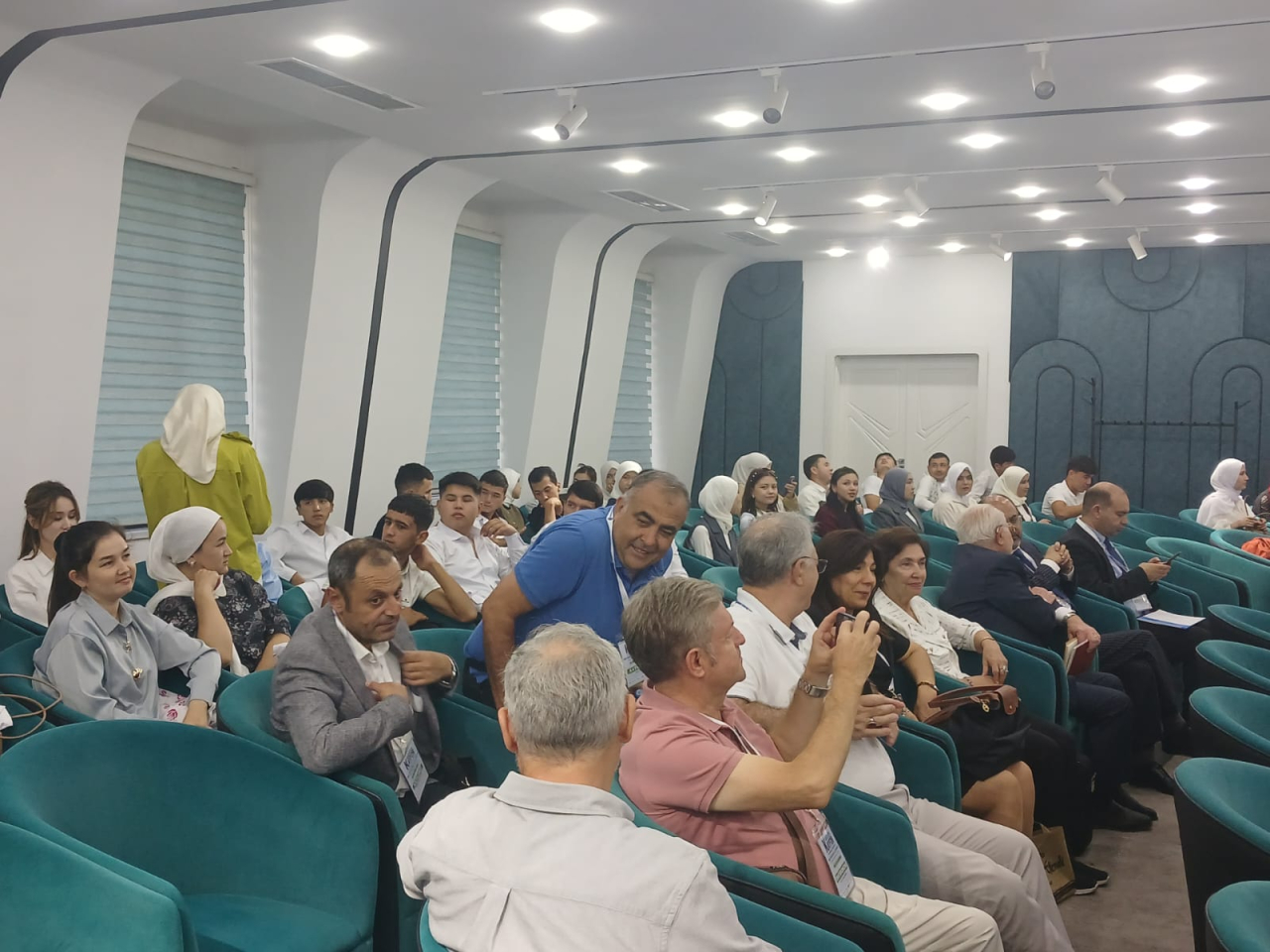
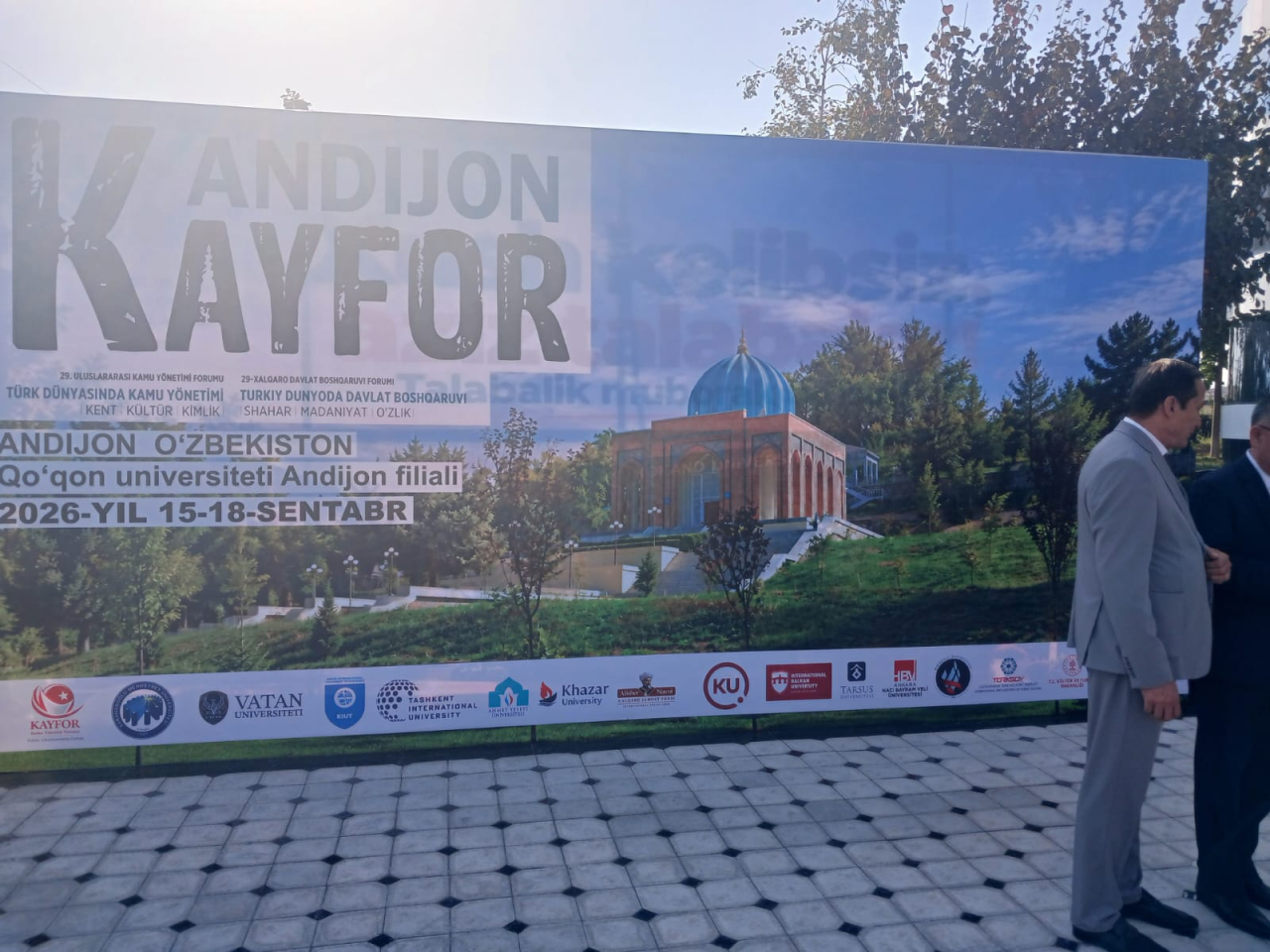
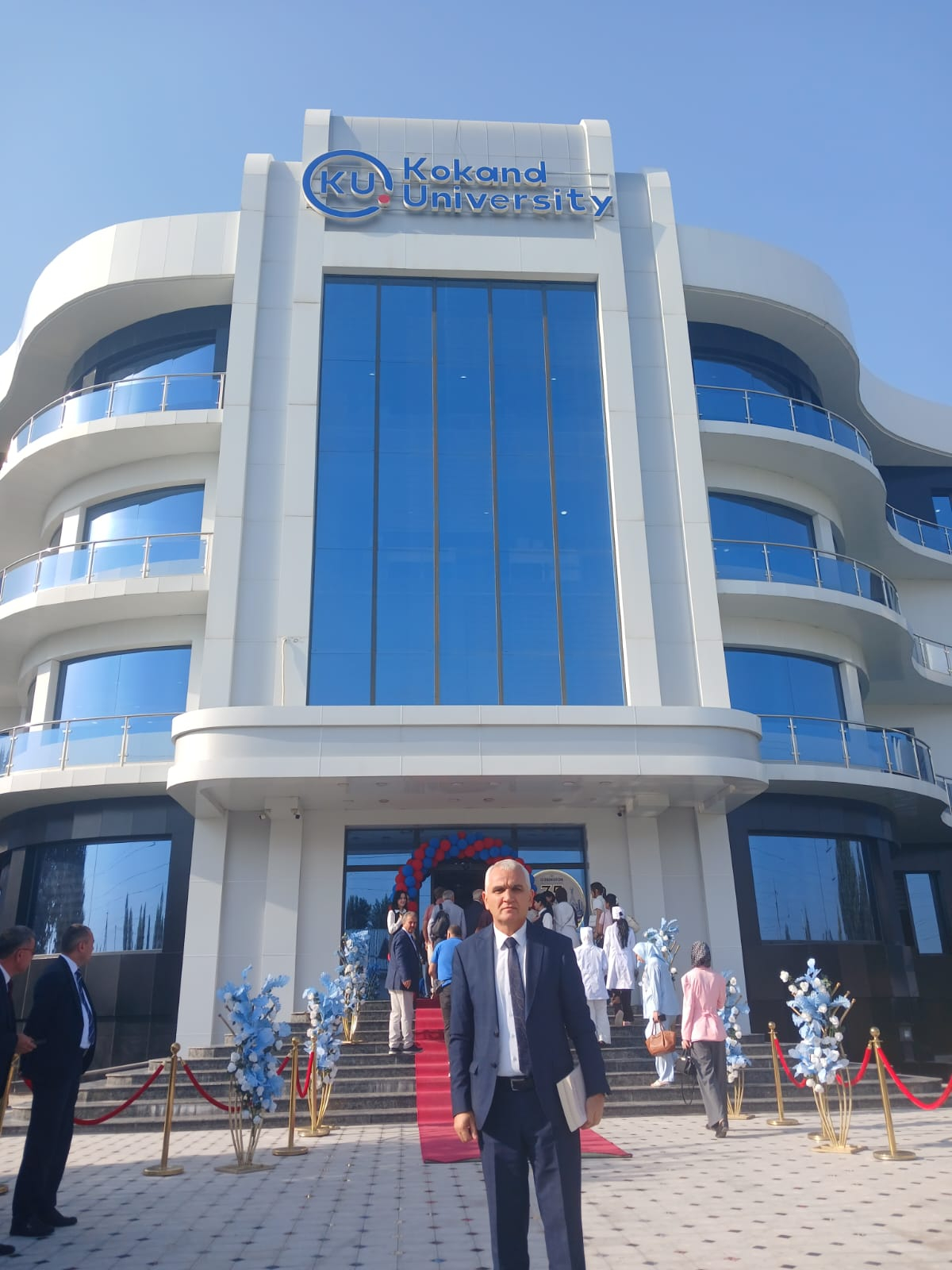
The Andijan Forum is being held from September 15-18, 2026, at Kokand University, located in the city of Andijan, Uzbekistan, in cooperation with various universities of the Turkic world.
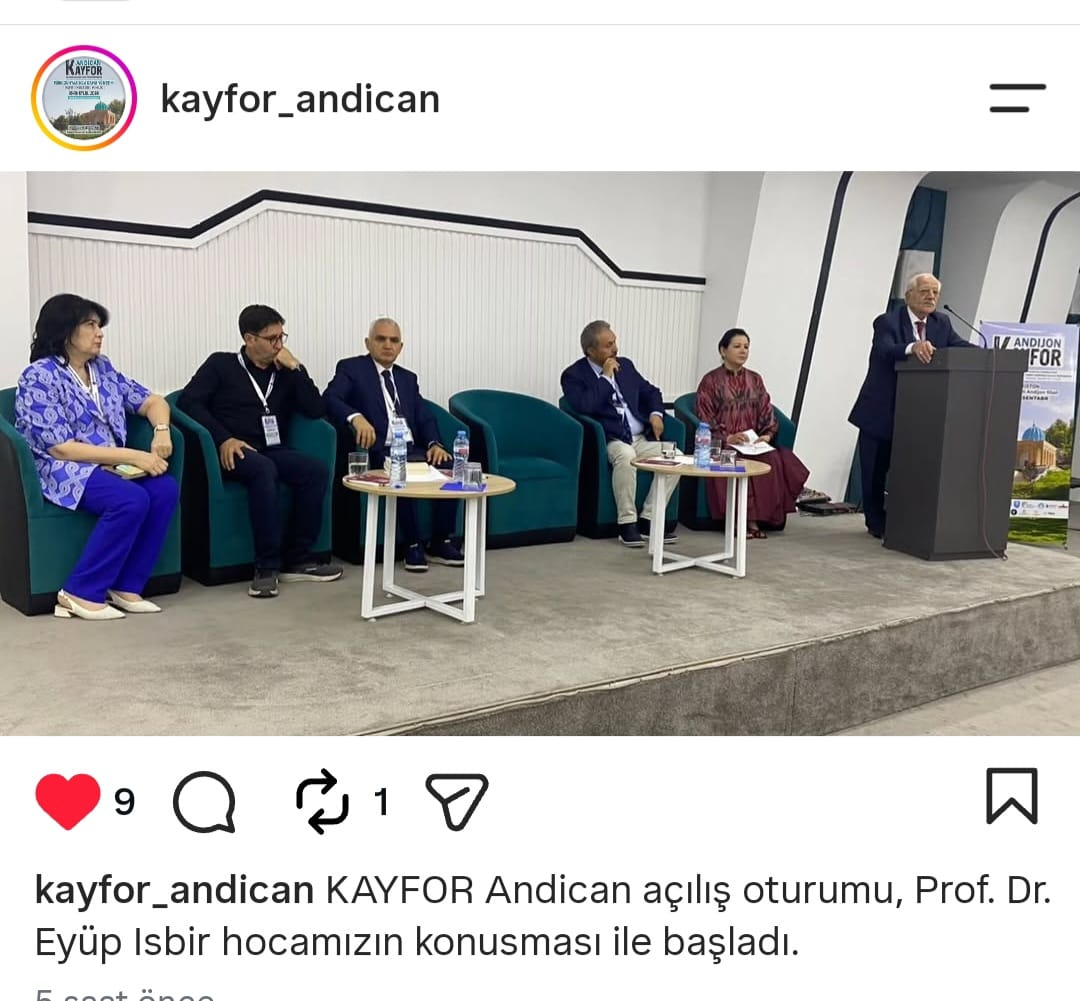
At the forum, whose main agenda covers the topics of cities, urban identity, urbanism, and urban governance, various presentations on history, architecture, urban planning, cultural heritage, and modern urban governance were heard. At the forum's opening panel, Telman Nusratoglu, Assoc.Prof. and Head of the Department of History and Archaeology, delivered an extensive presentation titled "The Turkic-Islamic Architectural Heritage of Shusha and Its Current State." The presentation provided a detailed analysis of Shusha's urban-architectural identity, the city's formation and construction process, the city's development during the Karabakh Khanate period, and Shusha's place within Turkic-Islamic urban traditions.
Emphasizing that Shusha is one of the important examples not only of Azerbaijani but of Turkic-Islamic urban culture as a whole, Telman Nusratoglu discussed the role of the city's historic neighborhoods, architectural monuments, fortresses, mosques, and other examples of cultural heritage in the formation of Shusha's distinctive urban identity. The presentation also drew attention to the destruction carried out against Shusha's Turkic-Islamic cultural heritage during the Armenian occupation, the damage and destruction of historical and religious monuments, and interventions aimed at altering the city's historical-cultural character. Assoc. Prof. Nusratoglu also paid special attention to the restoration and reconstruction process carried out after Shusha's liberation from occupation. It was noted that the city's reconstruction holds significant importance not merely as a physical construction process, but also in terms of preserving Shusha's own historical, national, and Turkic-Islamic urban identity and passing it on to future generations. In the presentation, it was noted that the preservation of the Shusha Fortress, historic neighborhoods, mosques, caravanserais, and other examples of architecture, alongside preserving the city's cultural heritage, also plays an important role in its transformation into one of the main centers of Azerbaijani and Karabakh tourism. One of the main messages of the presentation was that a city is not merely a space made up of buildings and streets; what makes a city a city is its historical memory, cultural heritage, architectural language, and the identity it forms. In this regard, the restoration of Shusha can be regarded as one of the important examples of both historical justice and the preservation of Turkic-Islamic urban heritage.


Copyright © Khazar University, 2026

 Facebook
  Instagram
  X
X  LinkedIn
  Telegram
  YouTube