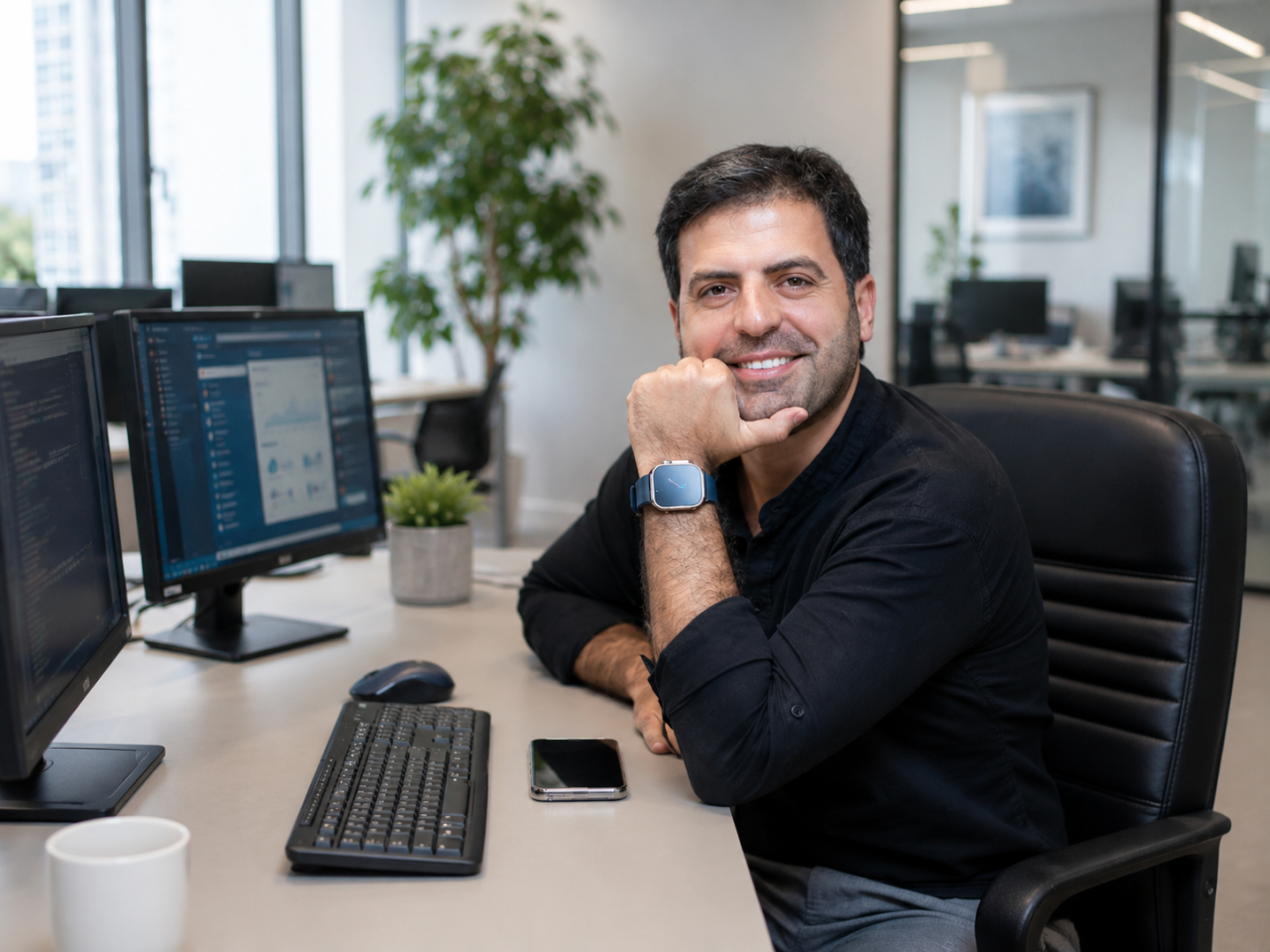
Farid Musayev, Head of Khazar University's Information Technologies Department, has shared his views on the rapid integration of artificial intelligence into work processes, companies' adaptation to these changes, and the roles of employees that will change in the future.
Speaking to Demokrat.az on the topic, Farid Musayev noted that the rise in the use of artificial intelligence in the workplace from 21 percent to 40 percent over the past two years shows that technological change in the labor market is accelerating. The fact that this figure has reached 76 percent in the IT sector demonstrates an even greater role for artificial intelligence in the field.
According to the expert, the active use of artificial intelligence tools, particularly by Generation Z, is turning companies' adaptation of their work processes to new technologies into a strategic necessity.
Farid Musayev noted that companies should focus on three main directions when transitioning to artificial intelligence. According to him, instead of allowing company employees to use open and unsupervised artificial intelligence tools, companies should provide corporate artificial intelligence solutions that ensure the protection of company data.
The expert emphasized that the application of artificial intelligence technology alone is not enough. It is also important for employees to acquire new skills, such as giving artificial intelligence the correct tasks, preparing effective prompts, and evaluating the results obtained.
In Farid Musayev's view, artificial intelligence should not simply be added to existing work systems; workflows should be rebuilt in a way that makes maximum use of the technology's capabilities.
The specialist noted that artificial intelligence will change the way employees work more than it will completely replace their jobs. An employee who previously prepared reports or wrote code may, in the future, transition to a role of assigning tasks to artificial intelligence, and checking, editing, and approving the results it produces.
According to the expert, the fact that artificial intelligence can make mistakes further increases the importance of human oversight. For this reason, employees' main advantage will not be blindly accepting the information provided by artificial intelligence, but the ability to verify and correctly assess it.
Farid Musayev noted that while artificial intelligence can process large volumes of information at high speed, skills such as empathy, leadership, strategic decision-making, and creativity still remain the main advantages of humans.
In the expert's view, the specialists who will gain the most value in the future labor market will be those able to combine technical skills with human-oriented skills.


Copyright © Khazar University, 2026

 Facebook
  Instagram
  X
X  LinkedIn
  Telegram
  YouTube