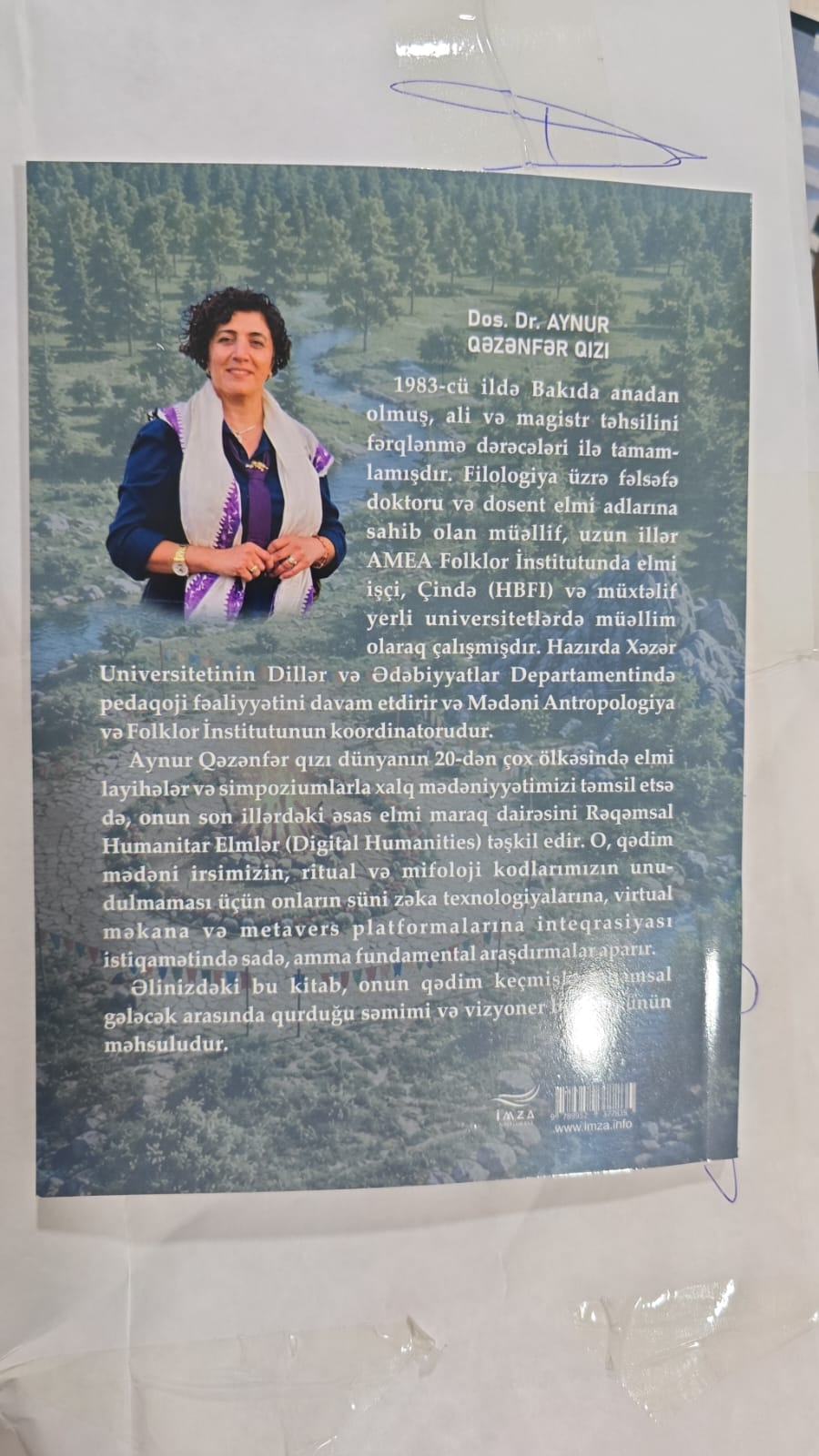
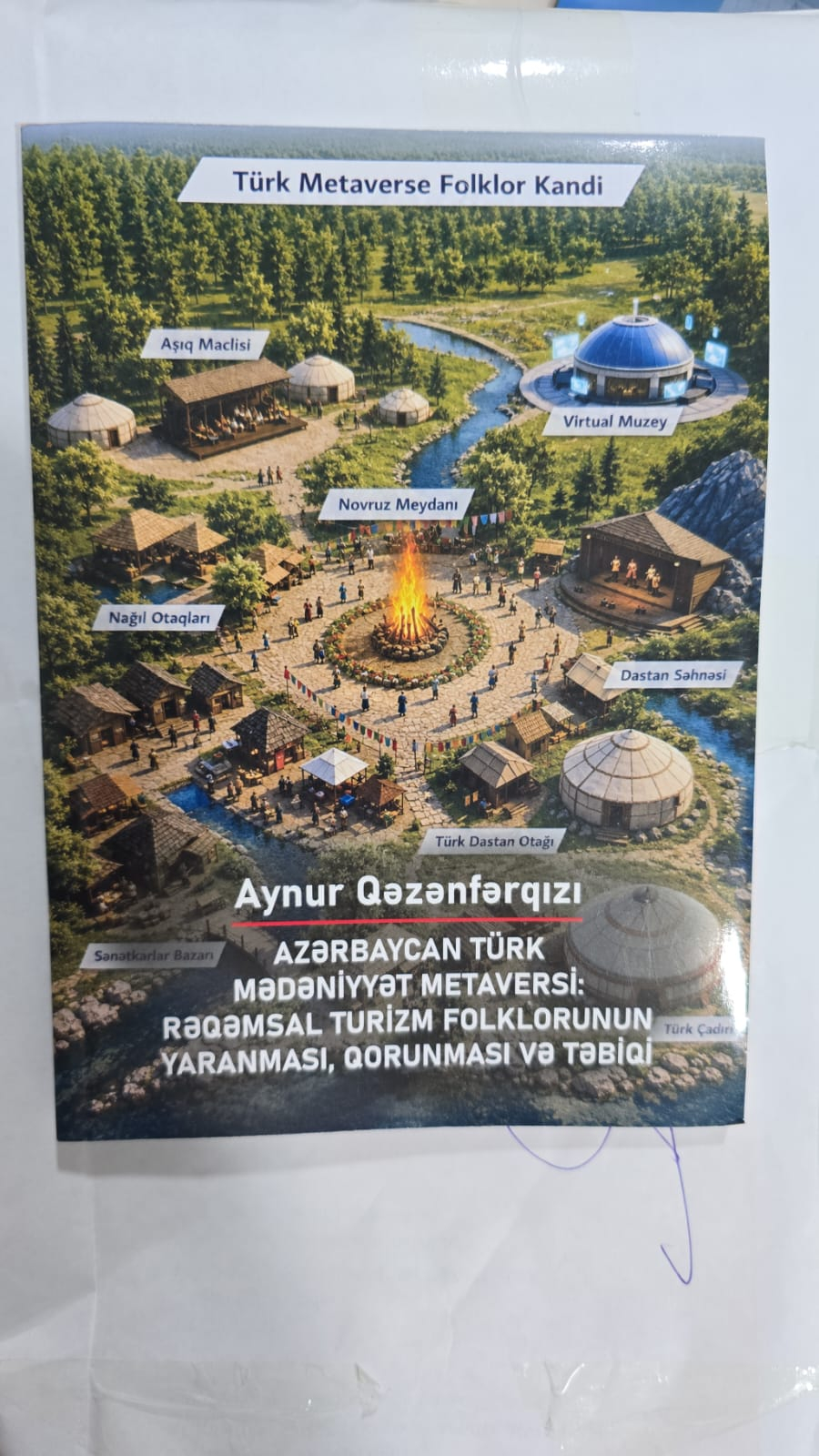
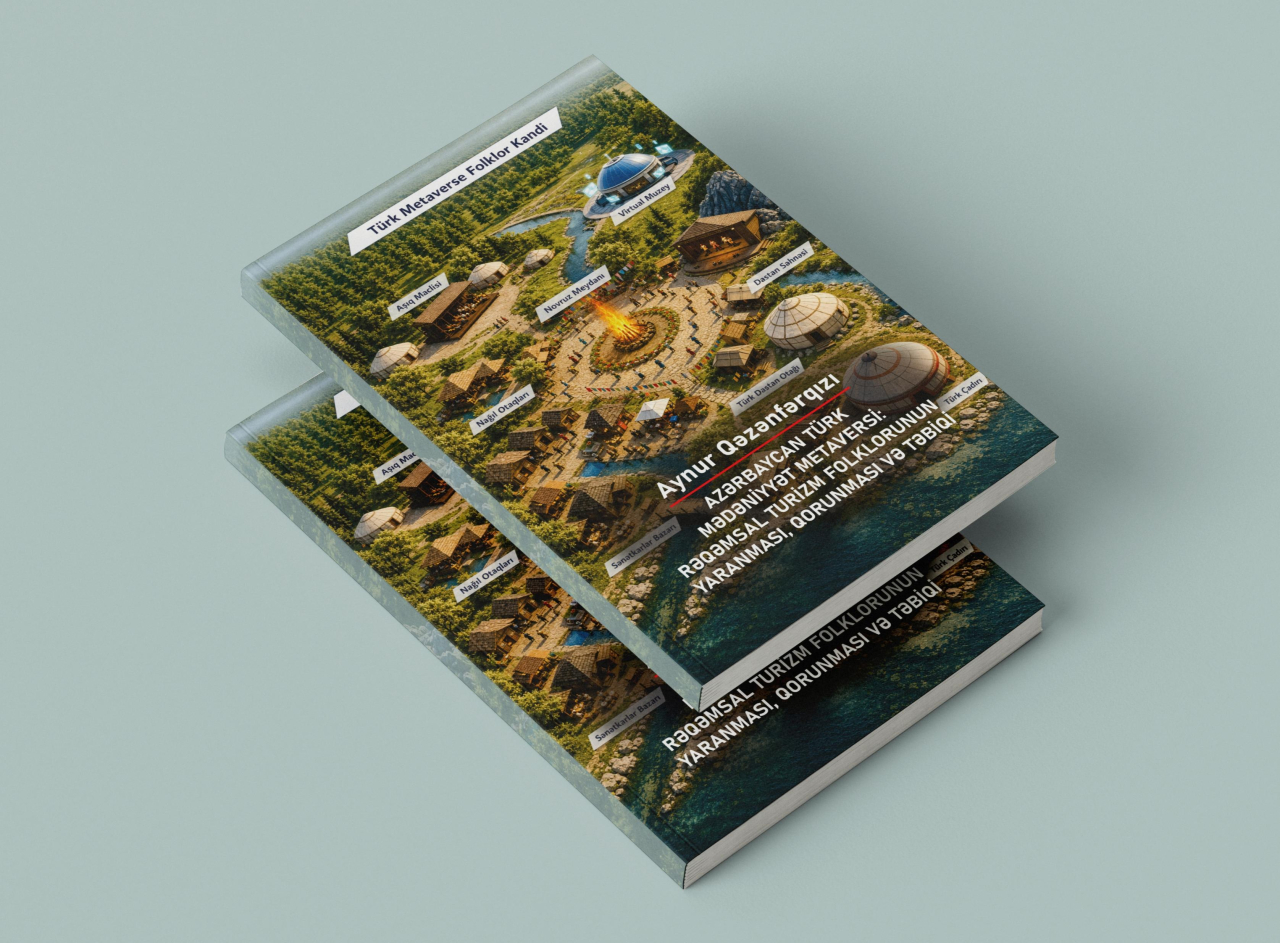
A monograph by Aynur Gazanfargizi, Assoc. Prof. at Khazar University, titled "Azerbaijani Turkic Cultural Metaverse: The Creation, Preservation, and Application of Digital Tourism Folklore" — the result of many years of scientific research — has been published by Imza Publishing.
The scientific editors of the monograph are folklore scholar Professor Fuzuli Bayat and tourism specialist Professor Bahadur Bilalov. The author of the book's foreword, Professor Fuzuli Bayat, highly praises the scientific significance of the work for modern folklore studies and digital humanities.
For the first time, the monograph systematically examines the existence and development prospects of the Azerbaijani Turkic cultural heritage within the metaverse environment. Bringing together folklore studies, tourism, digital humanities, and information technology, the work seeks to answer one of the pressing scientific questions of the modern era — how traditional folklore can survive and gain new content in the virtual world.
One of the main scientific innovations of the book is the author's introduction of the concept of "digital tourism folklore," along with a scientifically grounded analysis of the mechanisms behind this phenomenon's emergence, ways of preserving it, and possibilities for its practical application. The monograph shows that the metaverse can be regarded not merely as a technological platform, but also as a digital cultural space that creates new opportunities for preserving cultural memory, keeping folklore alive in a new communication environment, and conveying it to a wide audience through tourism.
The author believes that, in an era when artificial intelligence, the metaverse, and other digital technologies are developing rapidly, the main issue is not the technology itself, but how it is used to preserve and promote national-cultural heritage and pass it on to future generations. In this regard, the monograph presents a new scientific approach of both theoretical and practical significance.
The publication is expected to serve as a valuable scientific resource for researchers, master's and doctoral students working in the fields of folklore studies, tourism, digital humanities, and cultural heritage preservation, as well as for readers interested in the topic.


Copyright © Khazar University, 2026

 Facebook
  Instagram
  X
X  LinkedIn
  Telegram
  YouTube