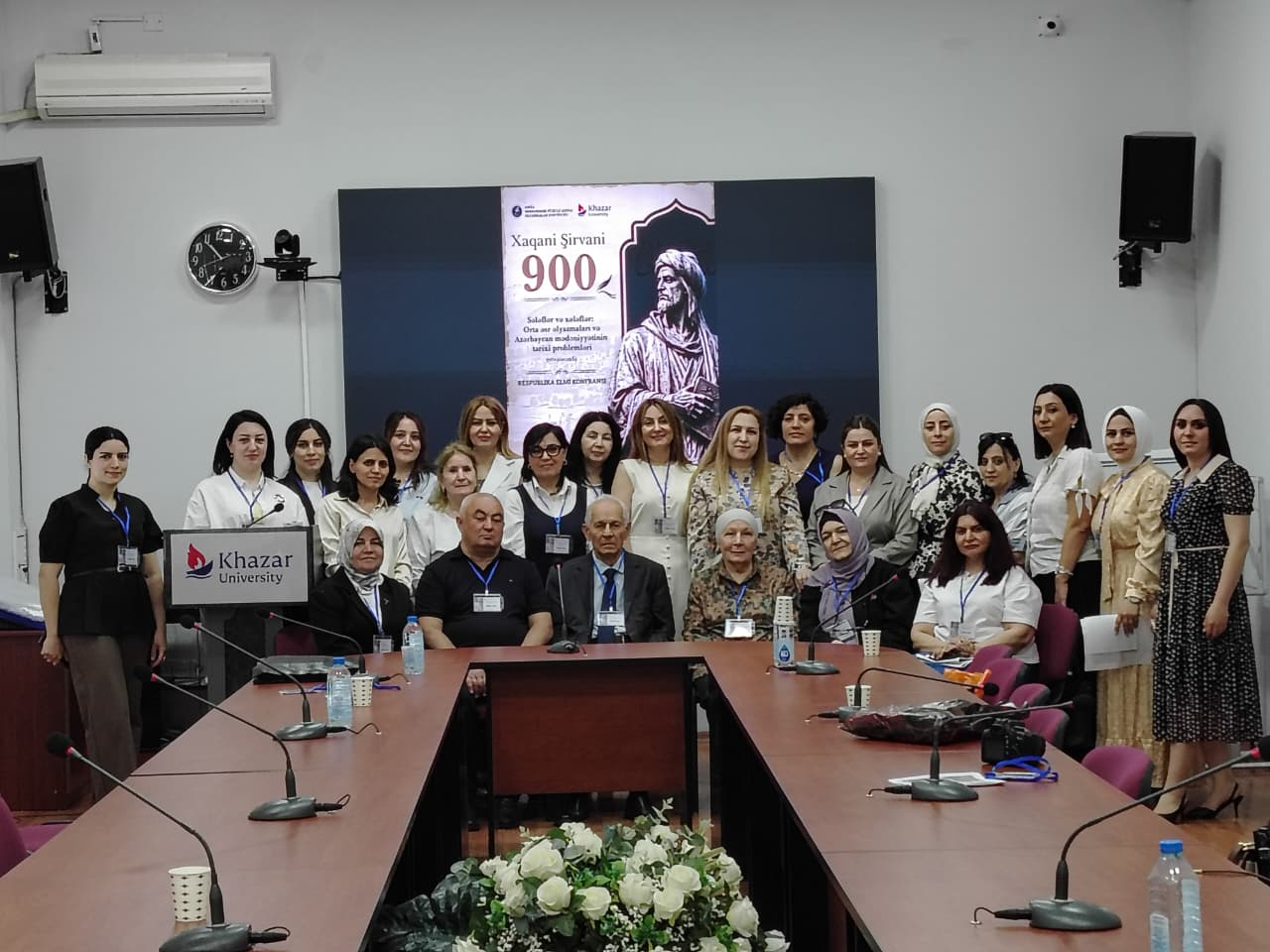
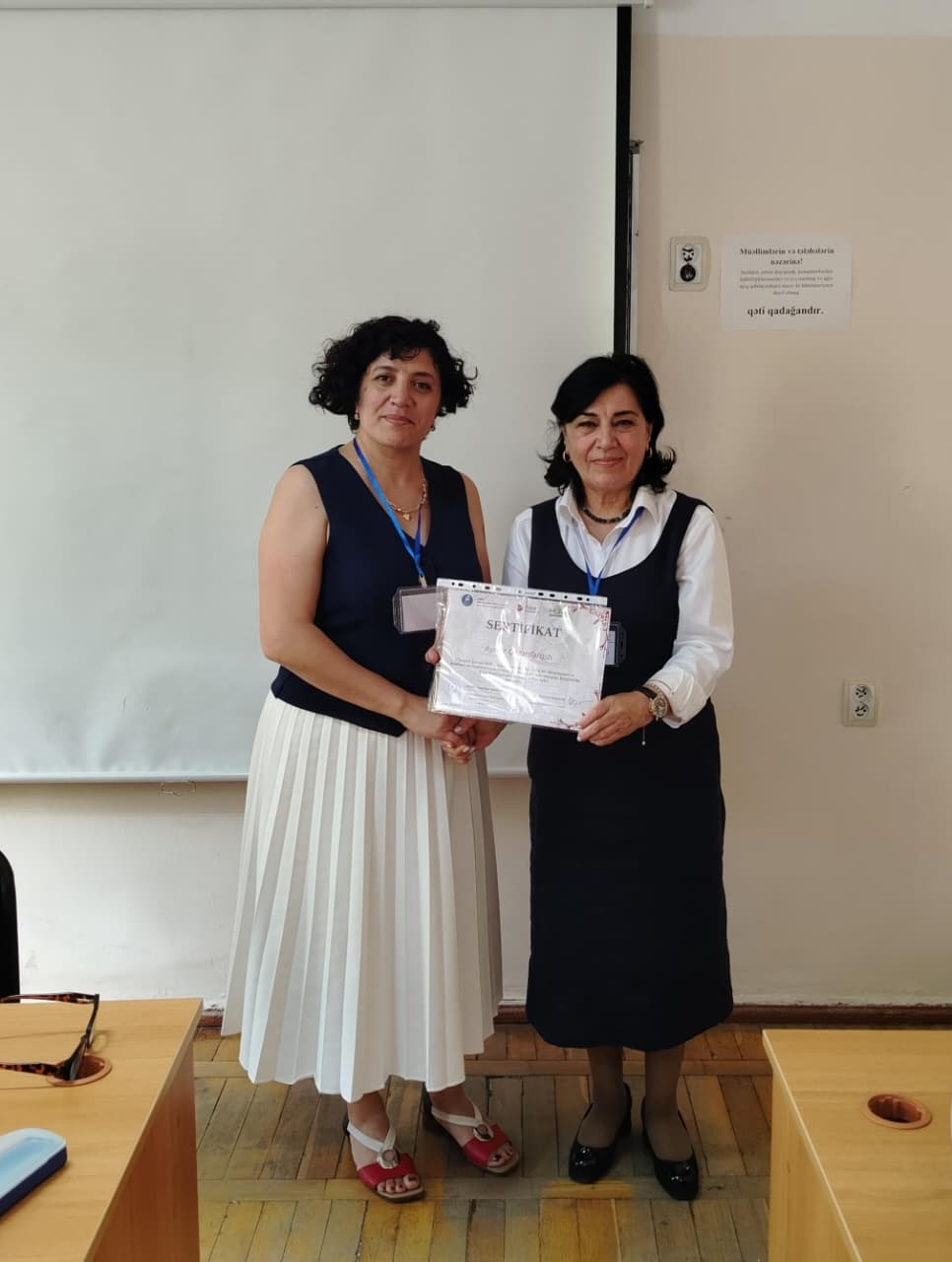
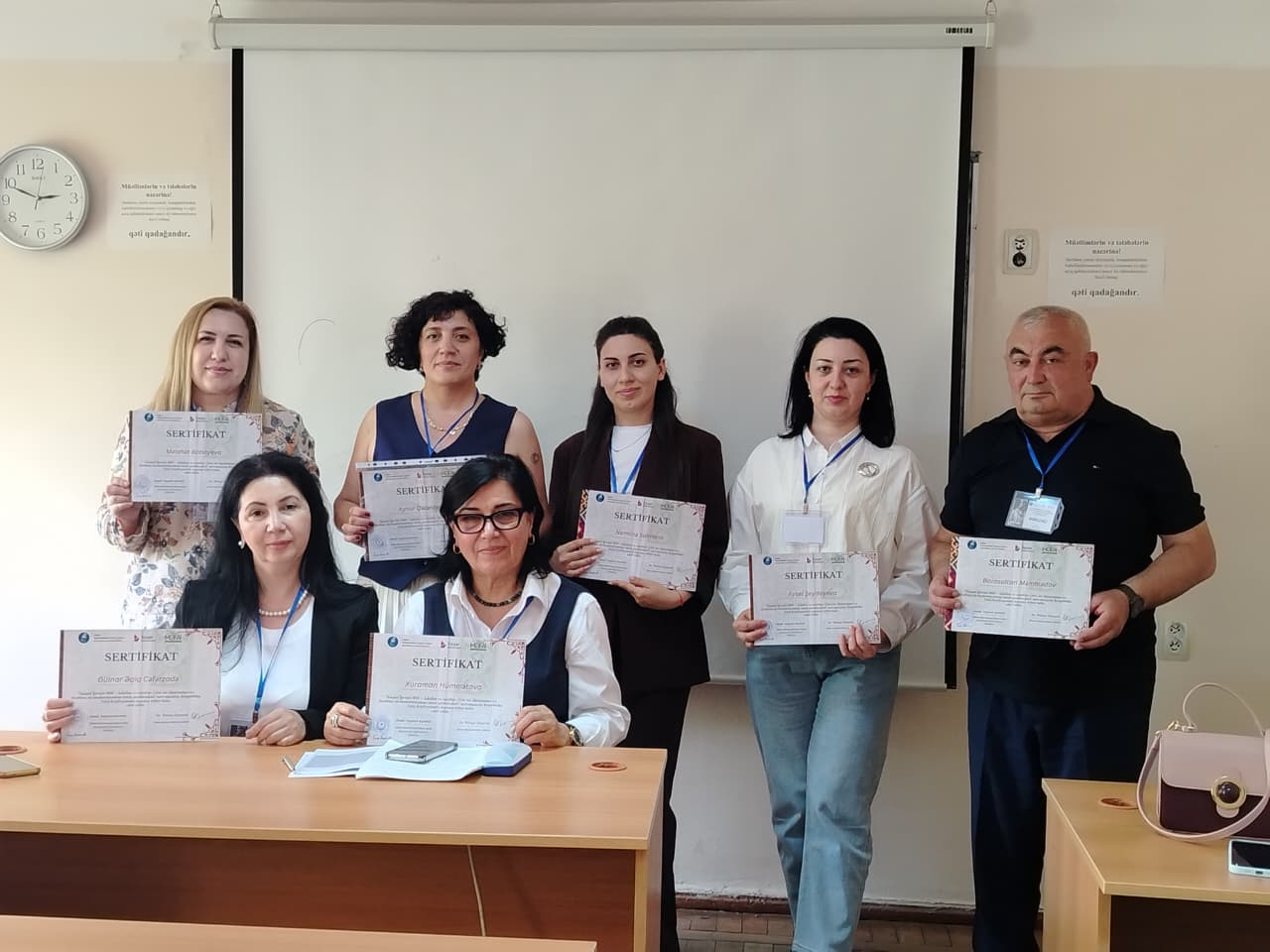
At a Republic Scientific Conference titled "Khagani Shirvani – 900. Predecessors and Successors: Medieval Manuscripts and Historical Problems of Azerbaijani Culture," held on June 8, 2026, at Khazar University under the auspices of the Molana Institute of Literary and Philosophical Research (MILPR), a paper on the multidisciplinary study of classical texts was presented. At the conference, Aynur Gazanfargizi, coordinator of the Institute of Cultural Anthropology and Folklore at Khazar University, lecturer and Assoc.Prof at the Department of Languages and Literatures, delivered a presentation entitled "Analysis of Folklore-Mythological Codes in Khagani Shirvani's Works in the Context of Digital Humanities."
The paper put forward principles for studying Azerbaijan's classical literary heritage within the context of Digital Humanities, particularly through the use of corpus linguistics and structural-semantic analysis tools. Within the research, and in contrast to traditional descriptive-philological approaches, methodologies were applied involving the creation of text corpora, frequency analysis of lexical units, and the construction of semantic networks. Symbols of archetypal origin in Khagani's poetry ("fire," "water," "bird," "sky," and "path") were incorporated into a corpus model and arranged into a mathematical-systematic hierarchy.
Based on quantitative and qualitative indicators derived from a pilot analysis and scientific corpus simulation conducted on the text database, it was established that the motifs of "fire" and "sky" exhibit high frequency within the poet's artistic system, forming dominant semantic centers. The hierarchical structure of intra-textual conceptual relationships — such as fire–light–soul and sky–order–fate — was modeled through a specialized semantic network diagram. The empirical data obtained indicate that the folklore-mythological elements in the classical text constitute not scattered poetic figures, but a culturally encoded system structured according to specific internal patterns of cultural memory.
The study proposes a digital methodological framework (working model) that combines quantitative and structural analysis of classical texts. The scholarly and methodological findings of the work may serve as practical material in the development of course curricula in philology, folklore studies, and the emerging field of digital humanities at higher education institutions, as well as in the preparation of methodological manuals on digital literary studies.
Aydan Aliyeva
3rd-year student, Azerbaijani Philology, Khazar University


Copyright © Khazar University, 2026

 Facebook
  Instagram
  X
X  LinkedIn
  Telegram
  YouTube