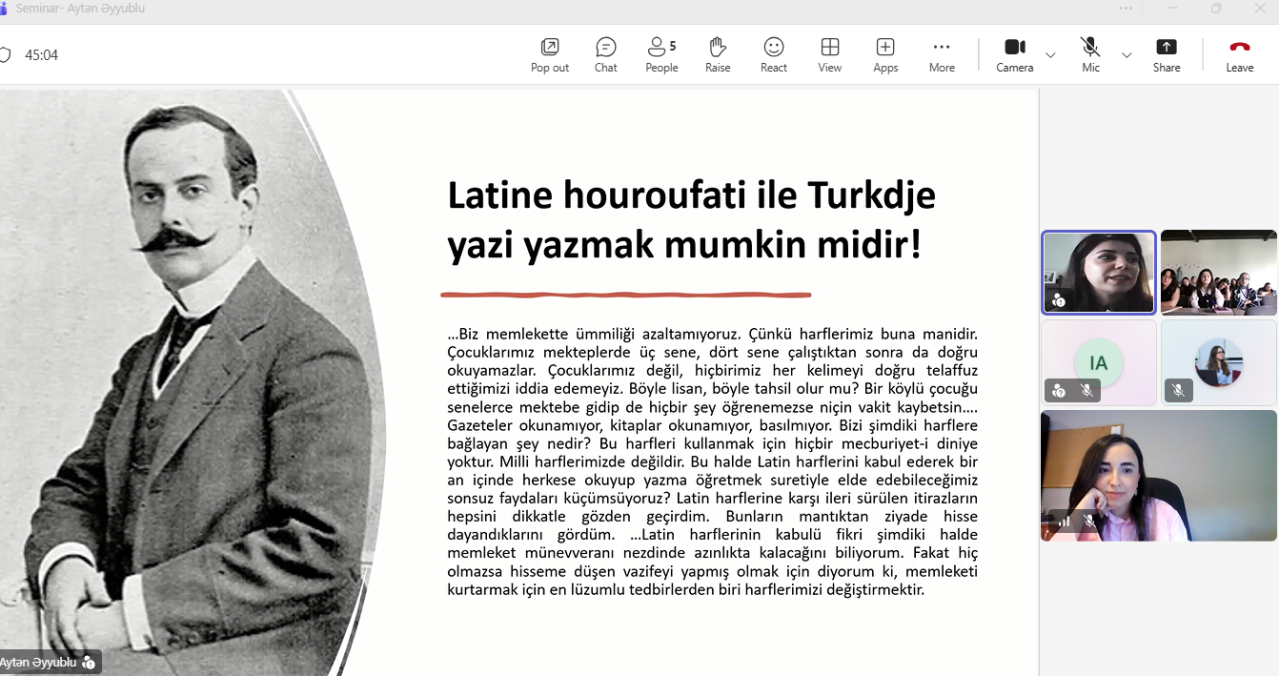
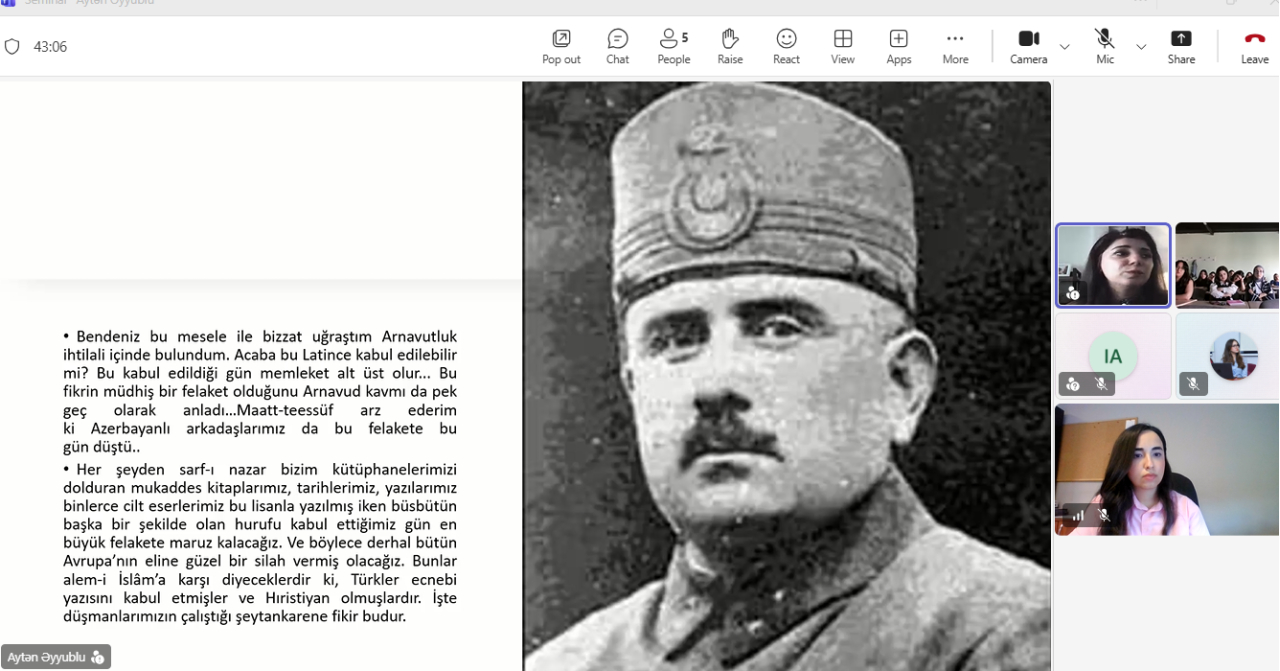
Khazar University's Graduate School of Science, Art and Technology and the Department of History and Archaeology organized a seminar on May 13, 2026, delivered by doctoral student Ayten Eyyublu, on the topic "The Influence of Azerbaijan's Transition to the Latin-Script Alphabet on Alphabet Discussions Conducted in Türkiye (1923–1930)."
The presenter is pursuing doctoral studies at Istanbul University in Türkiye under a trilateral agreement between the Ministry of Science and Education of the Republic of Azerbaijan and Khazar University, within the "State Program on Enhancing the International Competitiveness of the Higher Education System of the Republic of Azerbaijan for 2019–2023."
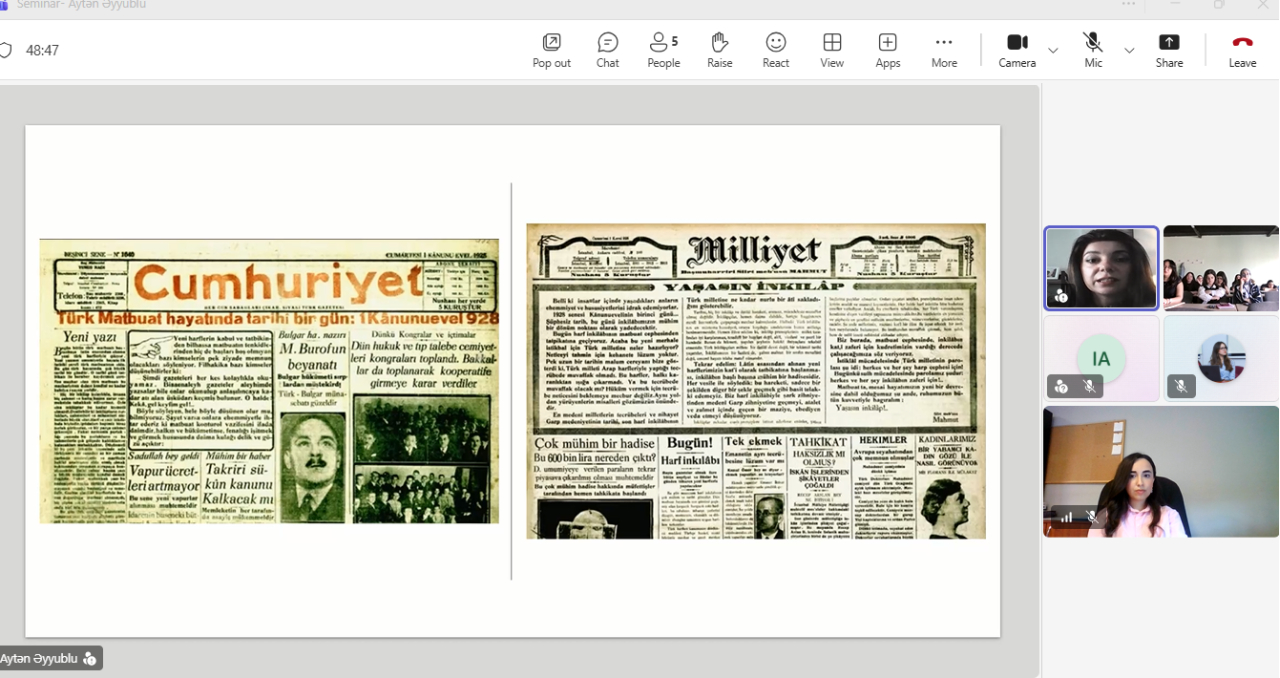
The seminar featured a comparative analysis of the debates surrounding the alphabet question in Azerbaijan and Türkiye during the first half of the 20th century. The presentation examined the compatibility of the Arabic alphabet with the phonetic characteristics of the Turkic language, its impact on the problem of literacy, and the connection between the transition to the Latin alphabet and the modernization process. The seminar also touched upon Mirza Fatali Akhundzade's ideas on alphabet reform, the activities of the New Turkish Alphabet Committee, and the influence of the Baku Turkological Congress on the Turkic world. The stance and critiques of the Azerbaijani emigre press — most notably the journal "Yeni Qafqasiya" — regarding Soviet alphabet policy were likewise among the central themes of the presentation. Within the framework of the seminar, the impact of Azerbaijan's decision to transition to the Latin alphabet on the revival of alphabet discussions in Türkiye was assessed comparatively. Emphasis was also placed on the fact that the "Harf İnkılâbı" — carried out under the leadership of Mustafa Kemal Atatürk — represented one of the pivotal milestones in Türkiye's modernization process.



Copyright © Khazar University, 2026

 Facebook
  Instagram
  X
X  LinkedIn
  Telegram
  YouTube