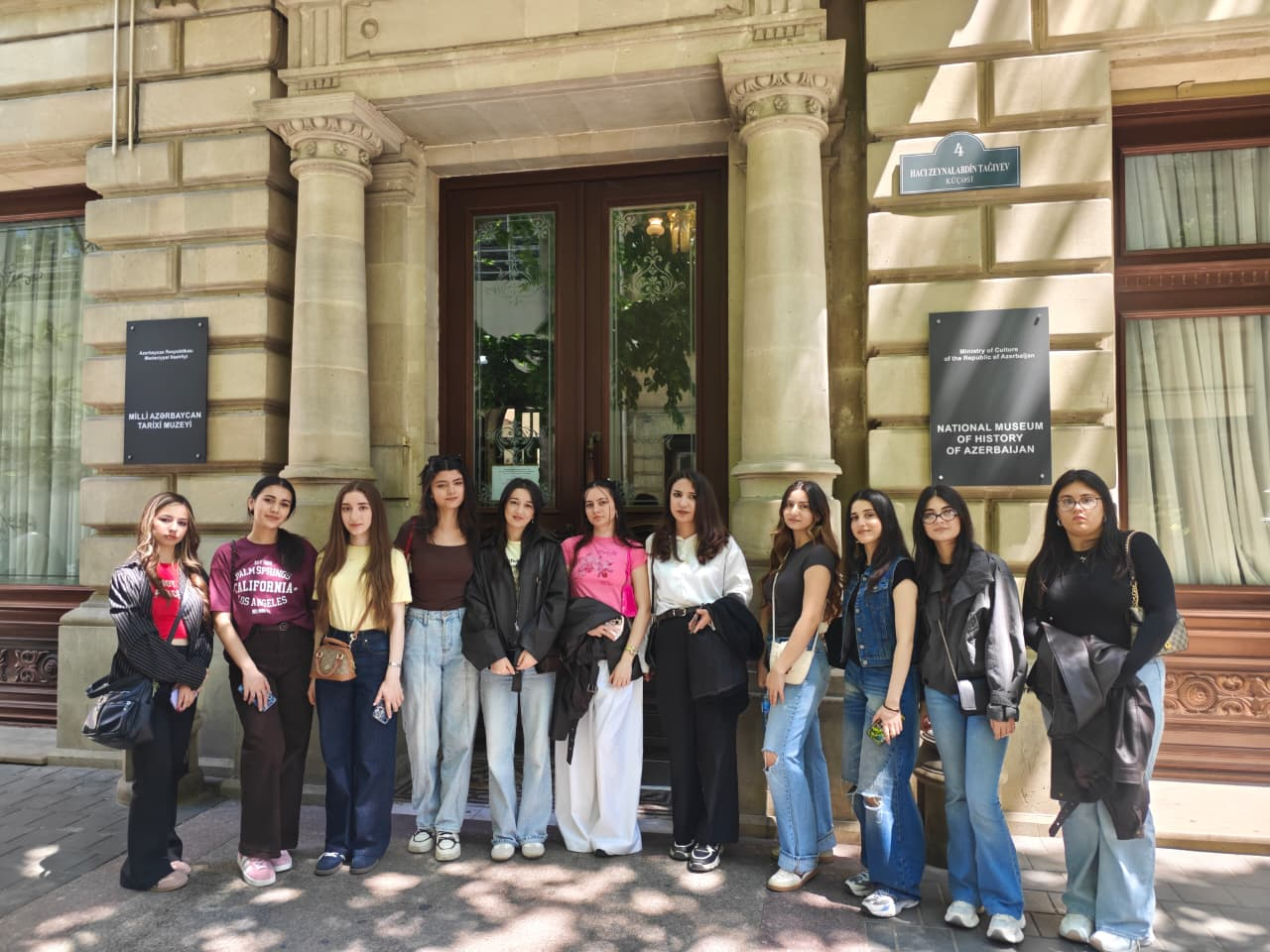
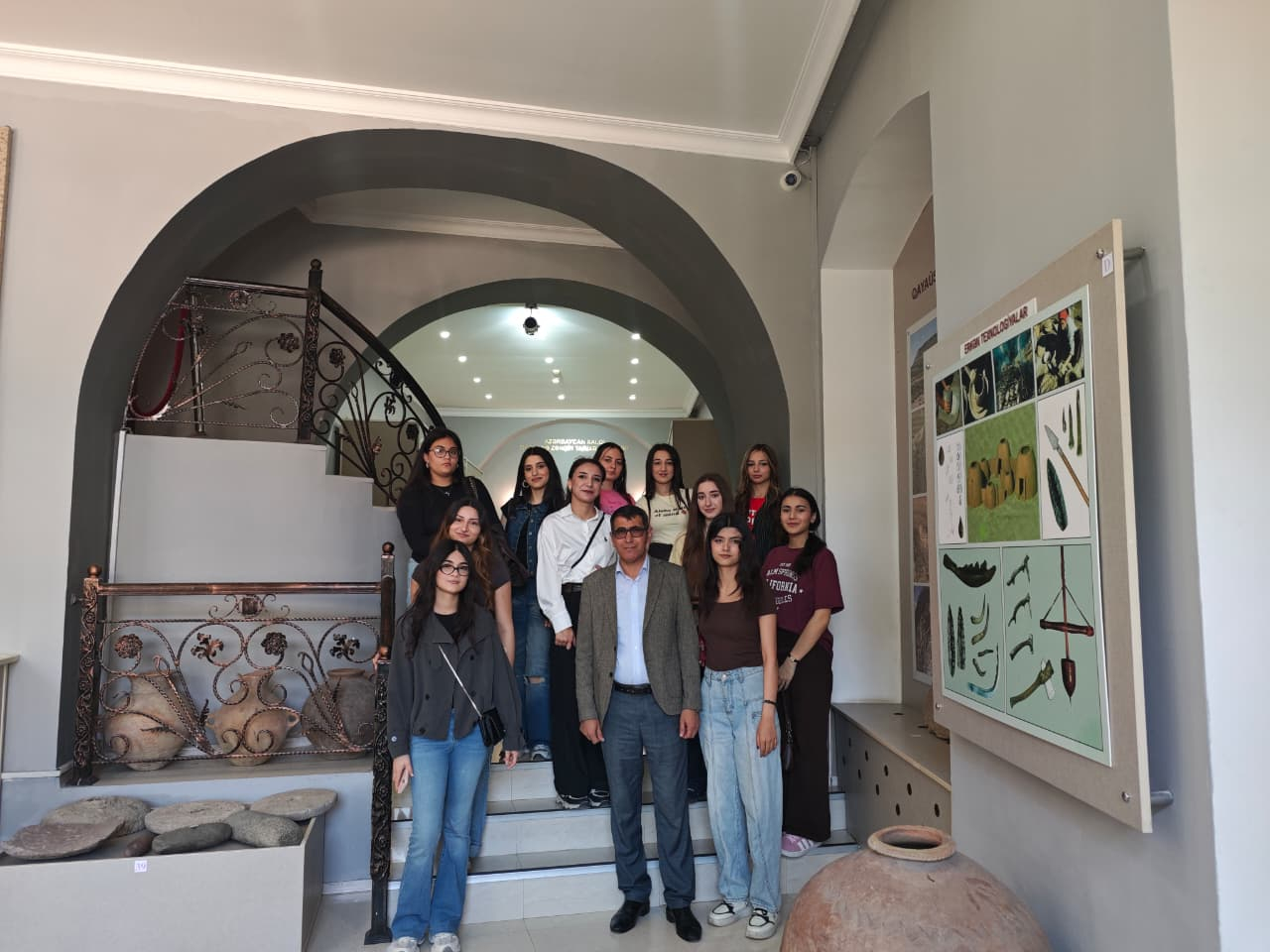
First-year students of the Graduate School of Science and Engineering at Khazar University, as part of the instruction of the "History of Azerbaijan" course, visited the Museum-Exhibition Hall of the ANAS Institute of Archaeology and Anthropology, the Home-Museum of Samad Vurgun, and the National Museum of Azerbaijan History on May 10, 2026, under the guidance of Dr. Yagub Mammadov, lecturer at the Department of History and Archaeology.
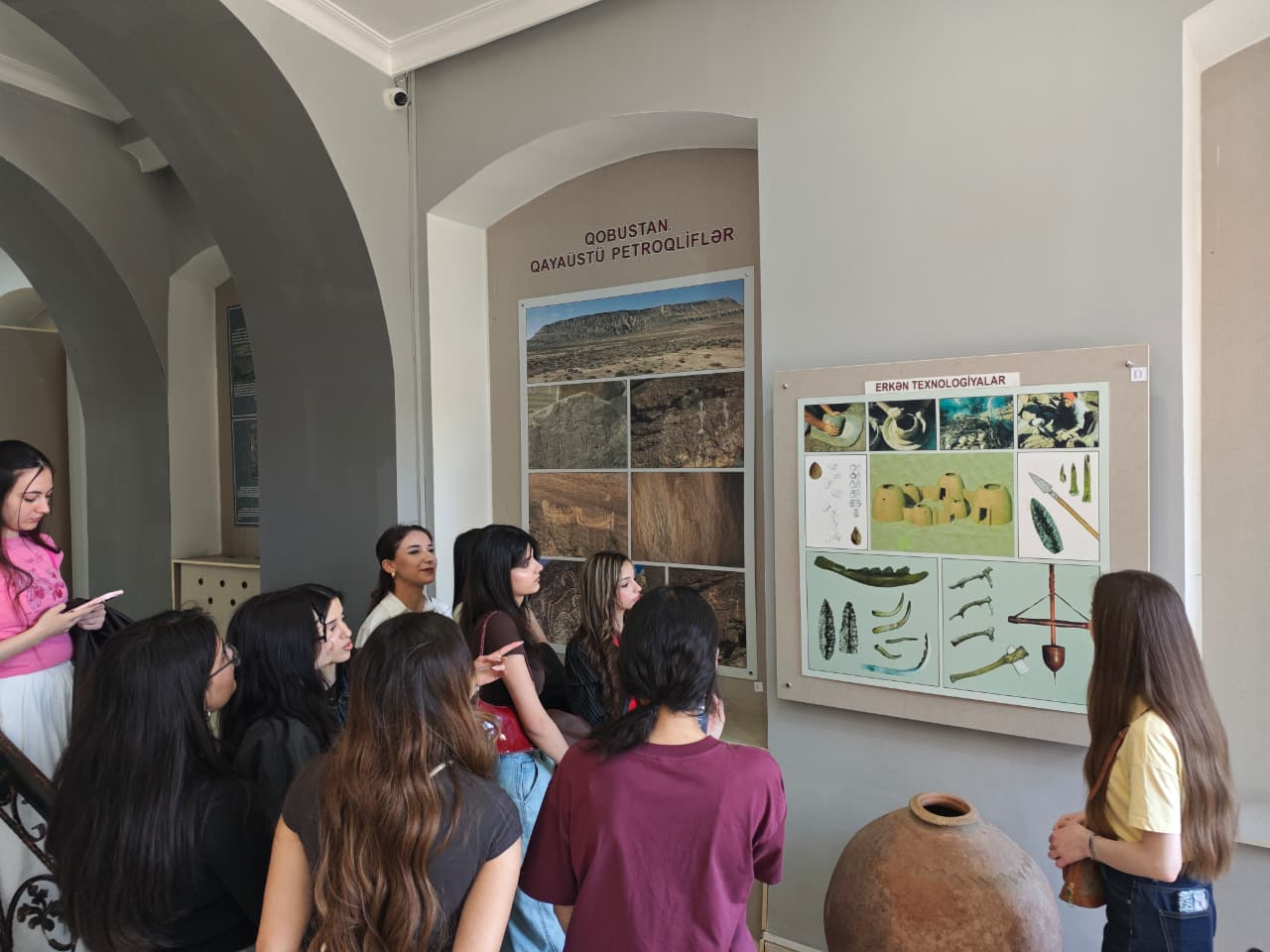
The Museum-Exhibition Hall of the ANAS Institute of Archaeology and Anthropology, located in the Icherisheher (Old City), displays exhibits obtained as a result of archaeological research conducted across Azerbaijan, covering periods from the Lower Paleolithic to the late Middle Ages. Dr. Yagub Mammadov, who has participated in numerous archaeological expeditions, provided students with detailed information about Azerbaijan's archaeological heritage and answered their questions.
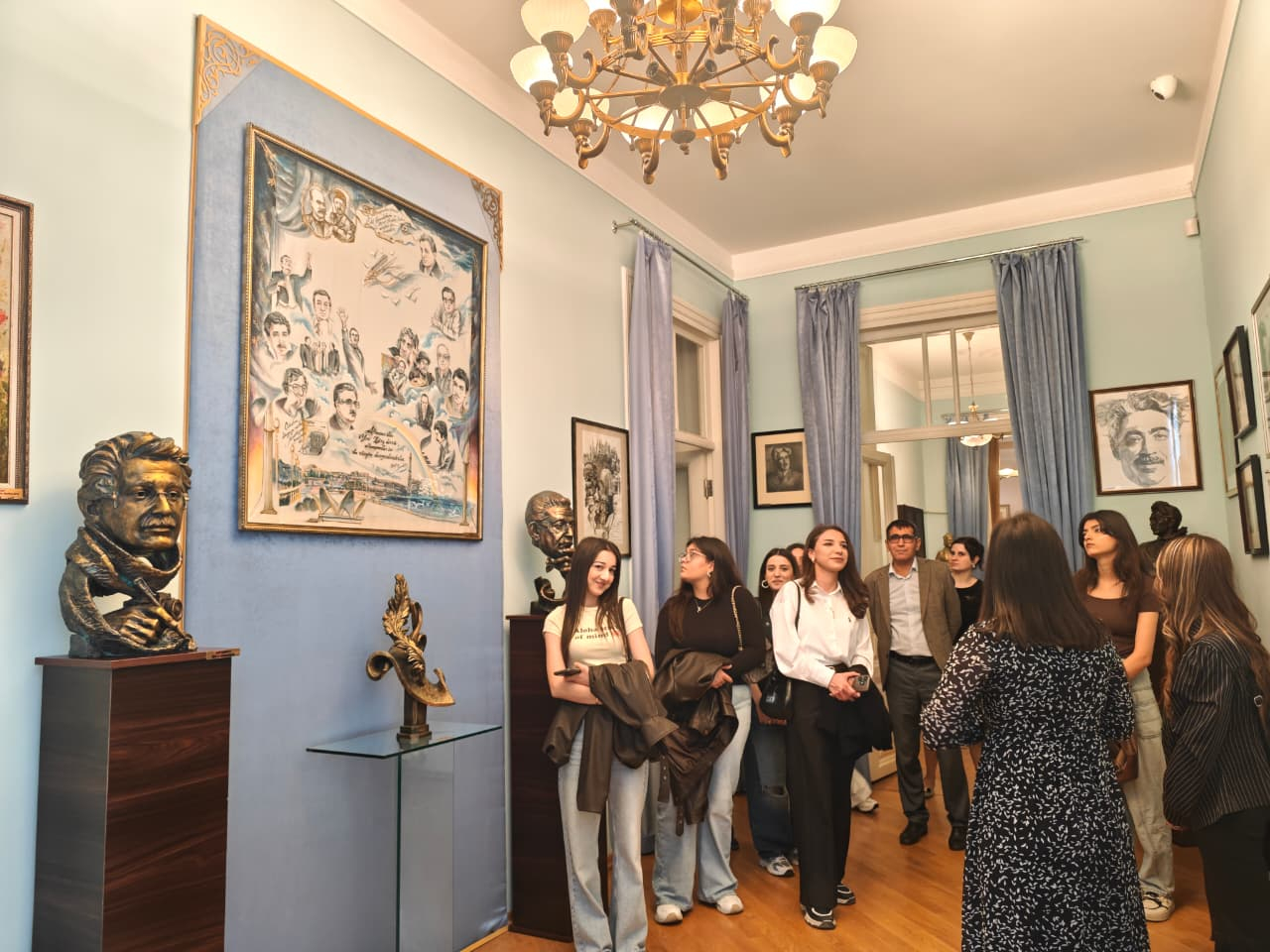
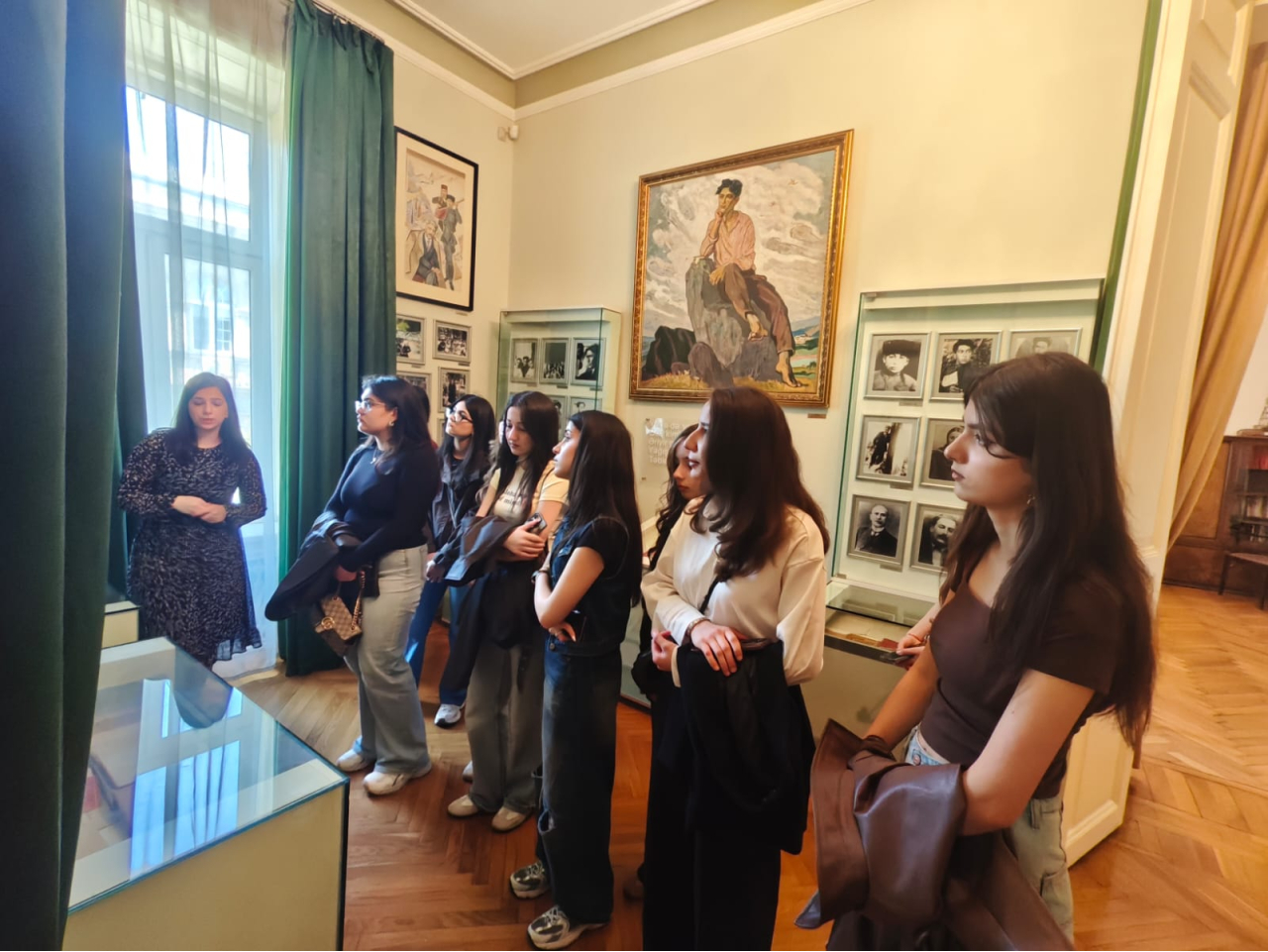
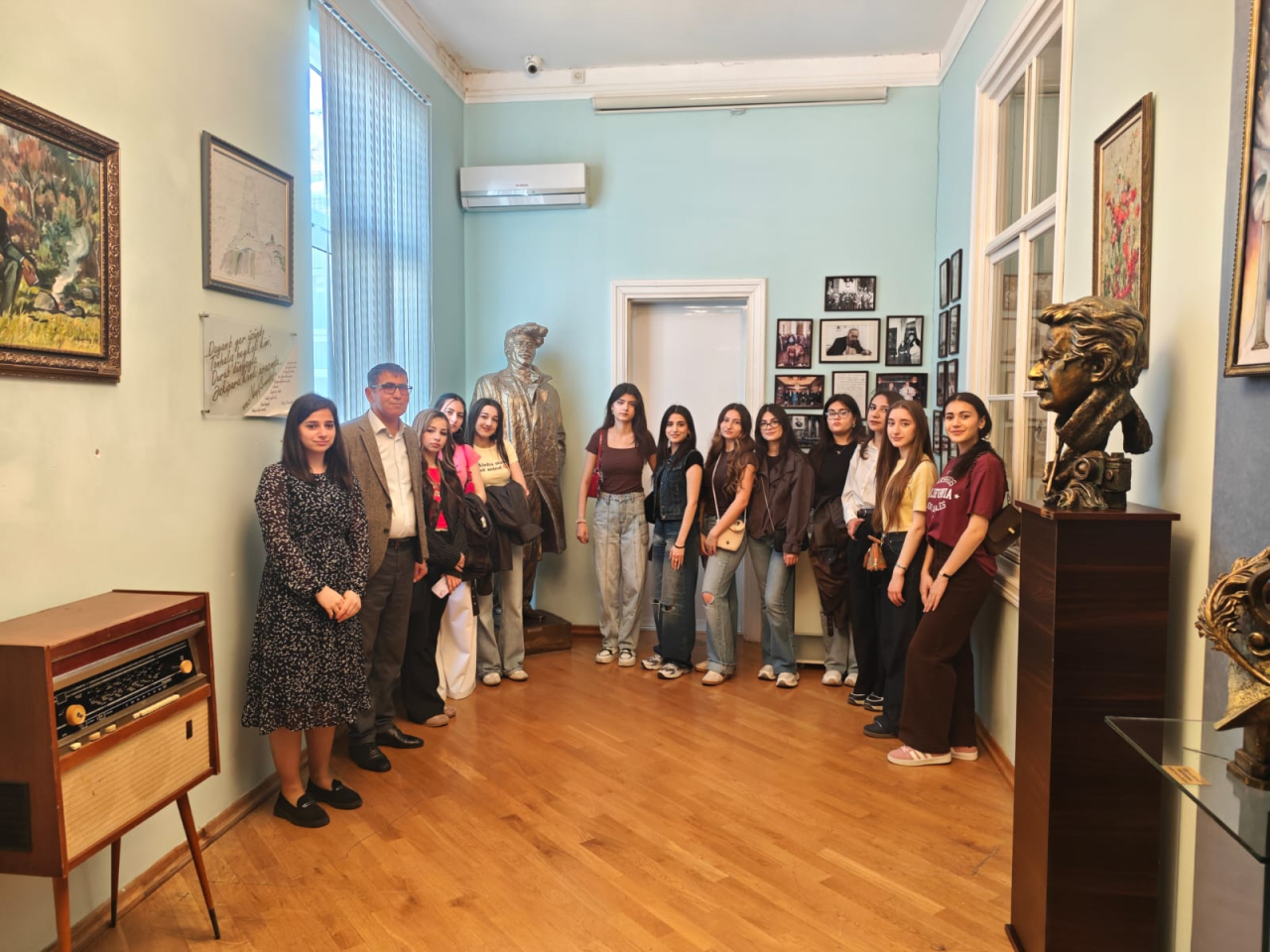
The students then visited the Home-Museum of Samad Vurgun — an outstanding representative of Azerbaijani literature, the first People's Poet, whose works in poetry and dramaturgy played a significant role in shaping national and spiritual values. The visit holds particular importance for the students, as it coincides with the poet's 120th anniversary. Museum staff member Nella Mammadova introduced the students to exhibits reflecting Samad Vurgun's life and creative legacy.
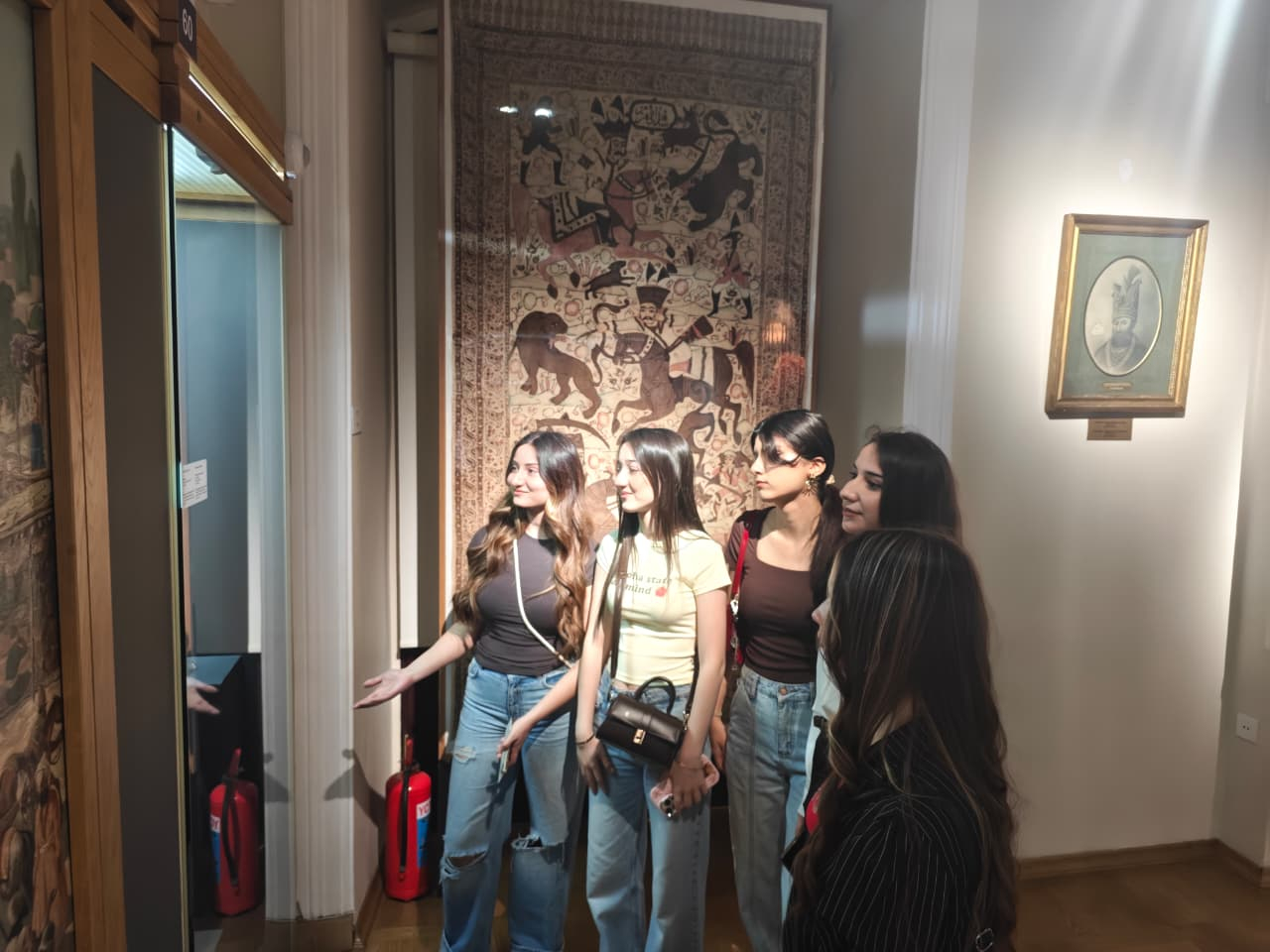
At the National Museum of Azerbaijan History, the students explored a rich collection tracing the historical development of the Azerbaijani people. On display were ancient archaeological finds, medieval weapons and craftwork, household items and documentary materials from the 19th–20th centuries. During the excursion, sections dedicated to the contemporary period also drew considerable attention. These exhibitions presented the history of Azerbaijani statehood, achievements of the independence era, examples of modern scientific and cultural heritage, as well as monuments restored following the liberation of Karabakh from occupation and the findings of new archaeological research.
Regularly organized excursions of this kind play a significant role in shaping students' scientific worldview. They gain the opportunity to apply the knowledge acquired in theoretical classes to actual historical monuments and museum exhibits, thereby reinforcing their academic understanding through practical observation.


Copyright © Khazar University, 2026

 Facebook
  Instagram
  X
X  LinkedIn
  Telegram
  YouTube