On December 23, 2024, Khazar University organized an annual training session for staff members on the environmental aspects of sustainability titled “Climate Change and Changing Economic Policies: Problems and Prospects.” The event was arranged by the Department of Economics and Management and brought together faculty members and professional staff to strengthen institutional awareness and understanding of climate-related challenges and sustainability issues.
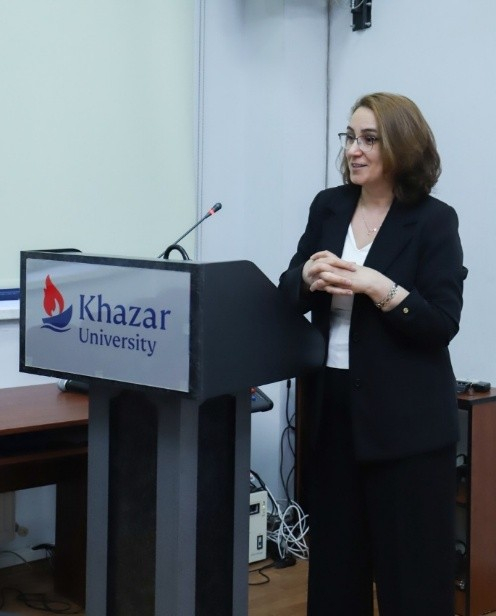
Opening the event, Dr. Razia Isaeva, Dean of the Faculty of Economics and Management, delivered an overview of the impact of climate change on the global economy and highlighted current responses and policy measures being adopted internationally and nationally. Her remarks emphasized the importance of building staff knowledge and capacity in relation to environmental sustainability.
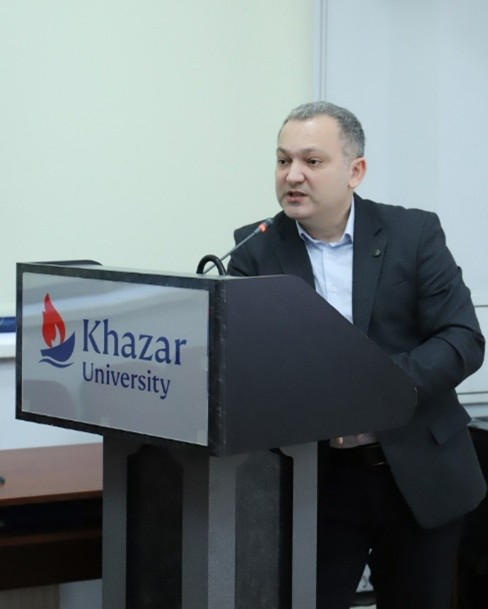
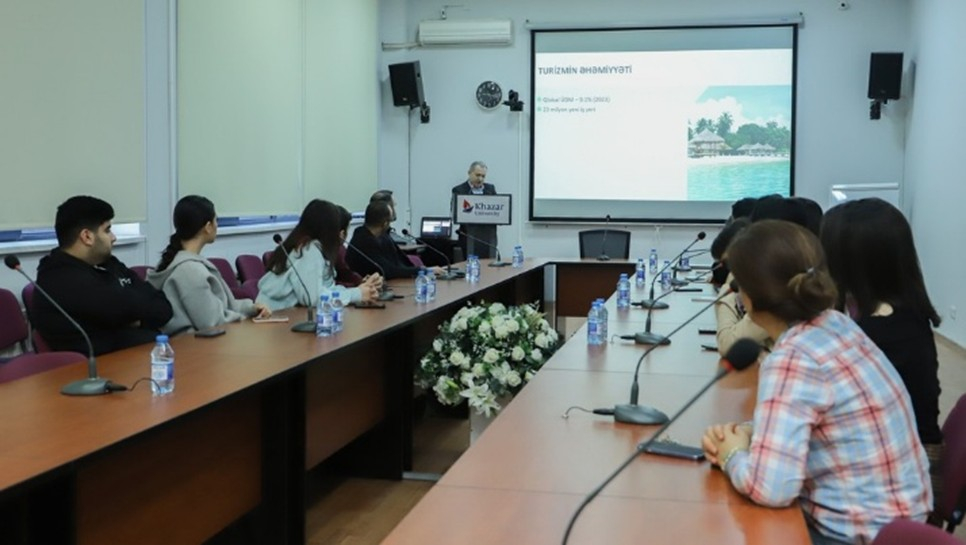
The training featured three main presentations. Polad Orujov, lecturer at the Department of Economics and Management, spoke on climate change and tourism policies, examining the effects of climate change on the tourism sector in different countries and discussing the main priorities of Azerbaijan’s tourism development strategy in the context of environmental sustainability.
The second presentation was delivered by Nuran Aliyeva, who shared research findings on sustainable development and economic growth. Her presentation addressed key issues such as sustainable development challenges, the green economy in Azerbaijan, effective responses to climate change, and examples of international good practice.
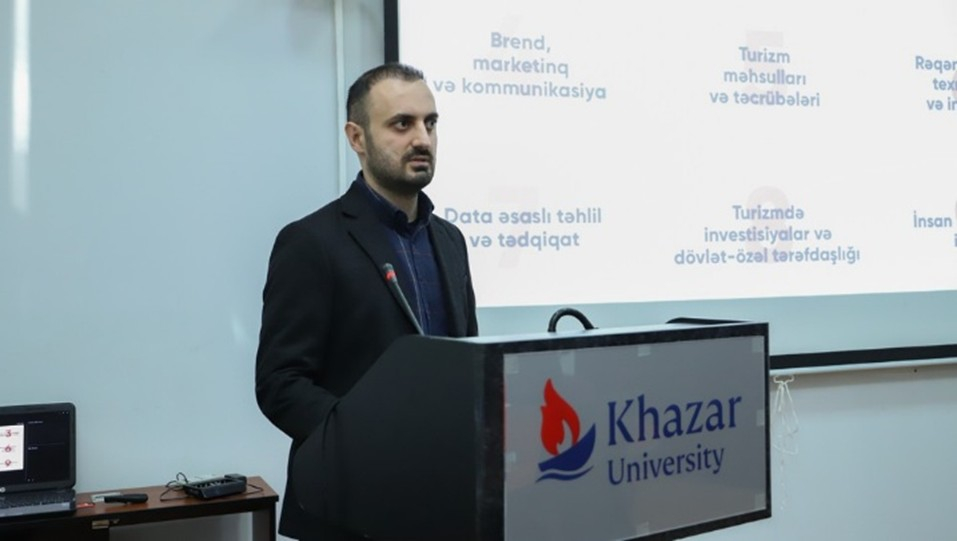
The final presentation, given by Hasan Rahimli, lecturer at the department, focused on “Climate Change: Reality or Illusion?” He discussed climate change forecasts, difficulties in climate finance, the relationship between carbon emissions and per capita GDP, the economic implications of environmental policies, and relevant empirical findings.
Following the presentations, participants engaged in a broad discussion of the issues raised, exchanging perspectives on climate change, environmental responsibility, and sustainability-related policy responses. The event served as an educational platform that supported staff development in the field of environmental sustainability and contributed to the University’s wider efforts to promote sustainability awareness across the institution.


Copyright © Khazar University, 2026

 Facebook
  Instagram
  X
X  LinkedIn
  Telegram
  YouTube