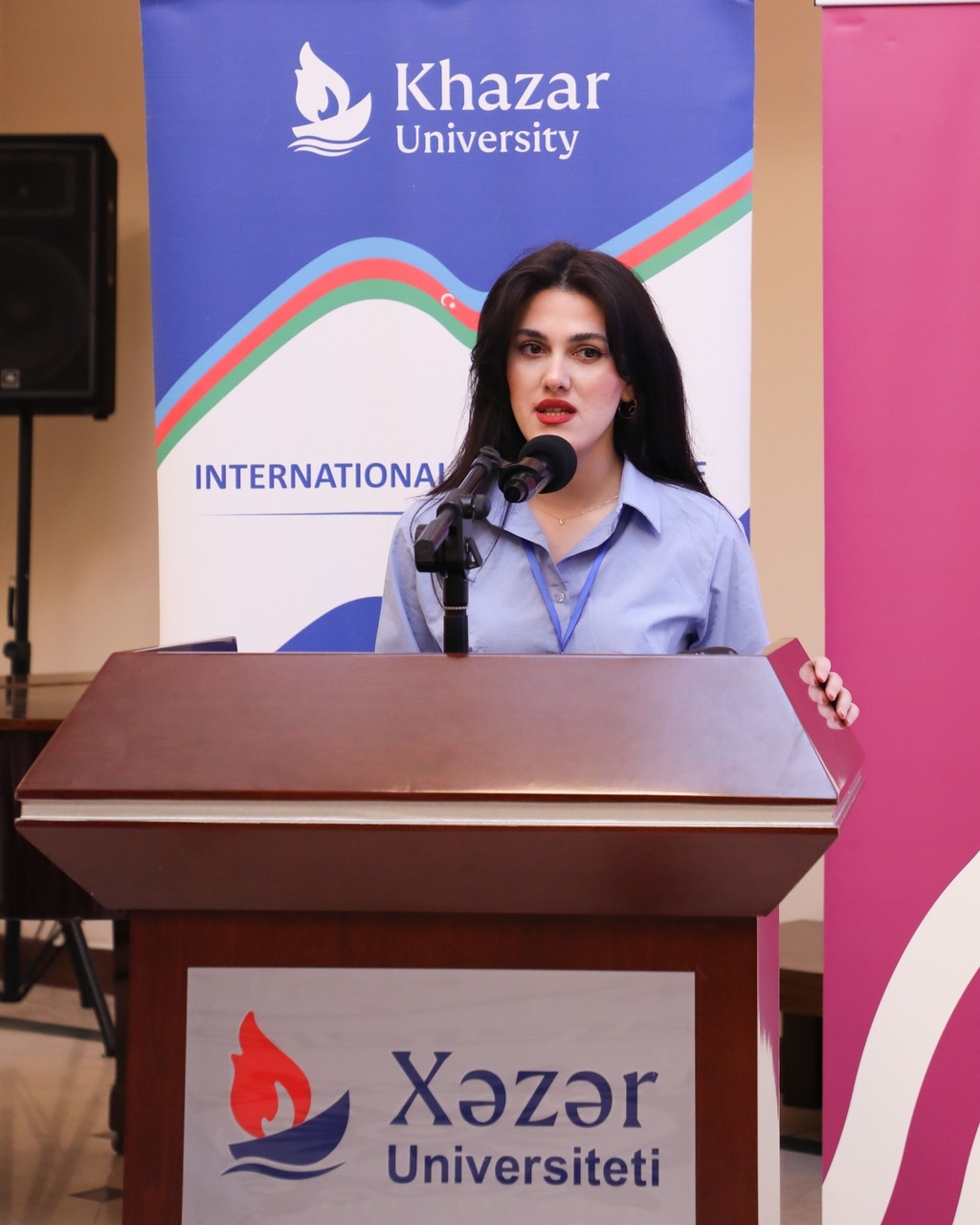
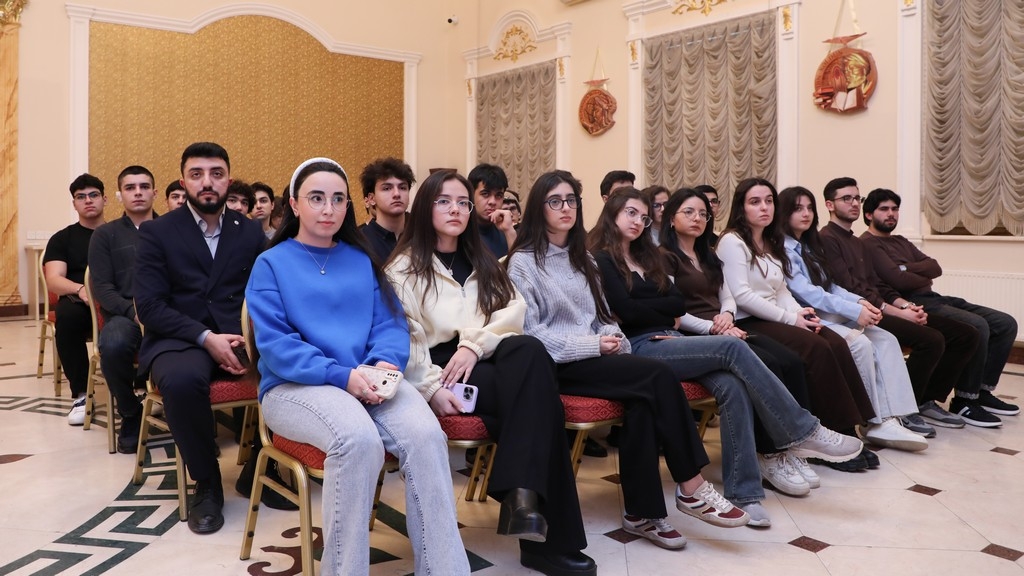
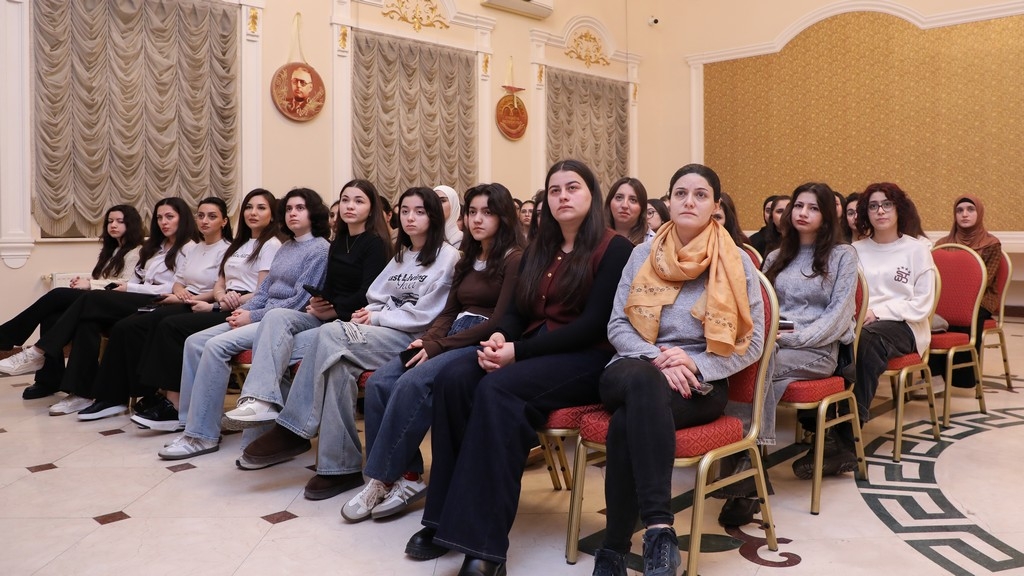
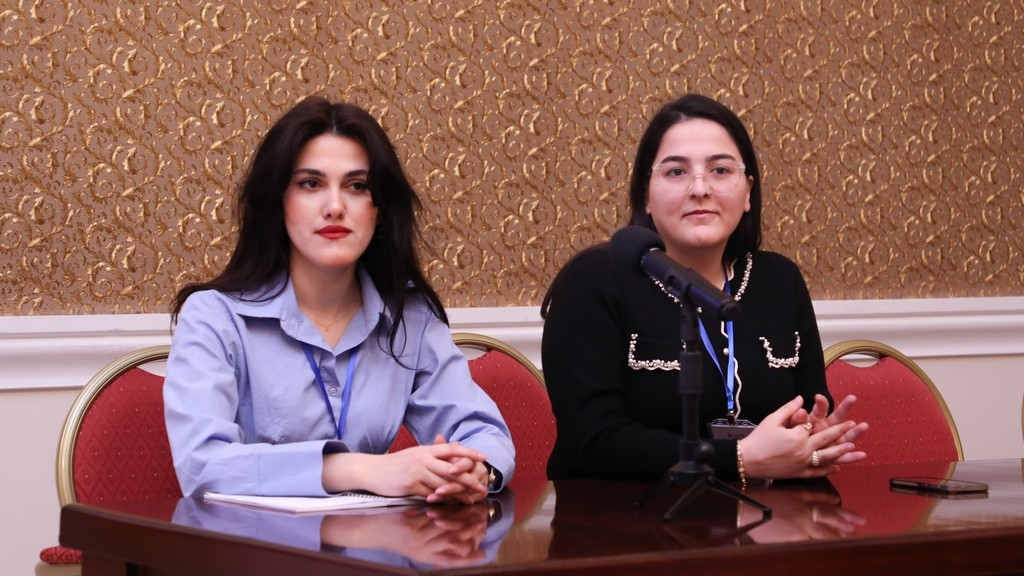
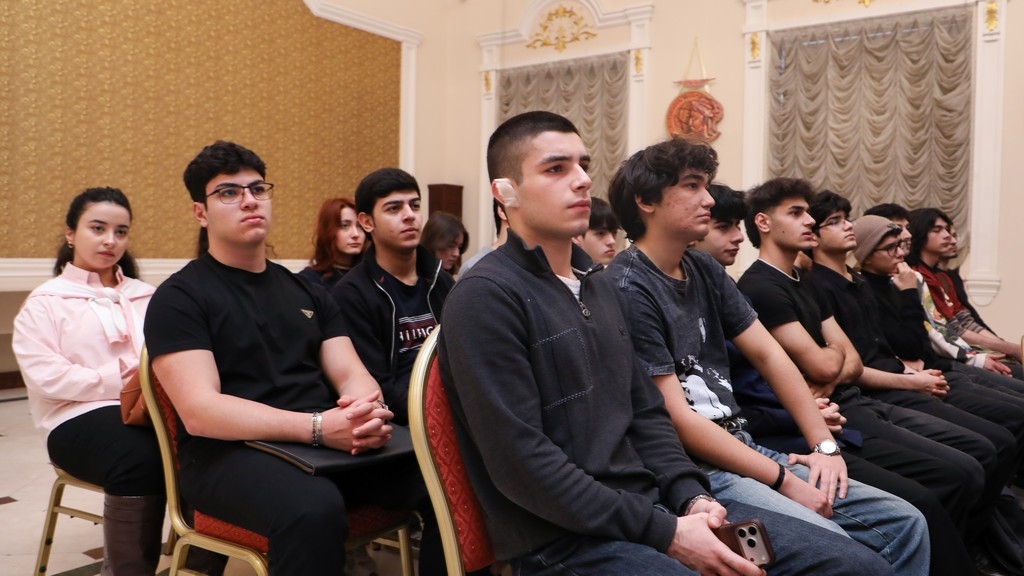
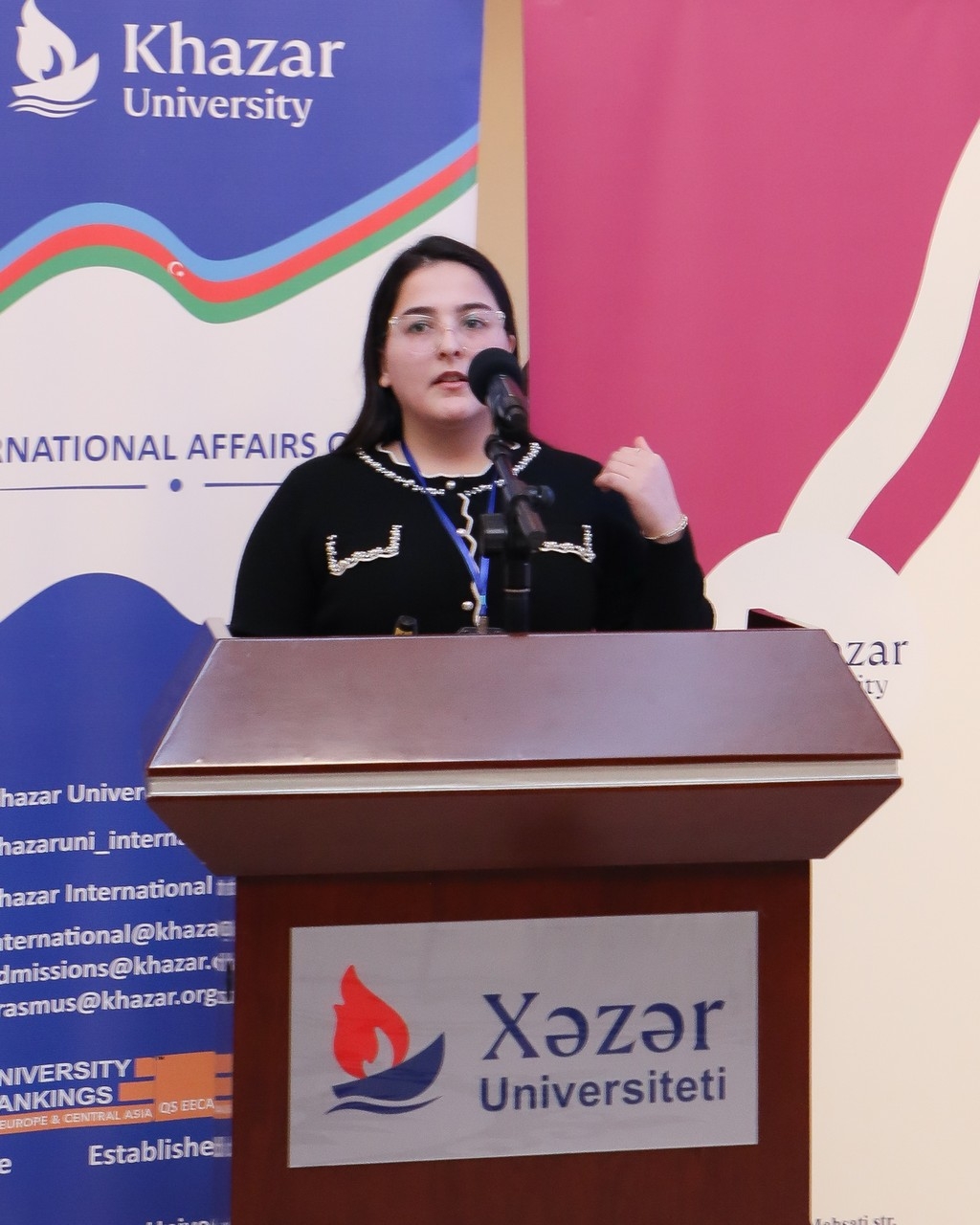
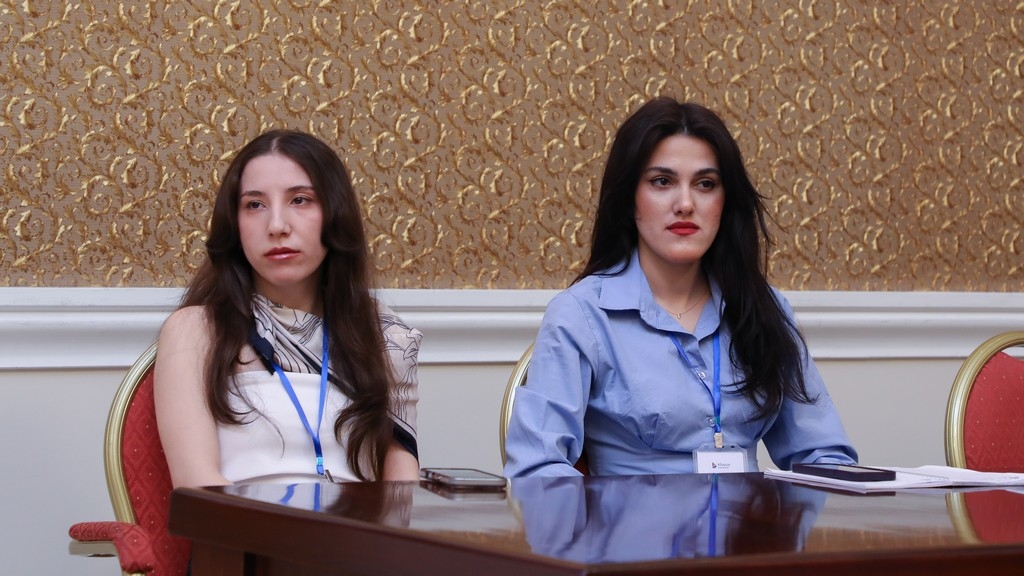
Khazar University's International Relations Office organized an information session on February 17, 2026, in the Marble Hall. The session was attended by local and international students from all faculties, as well as faculty coordinators. The main purpose of the session was for office staff to inform students on key administrative, immigration and security matters related to their studies and residence in the Republic of Azerbaijan, as well as on exchange programs.
The first session opened with a detailed presentation about the university. Participants were provided with comprehensive information about Khazar, its mission and academic environment, the faculties operating within the university, research centers, laboratories and other academic units, as well as campus facilities, dormitories, student services and available infrastructure.
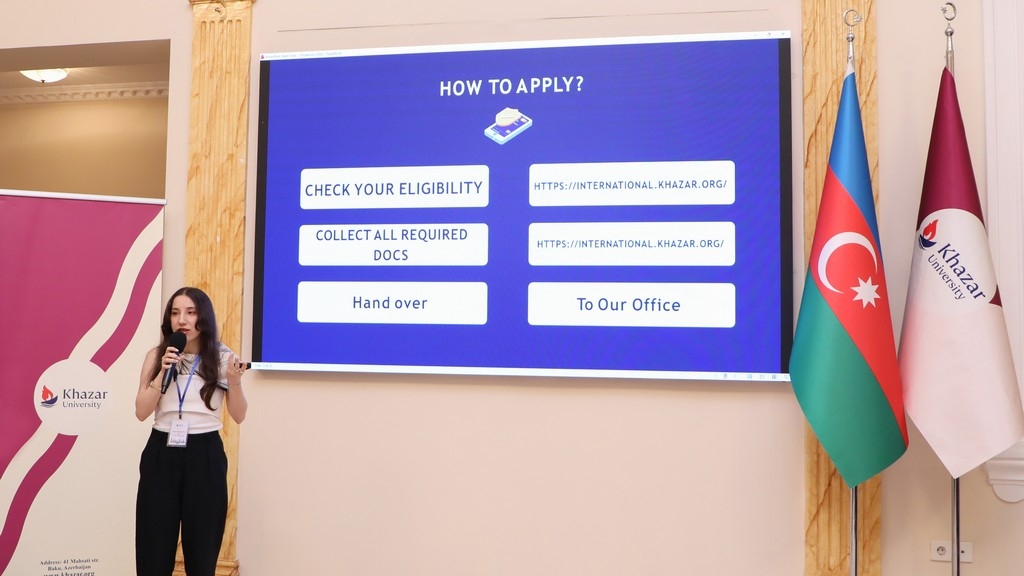
Special attention was devoted to the role of the International Relations Office and the support services it provides to local and international students, including guidance on documentation, mobility opportunities and administrative support. In addition, university admission procedures were explained, covering required documents, application stages and eligibility criteria.
The second part of the session addressed regulations regarding migration procedures. These included registration requirements, temporary residence permits, visa-related matters, extension and amendment procedures, required documents, deadlines and students' obligations. Participants were also informed about residential registration and relevant regulations, including those pertaining to the Agency for Quality Assurance in Education (AQAE).
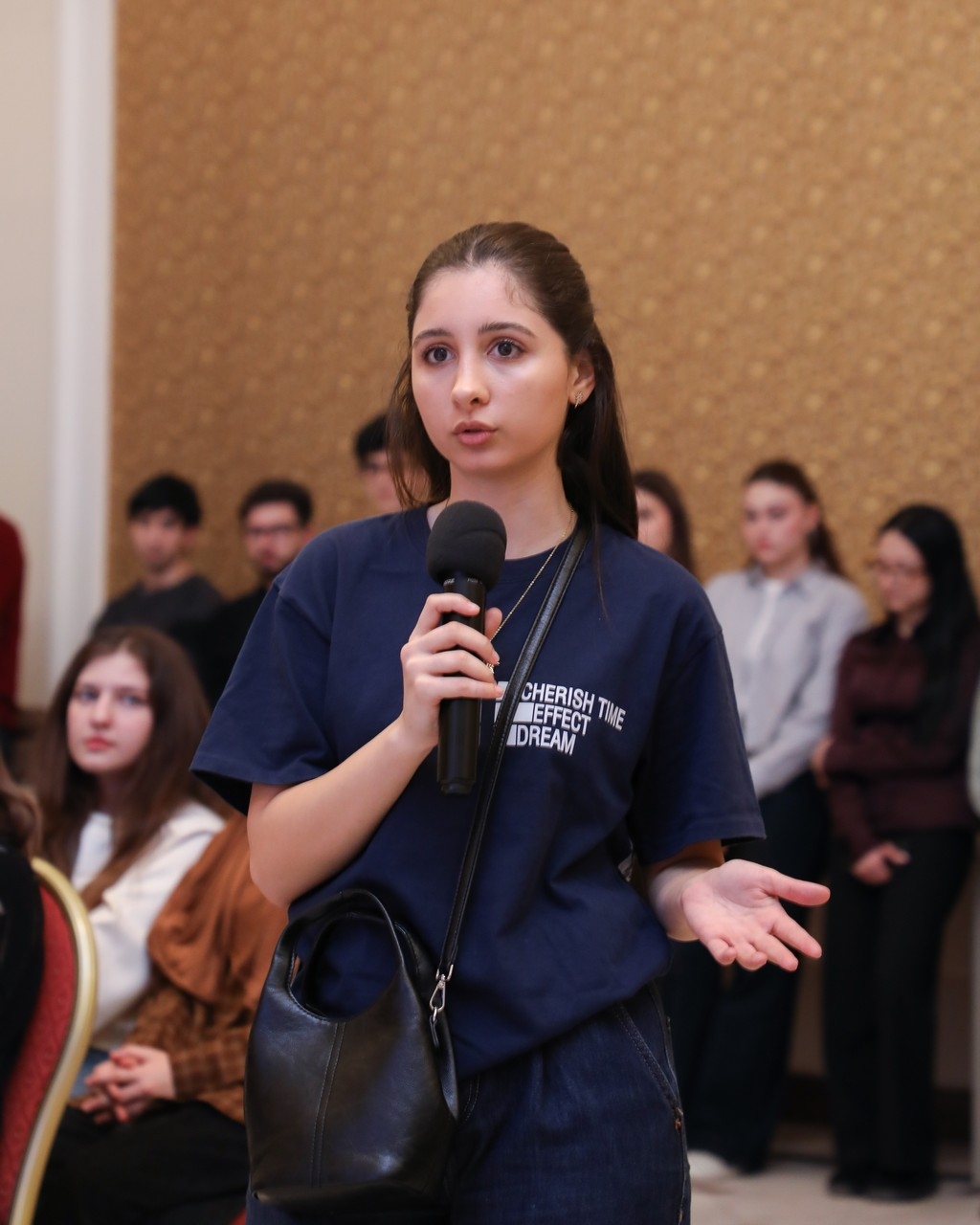
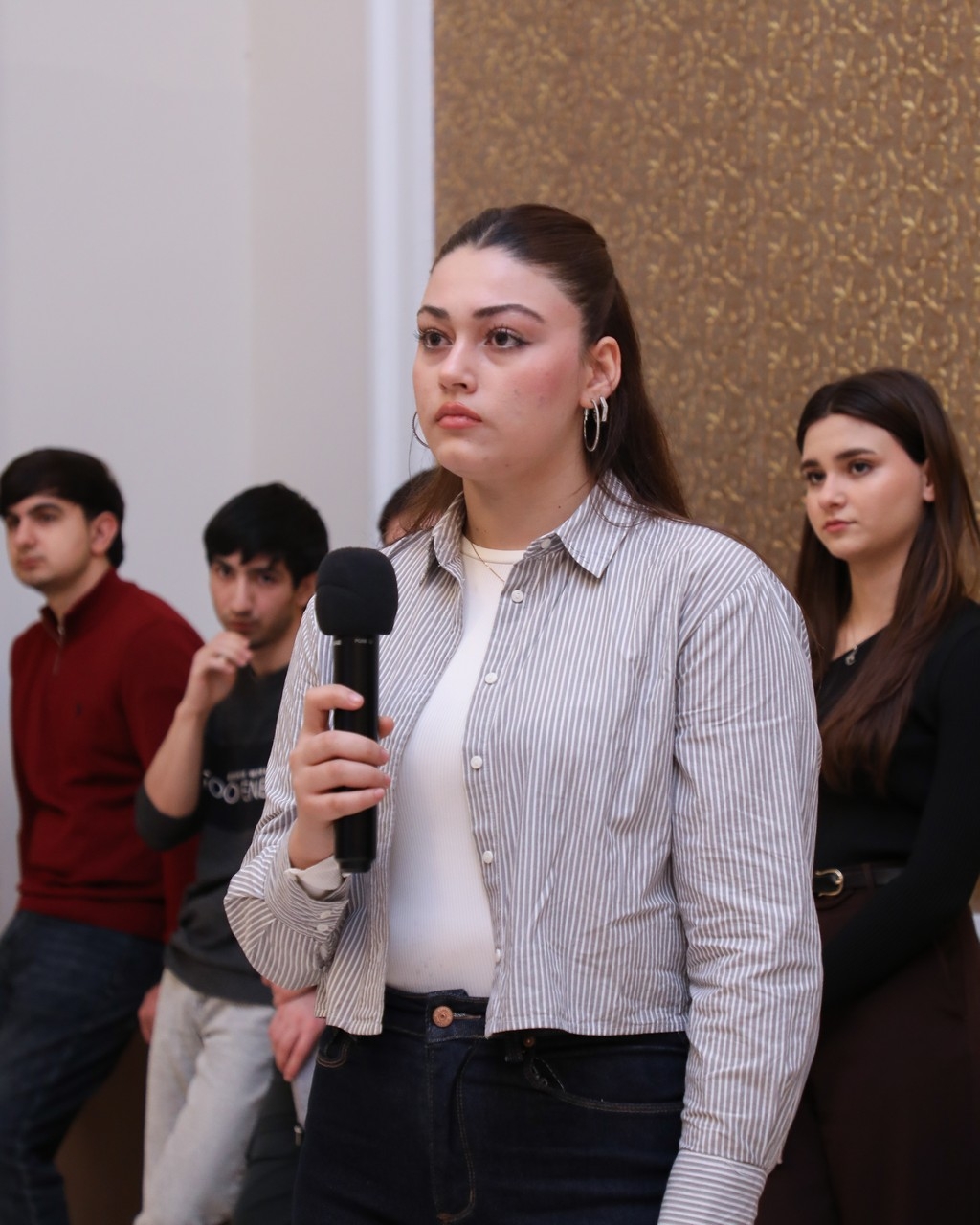
The final session was dedicated to international mobility opportunities. Information was presented on Erasmus+ exchange programs, bilateral cooperation agreements, and double degree, academic and internship mobility options available at the university, as well as partner universities, application requirements, selection criteria and the general mobility process. The session concluded with an interactive question-and-answer segment.
The information session served as an important platform for strengthening communication within the university community, raising awareness and ensuring transparency.



Copyright © Khazar University, 2026

 Facebook
  Instagram
  X
X  LinkedIn
  Telegram
  YouTube