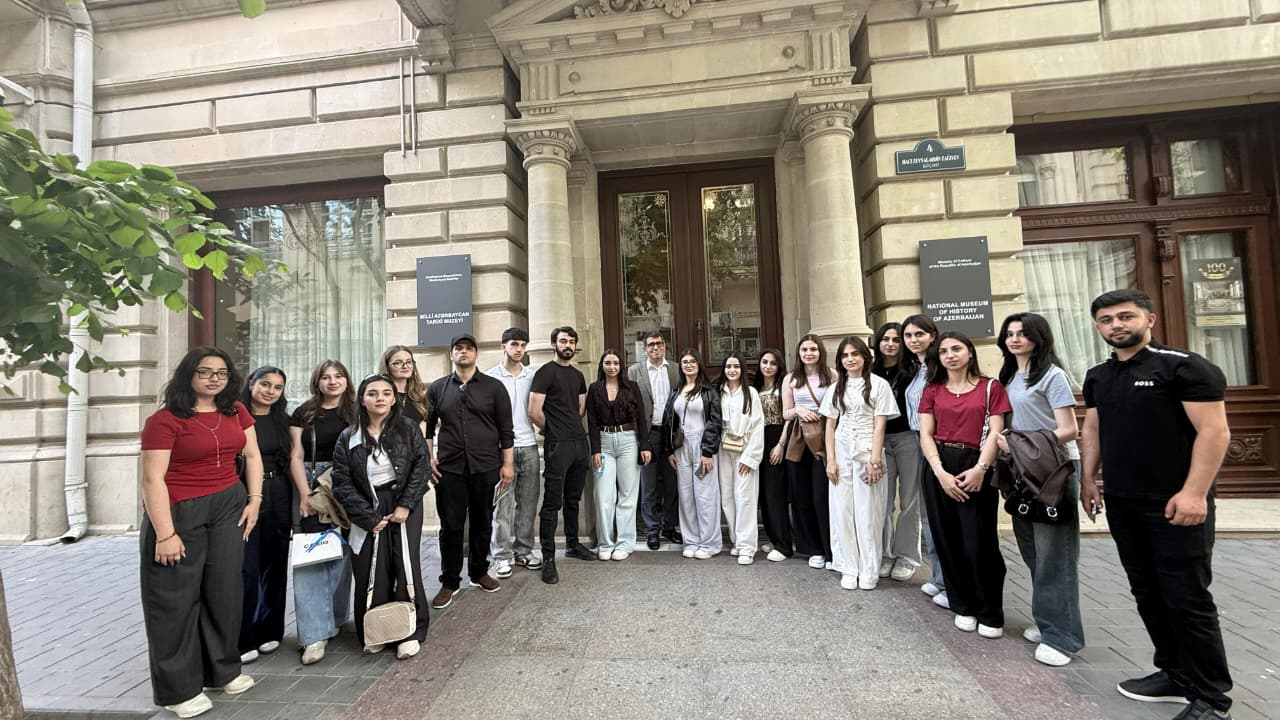
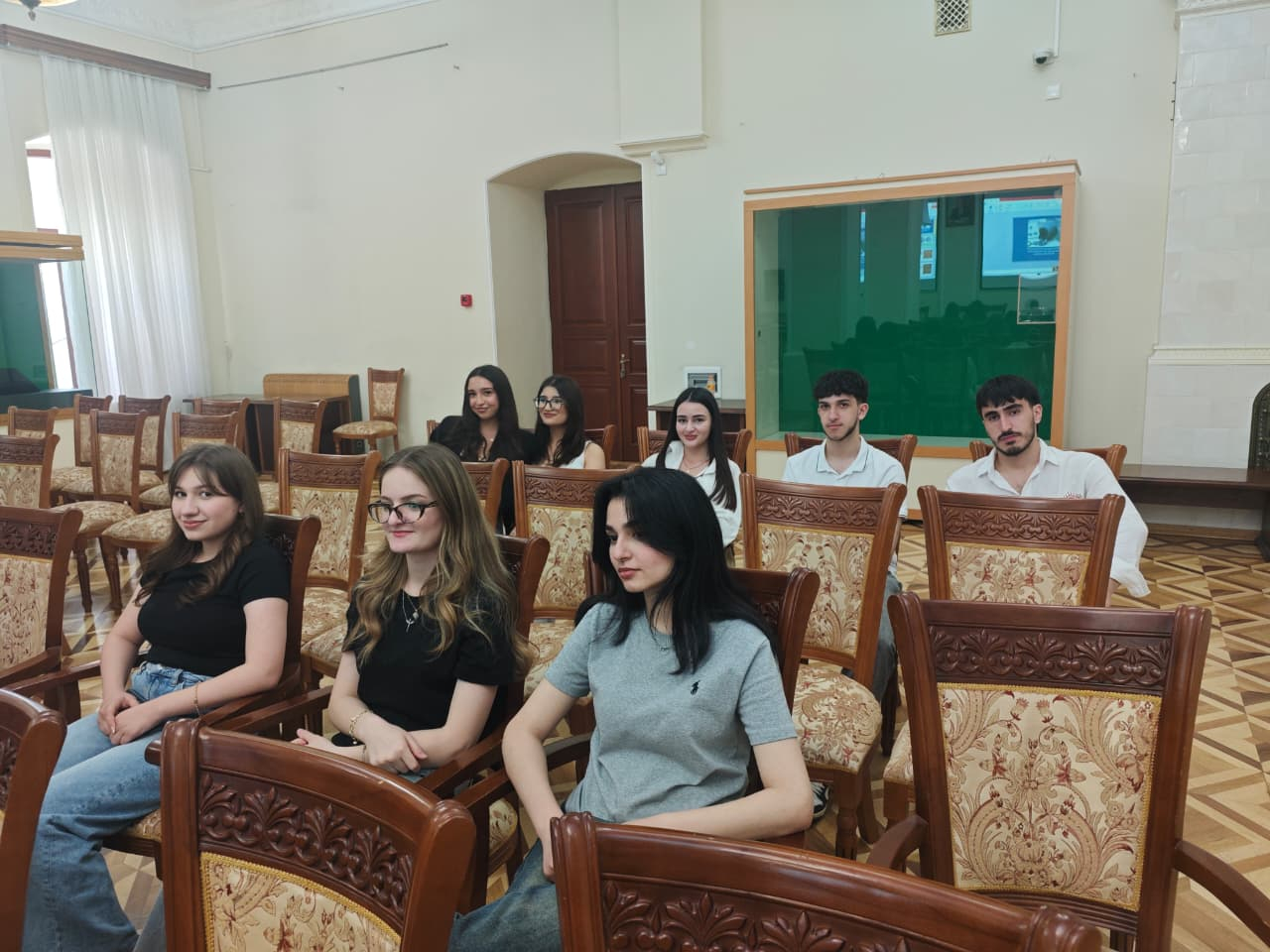
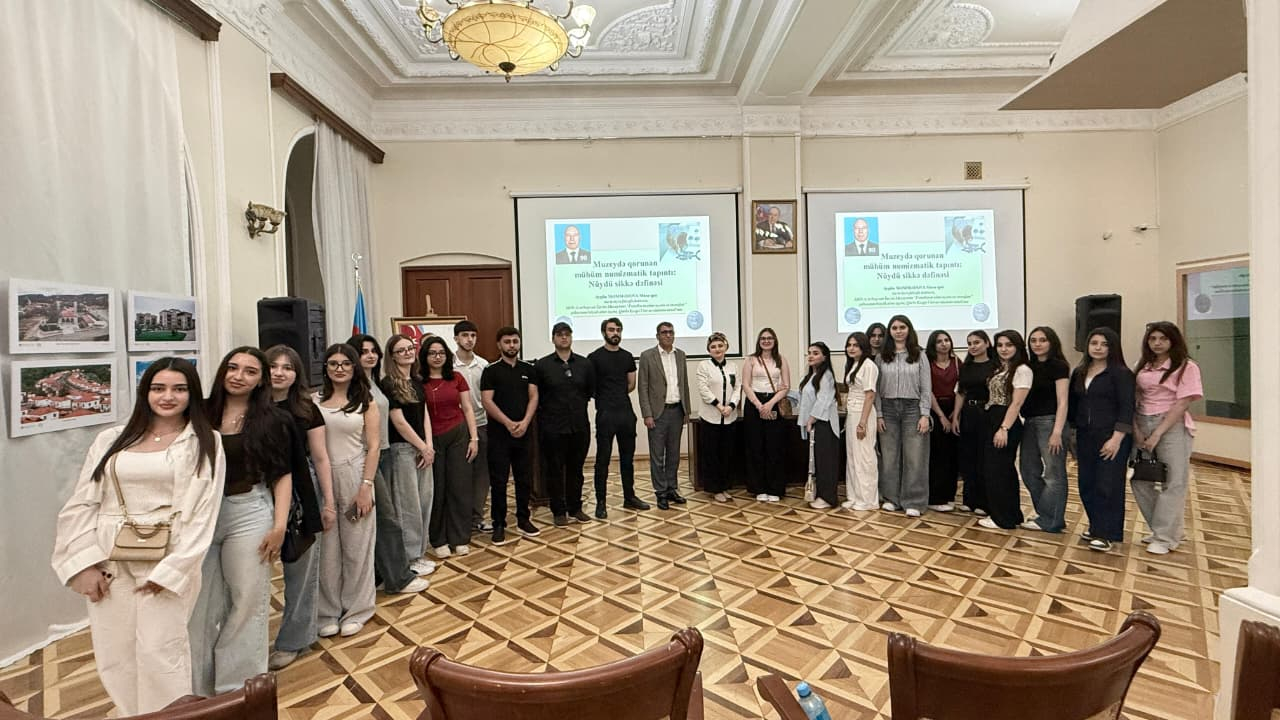
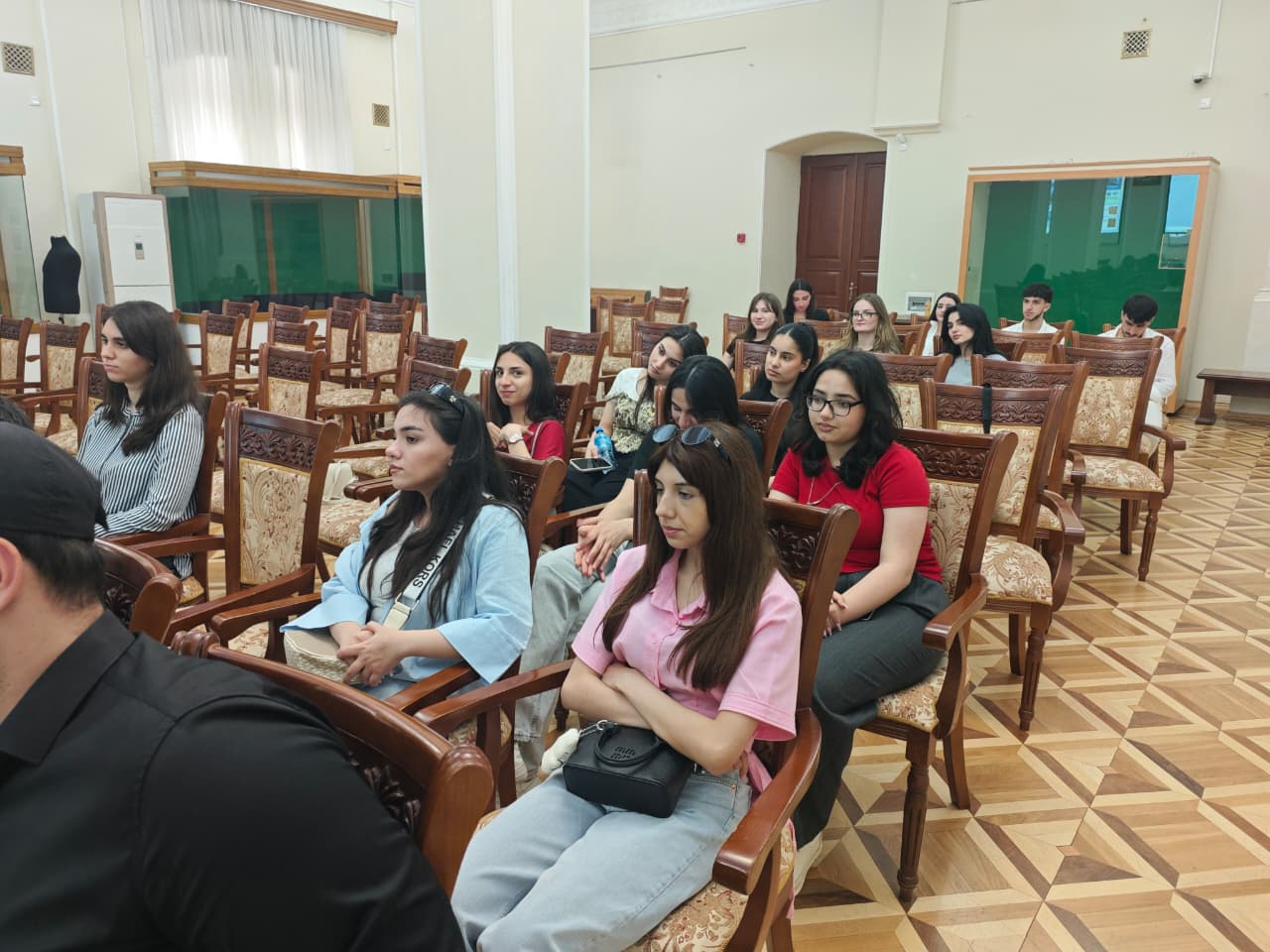
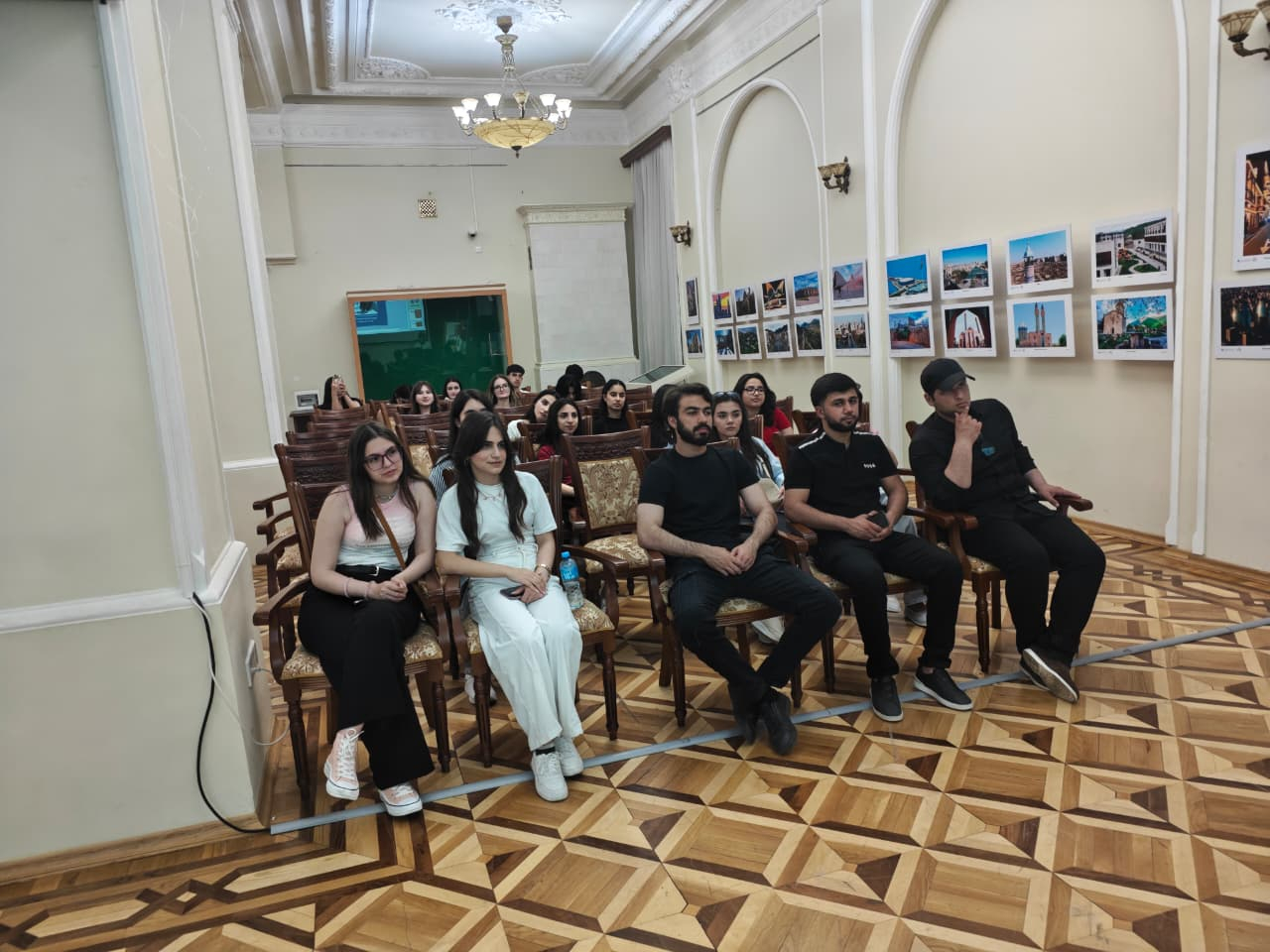
Under the supervision of Dr. Yagub Mammadov, Leading Research Fellow at the Institute of Archaeology and Anthropology of ANAS and lecturer at the History and Archaeology Department of Khazar University, first-year students of the History Teaching specialisation at the School of Humanities, Education and Social Sciences attended a scientific seminar titled "The Nüydü Coin Hoard Preserved in the Museum and Contemporary Numismatic Findings" at the National Museum of Azerbaijan History on May 15, 2026.
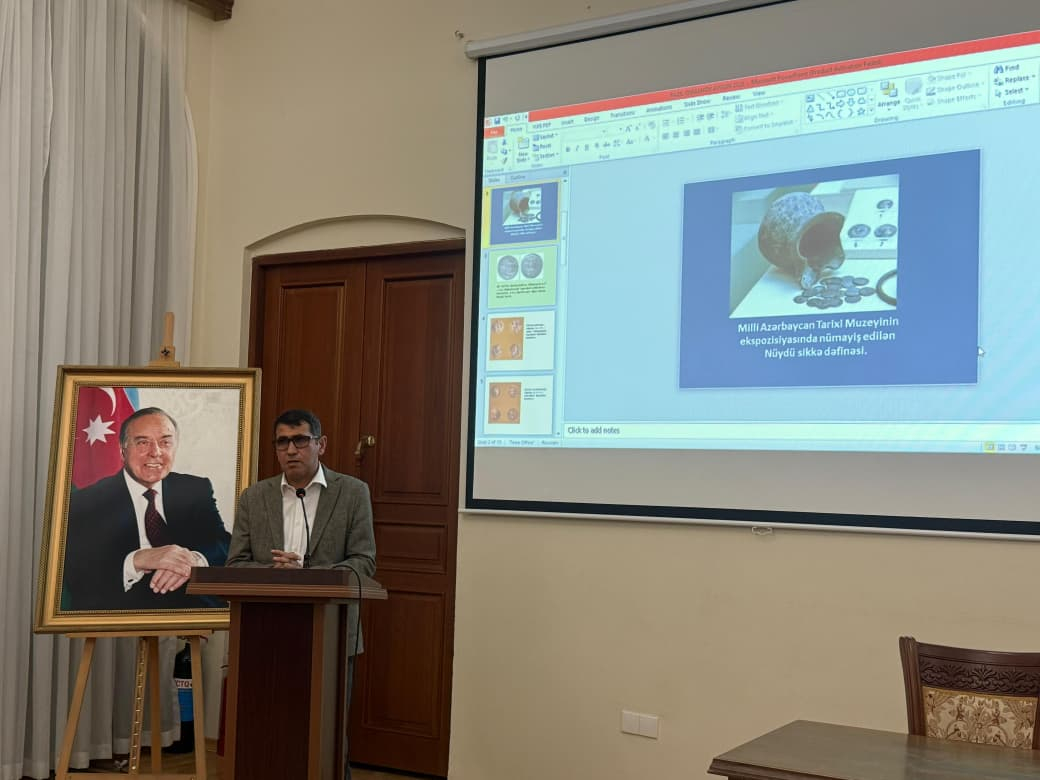
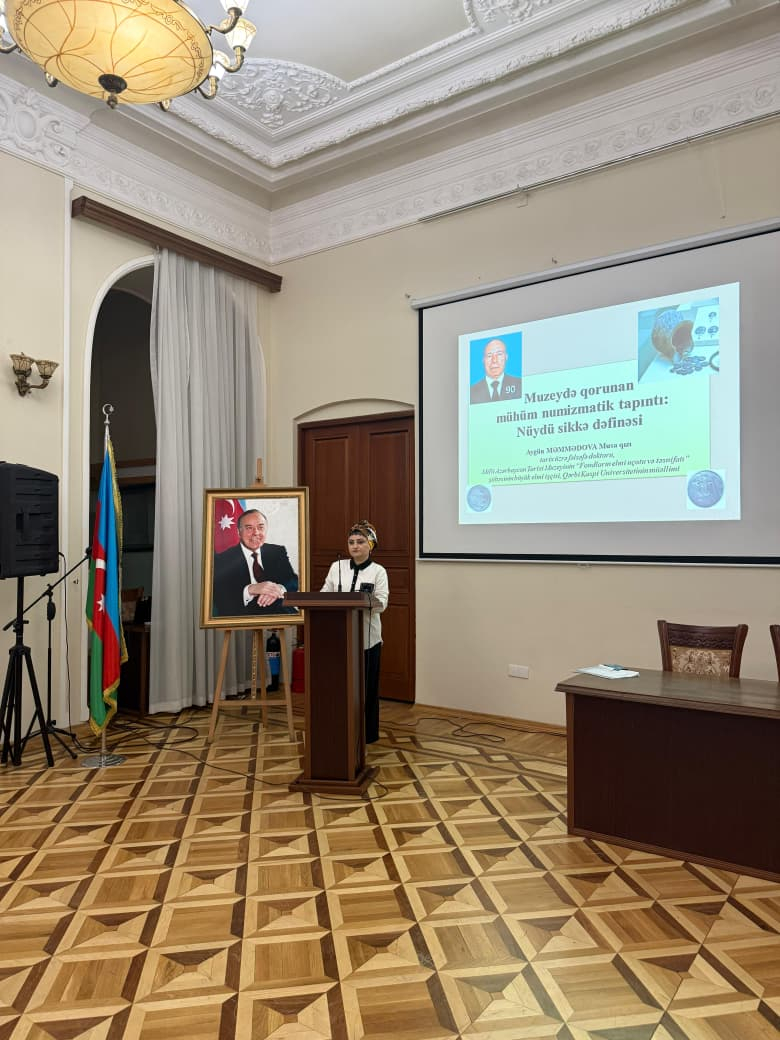
Dr. Aygun Mammadova, Senior Research Fellow of the "Scientific Registration and Classification of Funds" Department, delivered a presentation providing detailed information on the Nüydü coin hoard (2nd–1st centuries BC) displayed in the museum's exposition, the monetary economy of Caucasian Albania, and its foreign trade relations. She also outlined the contemporary numismatic findings obtained through the scientific study of the hoard, noting that the coins constitute a significant source for examining the economic life, trade routes, and cultural connections of the period. The presentation further highlighted facts reflecting the economic and political standing of Caucasian Albania in the region, the geographic distribution of the coins, and a comparative analysis with the monetary units of other ancient states.
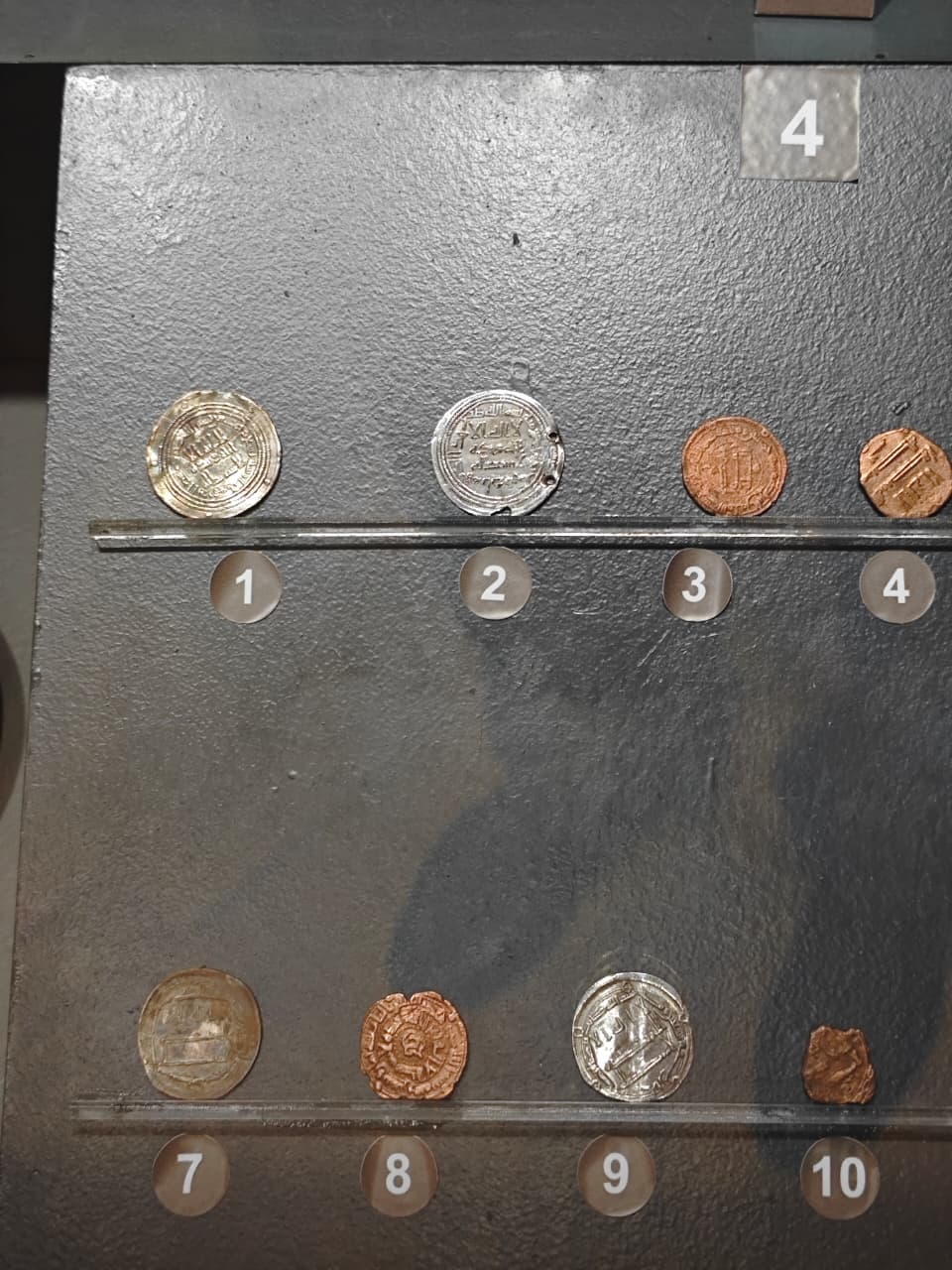
An electronic presentation prepared in connection with the lecture featured photographs of the coins from this hoard held in the Numismatics Fund, along with images of their various types.
Concluding the seminar, Dr. Mammadov underscored the significance of archaeological and numismatic finds of the period in education, stating that such materials play an important role in shaping students' scientific outlook. He stressed the importance of preserving cultural heritage and promoting it on an international scale through substantiated scholarly evidence.
Dr. Mammadov expressed his gratitude to the leadership of the National Museum of Azerbaijan History and to numismatist Dr. Mammadova for organising the seminar, and emphasised the necessity of holding such events on a regular basis and establishing them as a tradition.
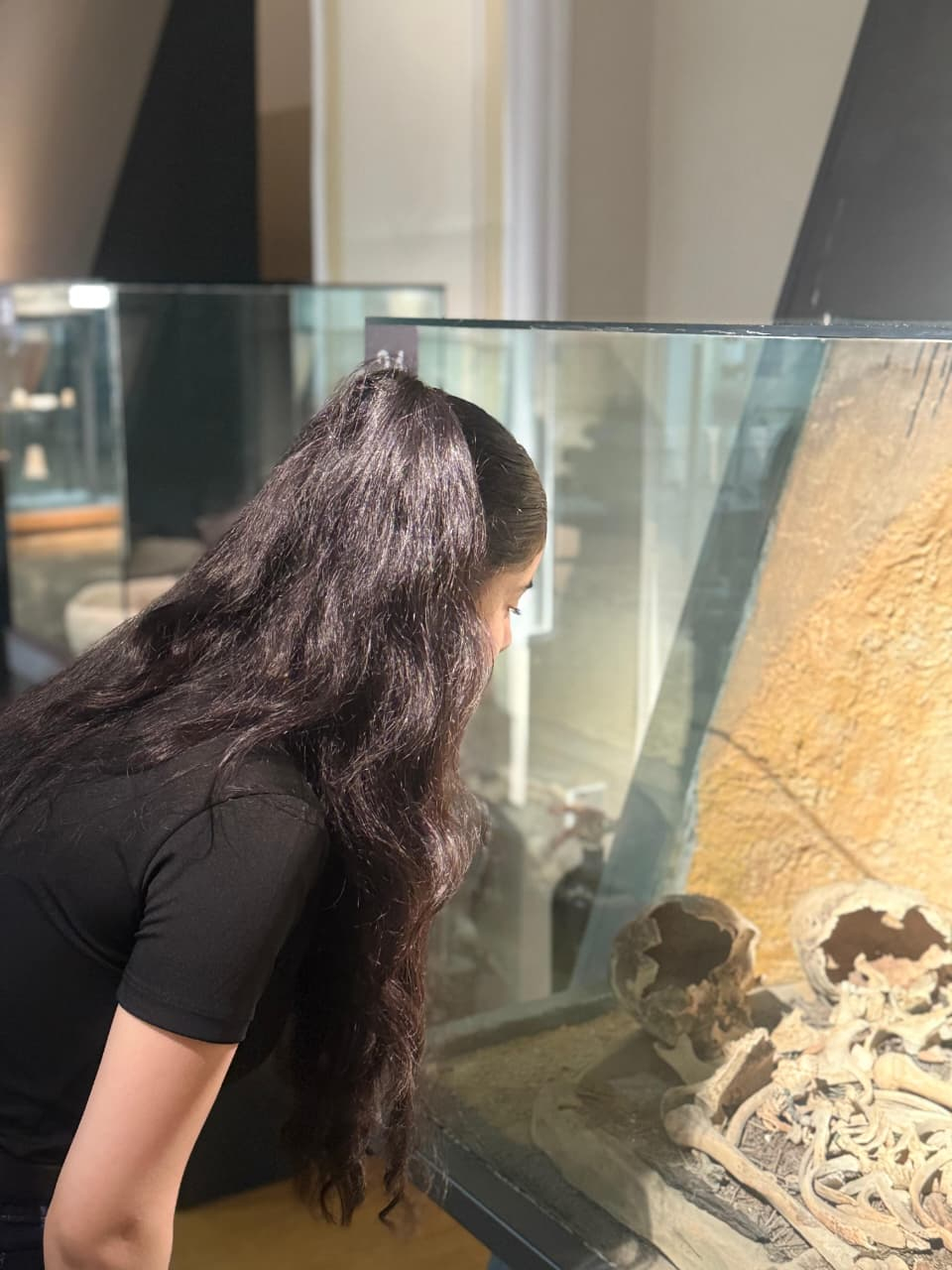
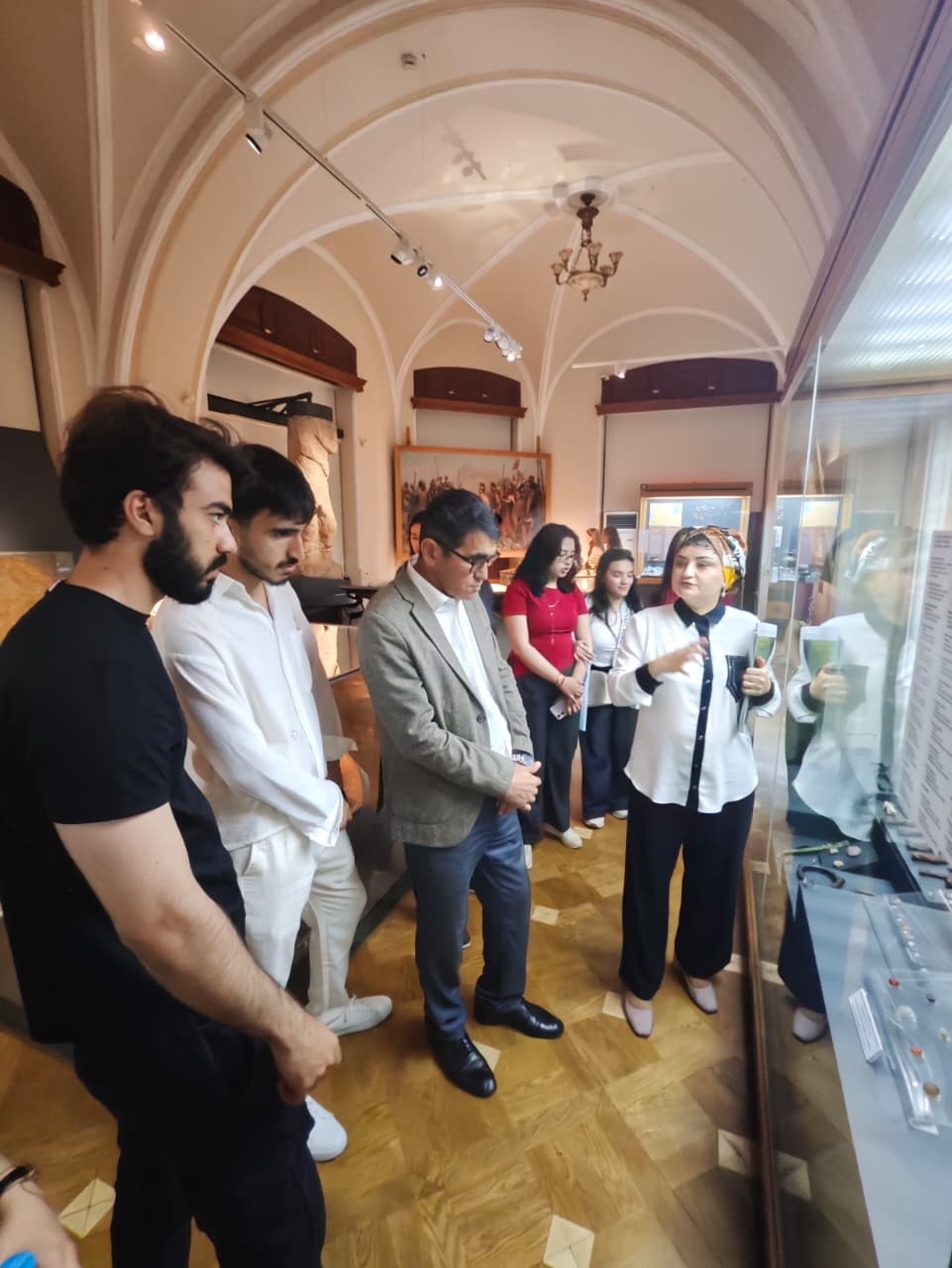
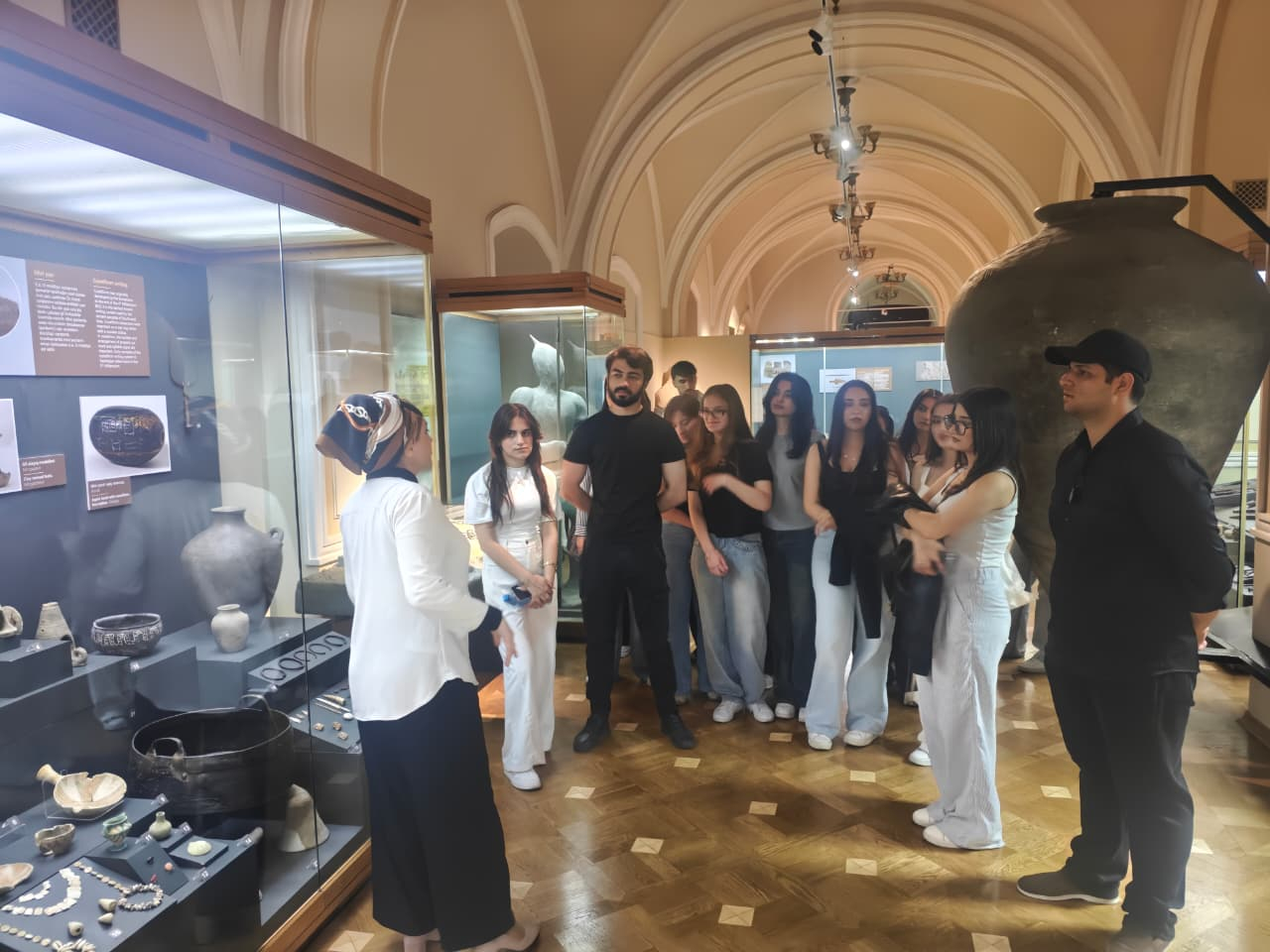
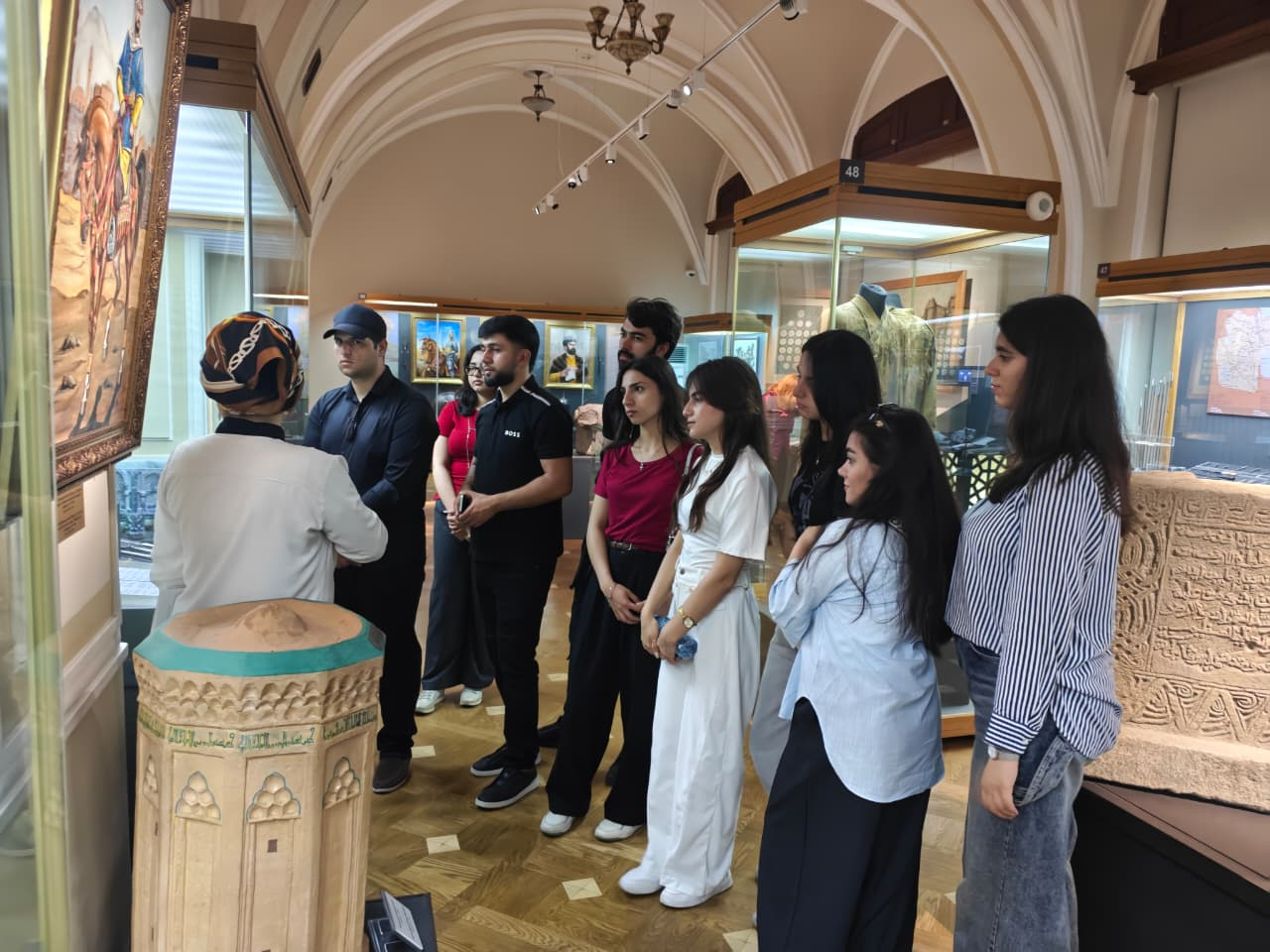
At the conclusion of the visit, students familiarised themselves with the museum's rich exposition. Dr. Mammadova provided students with a direct visual presentation of the coin specimens discussed in her lecture and elaborated on their various typological characteristics.
Students also received information on the chronological classification of coins displayed in the exposition, the monetary circulation of Caucasian Albania, and scientific findings related to its trade connections. Dr. Mammadova additionally responded to students' questions, addressing the methods of numismatic research, the significance of studying coins within their archaeological context, and contemporary scholarly approaches.
It should be noted that familiarisation with museums serves to consolidate students' theoretical knowledge.


Copyright © Khazar University, 2026

 Facebook
  Instagram
  X
X  LinkedIn
  Telegram
  YouTube