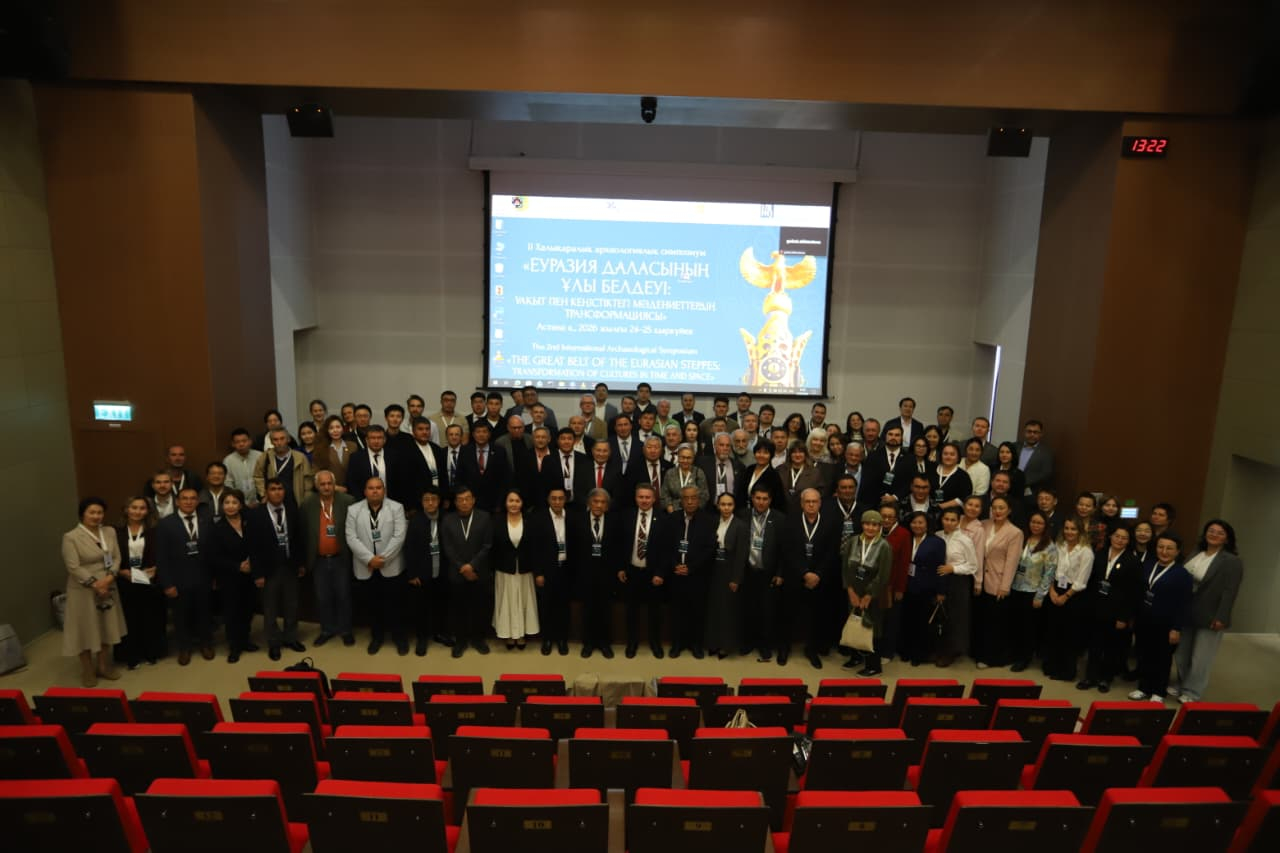
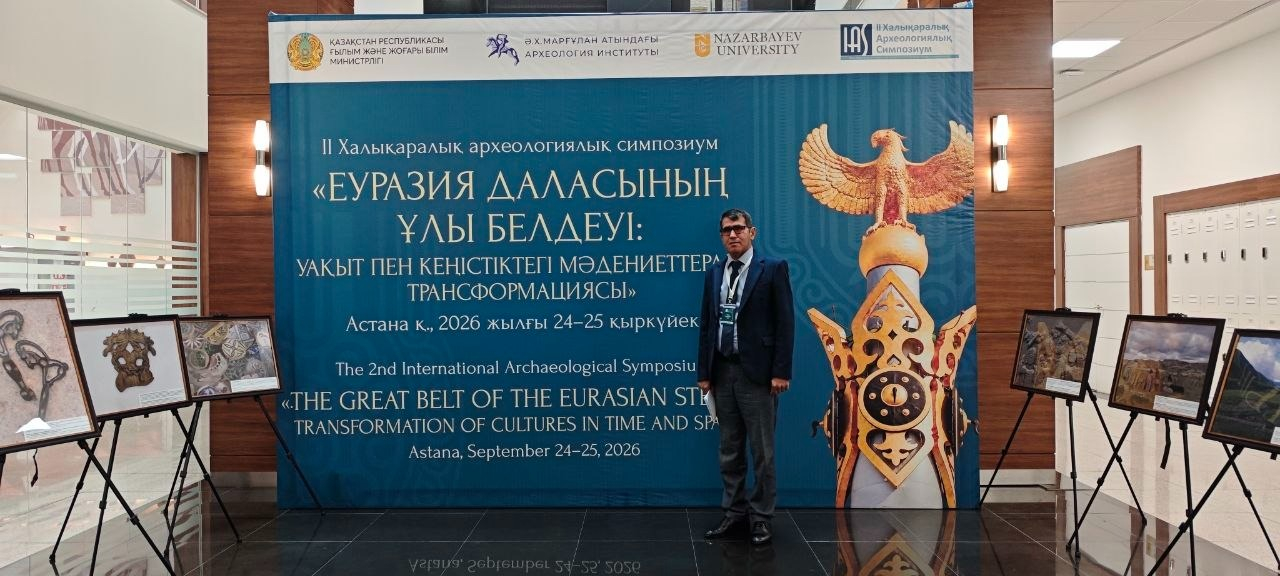
The 2nd International Archaeological Symposium, titled "The Great Steppe Belt of Eurasia: Transformation of Cultures through Time and Space," was held on September 24–25, 2026, at Nazarbayev University in Astana, the capital of the Republic of Kazakhstan, organized by the A. Kh. Margulan Institute of Archaeology jointly with Nazarbayev University, with the support of the Science Committee of the Ministry of Science and Higher Education of the Republic of Kazakhstan. The event was dedicated to the 35th anniversary of the Institute of Archaeology.
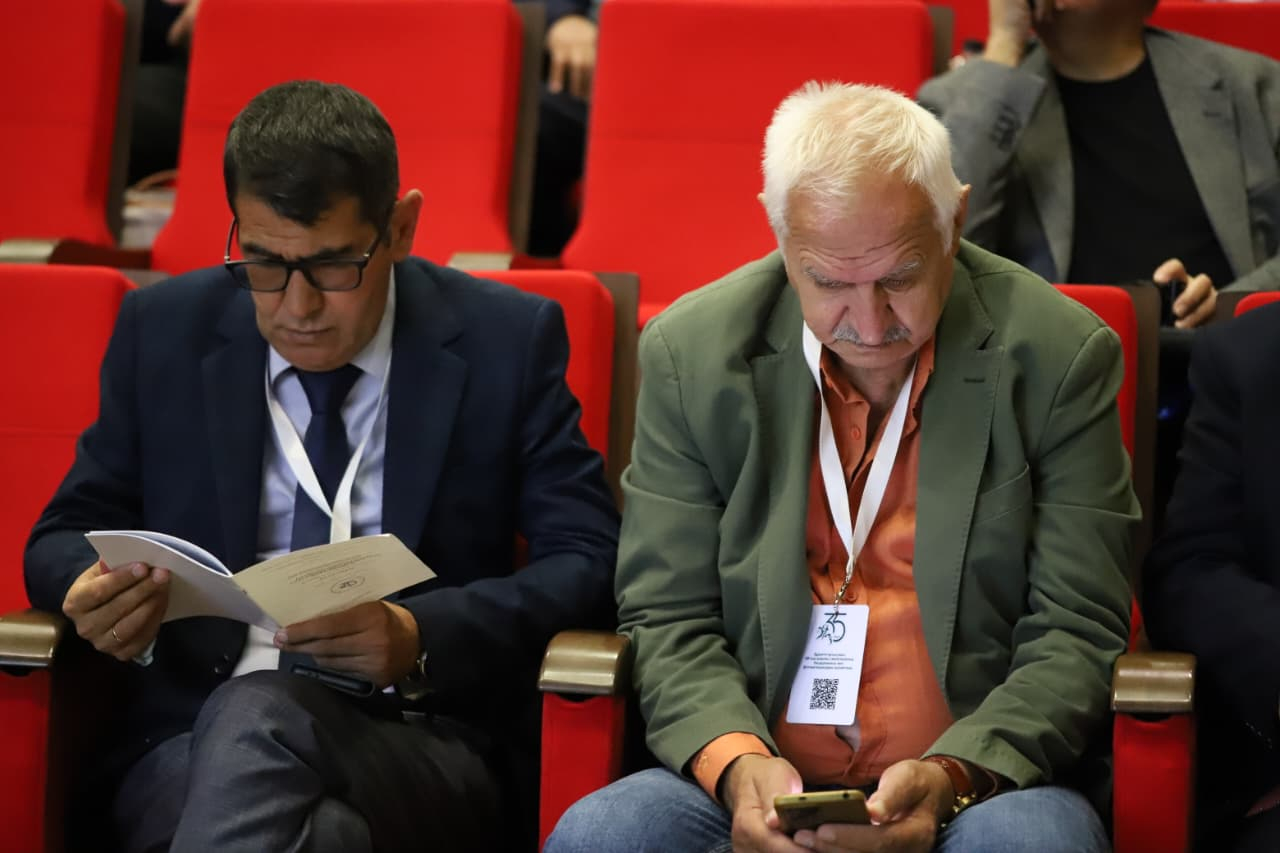
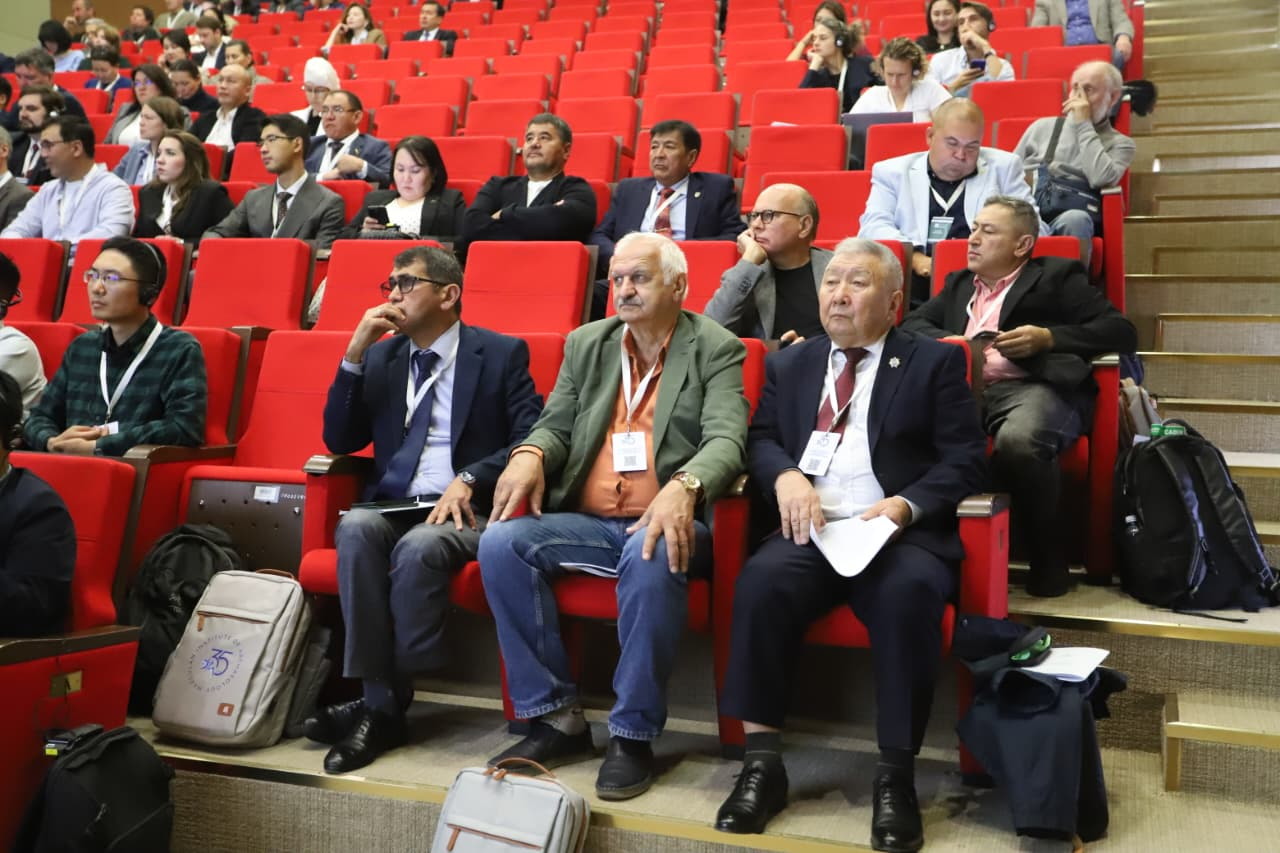
The symposium was attended by more than 150 researchers from Kazakhstan, Azerbaijan, Uzbekistan, Kyrgyzstan, Russia, China, Germany, France, Israel, the USA, the United Kingdom, and other countries. The event was organized in the format of a plenary session and four thematic panel sessions: "Caves as Stone Age Archaeological Archives of Eurasia," "Ancient Metallurgy and Global Connections," "The Phenomenon of Steppe Civilization: Power, Society and Cultural Transformation," and "Current Issues in the Archaeology of Medieval Kazakhstan."
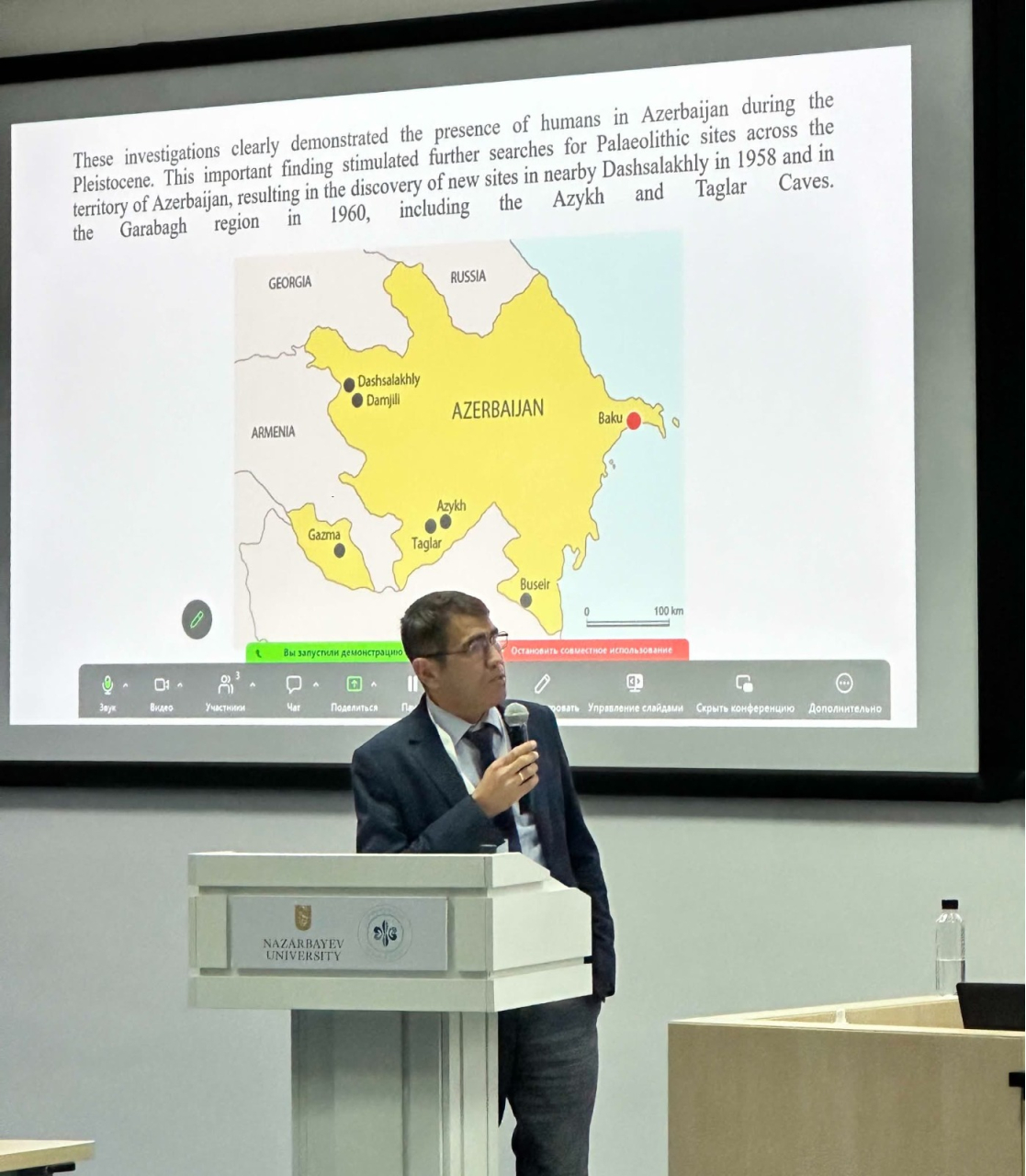
The presentation delivered by Dr. Yagub Mammadov, Leading Researcher at the Institute of Archaeology and Anthropology of ANAS and instructor at Khazar University's Department of History and Archaeology, at the first panel, "Caves as Stone Age Archaeological Archives of Eurasia," was dedicated to the research he conducted at Damjili Cave as part of the Azerbaijani-Japanese joint international archaeological expedition in 2016–2019 and 2022–2023. In the presentation, titled "Damjili Cave: A Unique Stone Age Monument in the South Caucasus," Y. Mammadov (co-authors: Y.V. Mammadov, Y. Nishiaki, A.A. Zeynalov, and U.R. Safarova) highlighted the unique opportunities offered by Damjili Cave — the first Paleolithic monument recorded and studied in Azerbaijan — not only for studying the aforementioned period, but also for examining the Mesolithic–Neolithic transition in the South Caucasus region, the shift from a consumption-based to a production-based economy, and the socio-cultural ties between these two groups.
It should be noted that, in addition to participating in the Azerbaijani-Japanese joint international archaeological research conducted at Damjili Cave in 2016–2019, Dr. Yagub Mammadov led this research in 2022–2023. He is also one of the editors of the book "Damjili Cave: Investigating the Late Pleistocene to Holocene Human History in the Southern Caucasus," which reflects the results of the research conducted at Damjili Cave and was published in 2025 by "Oxbow Books," a publishing house specializing in the publication of scientific literature on archaeological research worldwide.
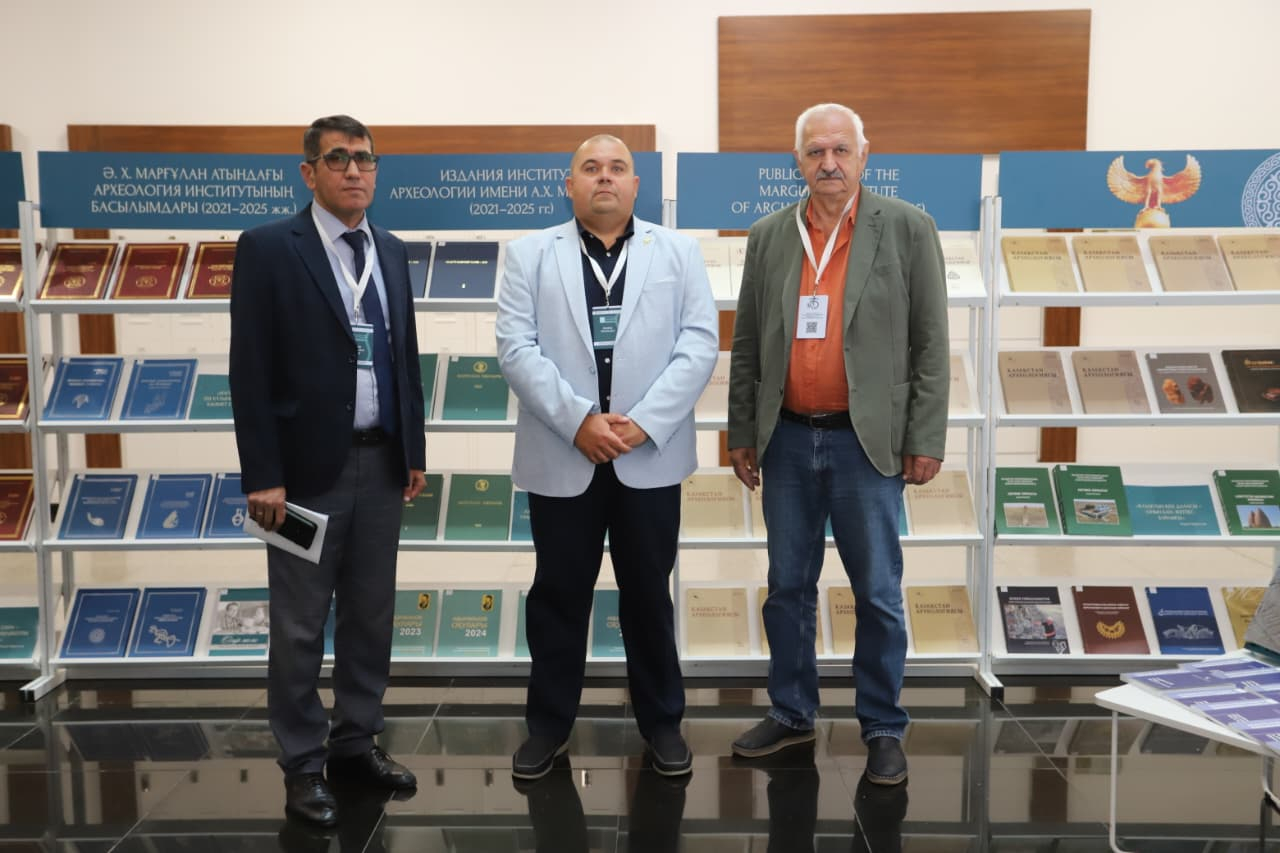
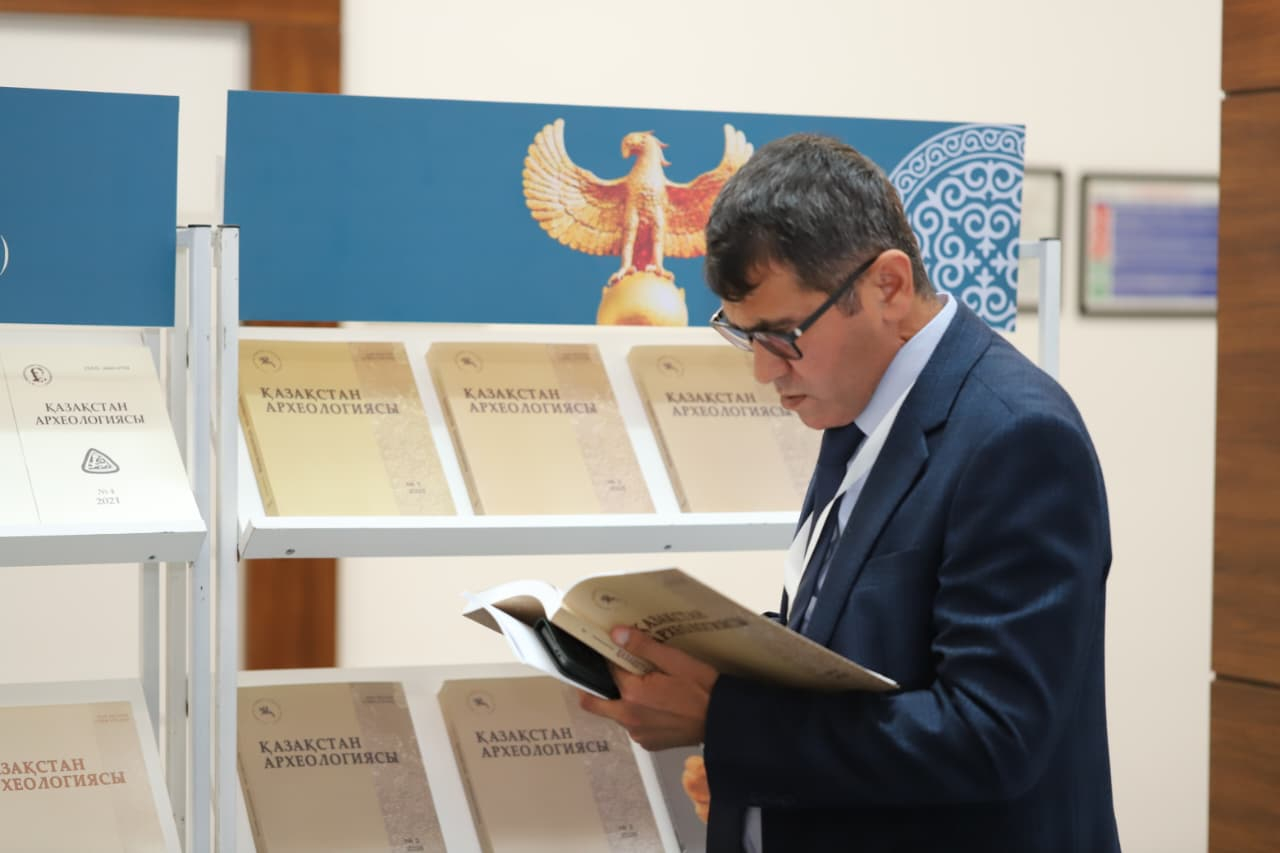
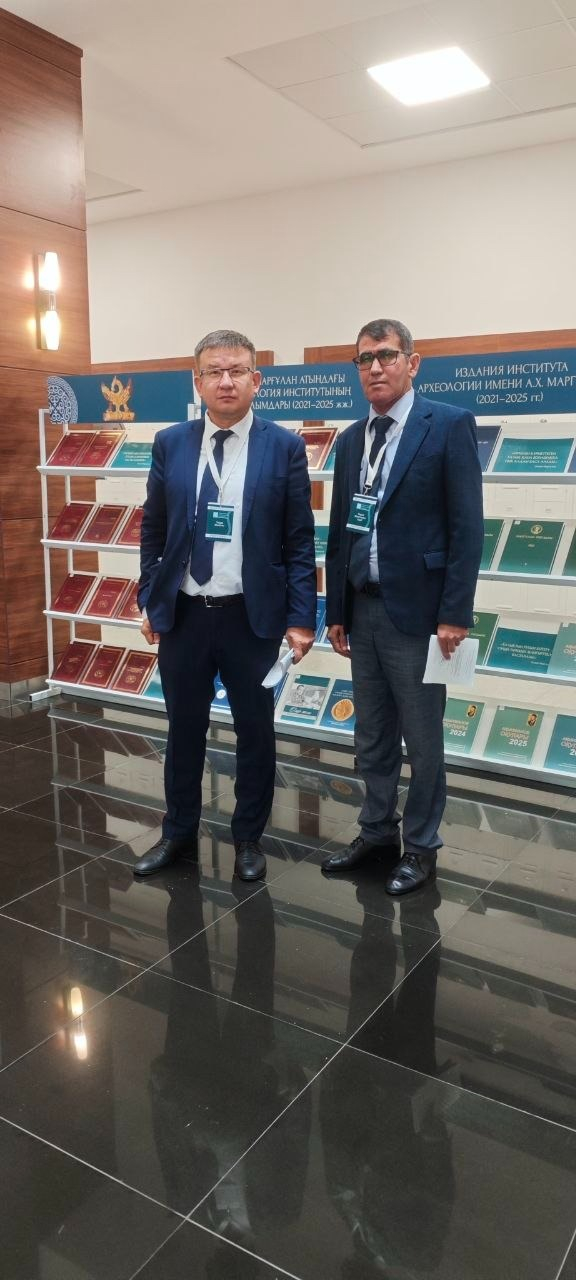
A book exhibition titled "Publications of the A. Kh. Margulan Institute of Archaeology (2021–2025)" and a photo exhibition titled "In Dialogue with Time" were also organized as part of the symposium.
It should be noted that it was decided to hold the 3rd International Archaeological Symposium in 2029. During the discussions held, the proposal put forward by the Azerbaijani delegation to name the first section, which will be dedicated to the Paleolithic period, "Processes of Human Migration and Adaptation in Prehistoric Times" was unanimously adopted.
After the main part of the conference concluded, an excursion was organized for conference participants to the Center of the First President of the Republic of Kazakhstan and the National Museum of the Republic of Kazakhstan. These excursions gave participants the opportunity to become closely acquainted with the stages of formation of modern Kazakh statehood and the country's political and cultural history. The archaeological and ethnographic exhibits displayed at the National Museum took on special significance, being directly linked to the symposium's theme in terms of studying the ancient civilizations of Eurasia.


Copyright © Khazar University, 2026

 Facebook
  Instagram
  X
X  LinkedIn
  Telegram
  YouTube