Dr. Gloria Shkurti Özdemir, Director of the Emerging Technologies and Artificial Intelligence (ETAI) Research Center at Khazar University, participated in a program on Pakistan TV dedicated to the evolving relationship between Türkiye and Pakistan.
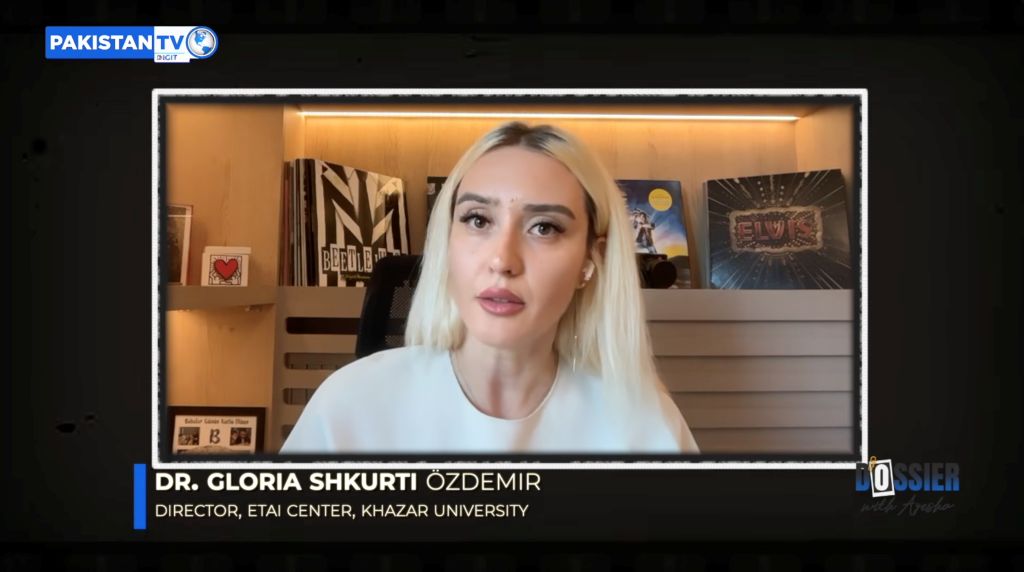
During the discussion, Dr. Shkurti Özdemir examined the historical foundations and contemporary dynamics of Türkiye–Pakistan relations, with particular attention to the growing strategic and defense partnership between the two countries. She highlighted how cooperation has gradually expanded from traditional political and diplomatic ties toward more institutionalized collaboration in the defense and technology sectors.
The discussion also addressed the role of emerging and advanced technologies in strengthening bilateral cooperation, including developments in unmanned aerial systems, naval platforms, and next-generation defense projects. Dr. Shkurti Özdemir emphasized that these areas increasingly constitute an important dimension of the broader strategic relationship between Türkiye and Pakistan.
ETAI Center’s Director Interviewed by AnewZ on AI and Warfare
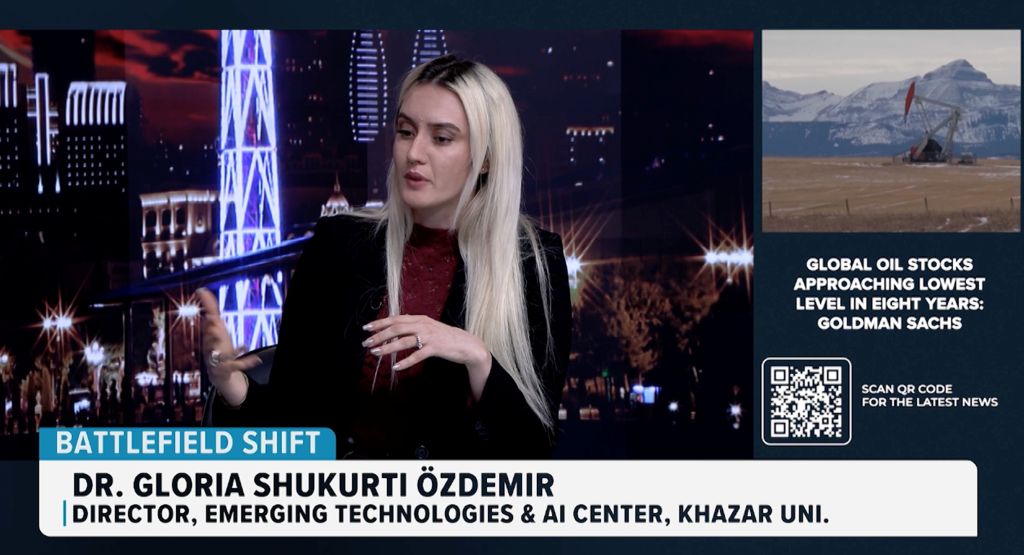
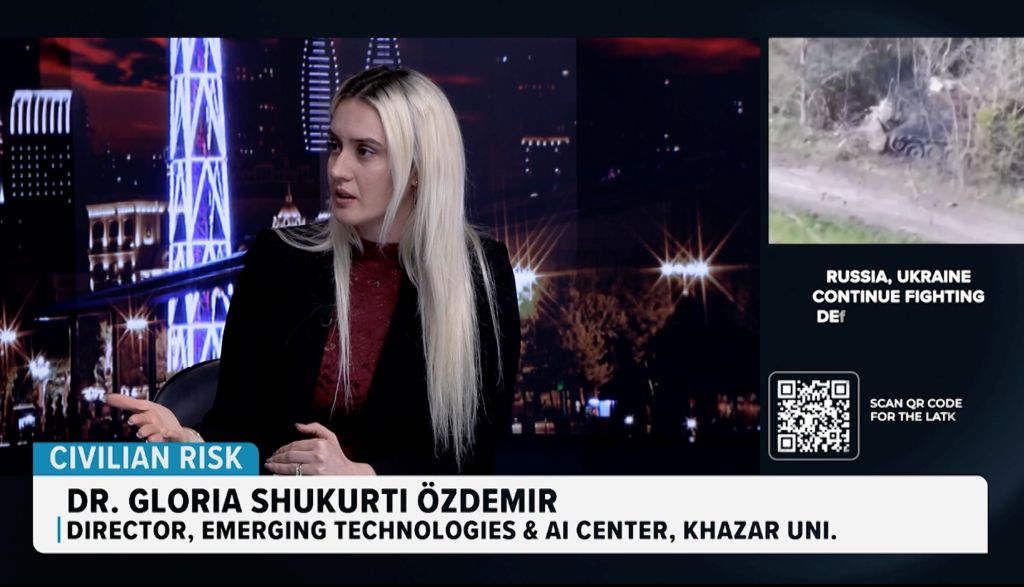
On Prime Time on AnewZ, Guy Shone spoke to Dr. Gloria Shkurti Özdemir, Director of ETAI Research Center at Khazar University,about one of the most disturbing shifts in modern war: artificial intelligence moving closer to the battlefield decision-making process. Her warning was blunt. AI is no longer just about better intelligence or faster strikes. It can now compress the entire kill chain, from gathering data, to analyzing targets to suggesting weapons and even helping justify policy. The most chilling point was automation bias. Commanders may have only seconds to accept or reject an algorithm’s recommendation. In that moment, trust in the machine can become a battlefield instinct. Dr. Shkurti Özdemir also said conflicts in Ukraine, Gaza, and Iran are becoming testing grounds for new forms of warfare, where major powers study each other’s systems, tactics, and mistakes. And the civilian question is impossible to ignore. Greater precision does not automatically mean less harm. In future wars, one algorithmic error could carry devastating human consequences.
ETAI Center’s Director Interviewed by Anadolu Ajansı on AI Efficiency and Infrastructure Dynamics
The Center’s Director, Gloria Shkurti Özdemir, was interviewed by Anadolu Ajansı for a feature titled “Google’ın TurboQuant duyurusunun donanım ihtiyacını azaltması beklenmiyor.” In the interview, she provided a critical assessment of recent developments in AI efficiency, emphasizing that advancements such as Google’s TurboQuant algorithm should not be interpreted as reducing overall hardware demand. Instead, she highlighted that such innovations enable more efficient utilization of existing infrastructure, potentially expanding, rather than diminishing, long-term demand for computational resources.
She further underlined that market reactions to AI breakthroughs are often shaped by speculative narratives rather than technical realities, noting the increasing sensitivity of AI markets to perceived paradigm shifts rather than their actual structural implications.
For more, see: https://www.aa.com.tr/tr/bilim-teknoloji/googlein-turboquant-duyurusunun-donanim-ihtiyacini-azaltmasi-beklenmiyor/3886194
ETAI Center’s Director Interviewed by Anadolu Ajansı on Data Centers as Strategic Assets in Modern Warfare
The Center’s Director, Gloria Shkurti Özdemir, was interviewed by Anadolu Ajansı in the article “Veri merkezleri savaş alanlarının yeni stratejik hedefi haline geldi.” In her analysis, she highlighted a structural transformation in contemporary conflict, arguing that digital infrastructure, particularly data centers, has evolved from a tool of geopolitical competition into a direct component of the battlefield.
She emphasized that, much like energy infrastructure in the industrial era, data centers now function as critical nodes of economic and state capacity, making them increasingly strategic targets in conflict scenarios. Özdemir also introduced the concept of data centers as “digital bases,” underscoring their role in projecting technological power and embedding state and corporate systems within global digital networks.
For more, see: https://www.aa.com.tr/tr/ekonomi/veri-merkezleri-savas-alanlarinin-yeni-stratejik-hedefi-haline-geldi/3849257
ETAI Center’s Director Interviewed by Anadolu Ajansı on Digital Infrastructure as a Strategic Target in the Gulf
The Center’s Director, Gloria Shkurti Özdemir, was interviewed by Anadolu Ajans in the article “Körfez’deki 30’dan fazla ABD’li teknoloji tesisi İran’ın hedef listesine girdi.” In her analysis, she examined the growing strategic significance of digital infrastructure in contemporary geopolitical conflicts, emphasizing that major U.S. technology companies operating in the Gulf region are not merely commercial actors but integral components of critical national and regional systems.
She highlighted that cloud infrastructure provided by companies such as Google, Microsoft, Amazon, and others underpins essential sectors including banking, healthcare, energy, and public services. As a result, targeting these infrastructures could trigger systemic disruptions, ranging from financial system failures to interruptions in energy management and public service delivery.
Özdemir further argued that such developments reflect a broader transformation in global conflict dynamics, where attacks on digital infrastructure simultaneously impact economic stability, state capacity, and geopolitical influence, positioning technology ecosystems at the center of strategic competition.
For more, see: https://www.haberler.com/ekonomi/korfez-deki-30-dan-fazla-abd-li-teknoloji-tesisi-19650315-haberi/
ETAI Center’s Director Interviewed by TRT World on AI and Cybersecurity
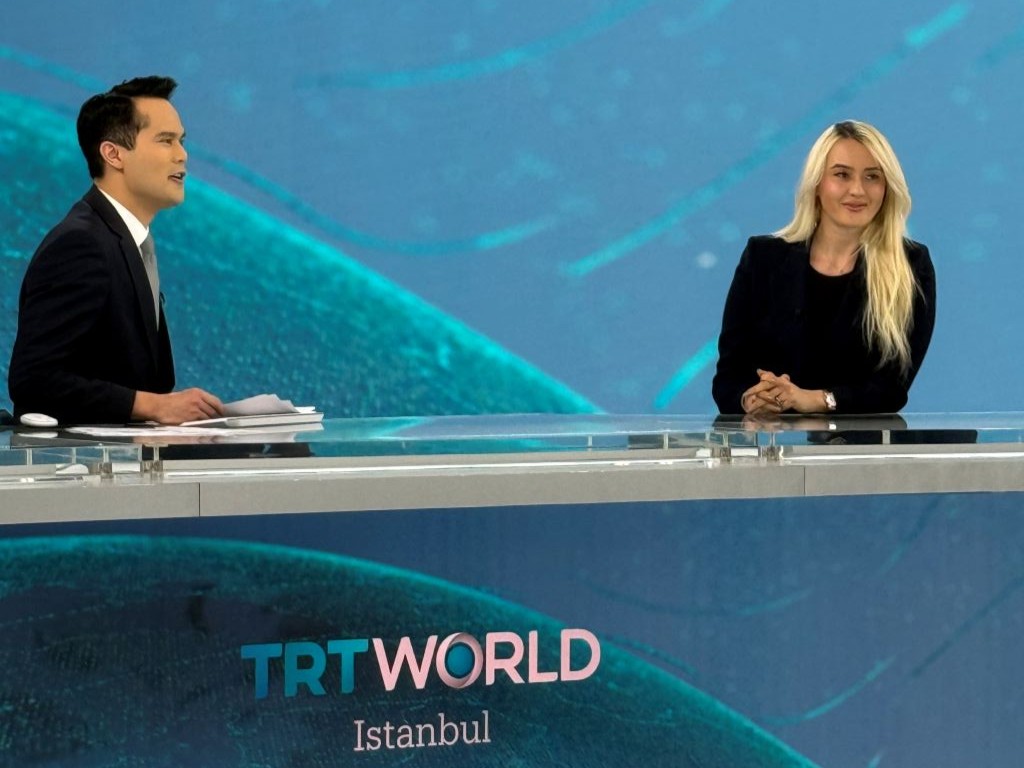
The Center’s Director, Gloria Shkurti Özdemir, was featured in an interview on TRT World, where she discussed the evolving intersection of artificial intelligence and cybersecurity. In the interview, she highlighted how AI is reshaping the threat landscape by enabling more sophisticated cyberattacks, while simultaneously enhancing defensive capabilities through automation, threat detection, and predictive analysis.
ETAI Center’s Director Interviewed by Anadolu Ajansı on the Future of AI.
The Center’s Director, Gloria Shkurti Özdemir, was recently interviewed for an Anadolu Ajansı feature titled “Devletler ve piyasalar yapay zekâyı vazgeçilmez görüyor” (“States and Markets See Artificial Intelligence as Indispensable”). In the interview, she highlighted how AI has become a strategic cornerstone for both governments and global markets, noting that despite fluctuations in public enthusiasm, the structural drivers behind AI, economic competitiveness, national security, and transformative technological capacity, ensure its enduring significance.
For more, see: https://www.aa.com.tr/tr/bilim-teknoloji/devletler-ve-piyasalar-yapay-zekayi-vazgecilmez-goruyor/3756513


Copyright © Khazar University, 2026
