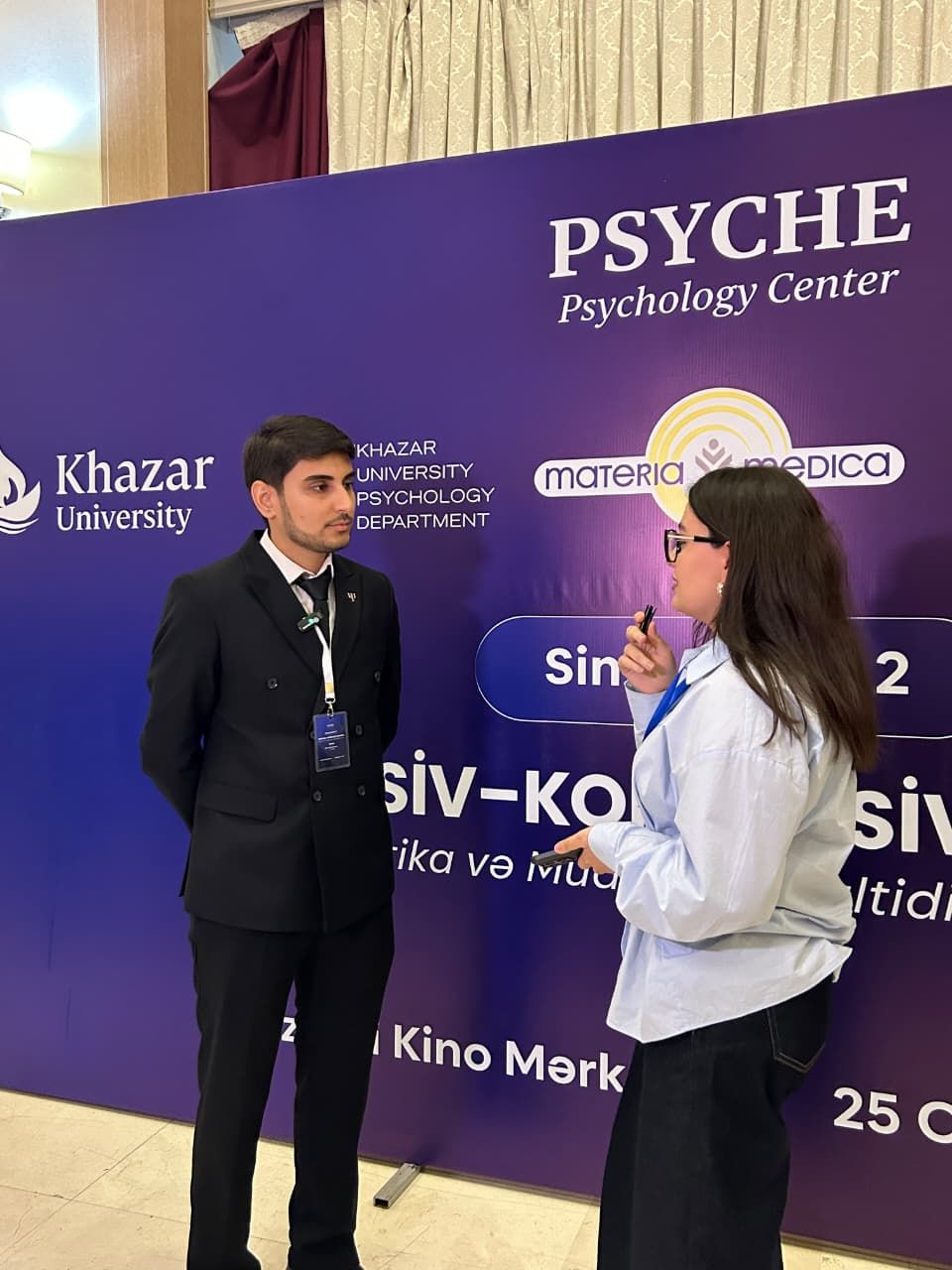
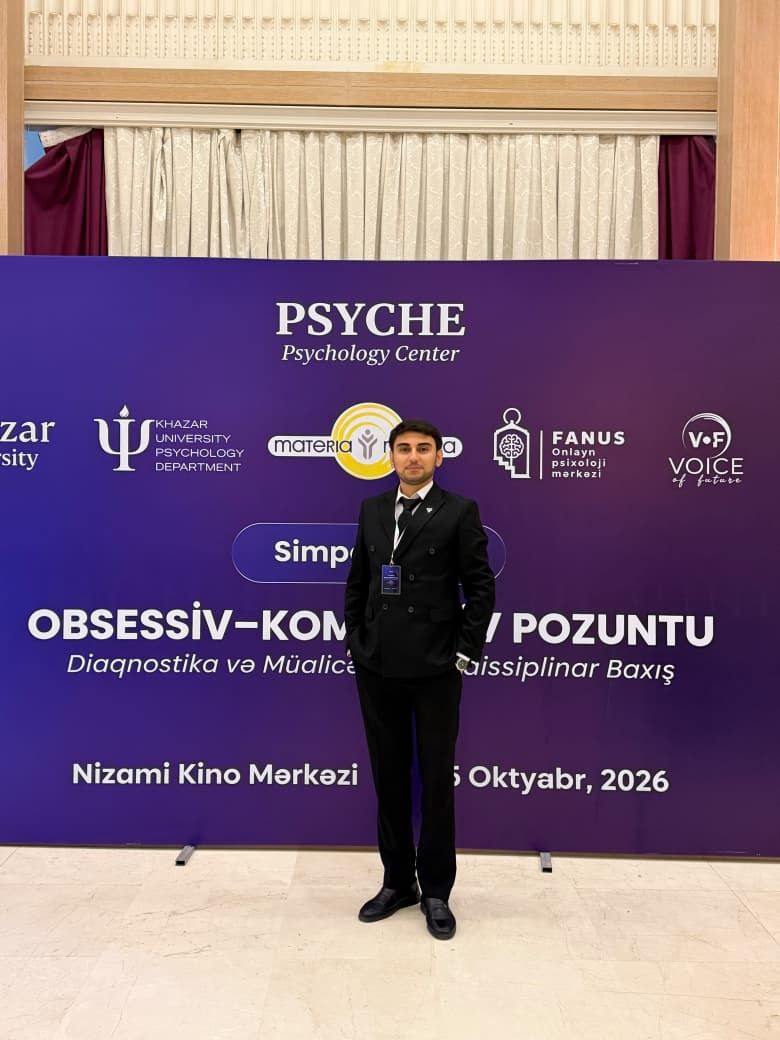
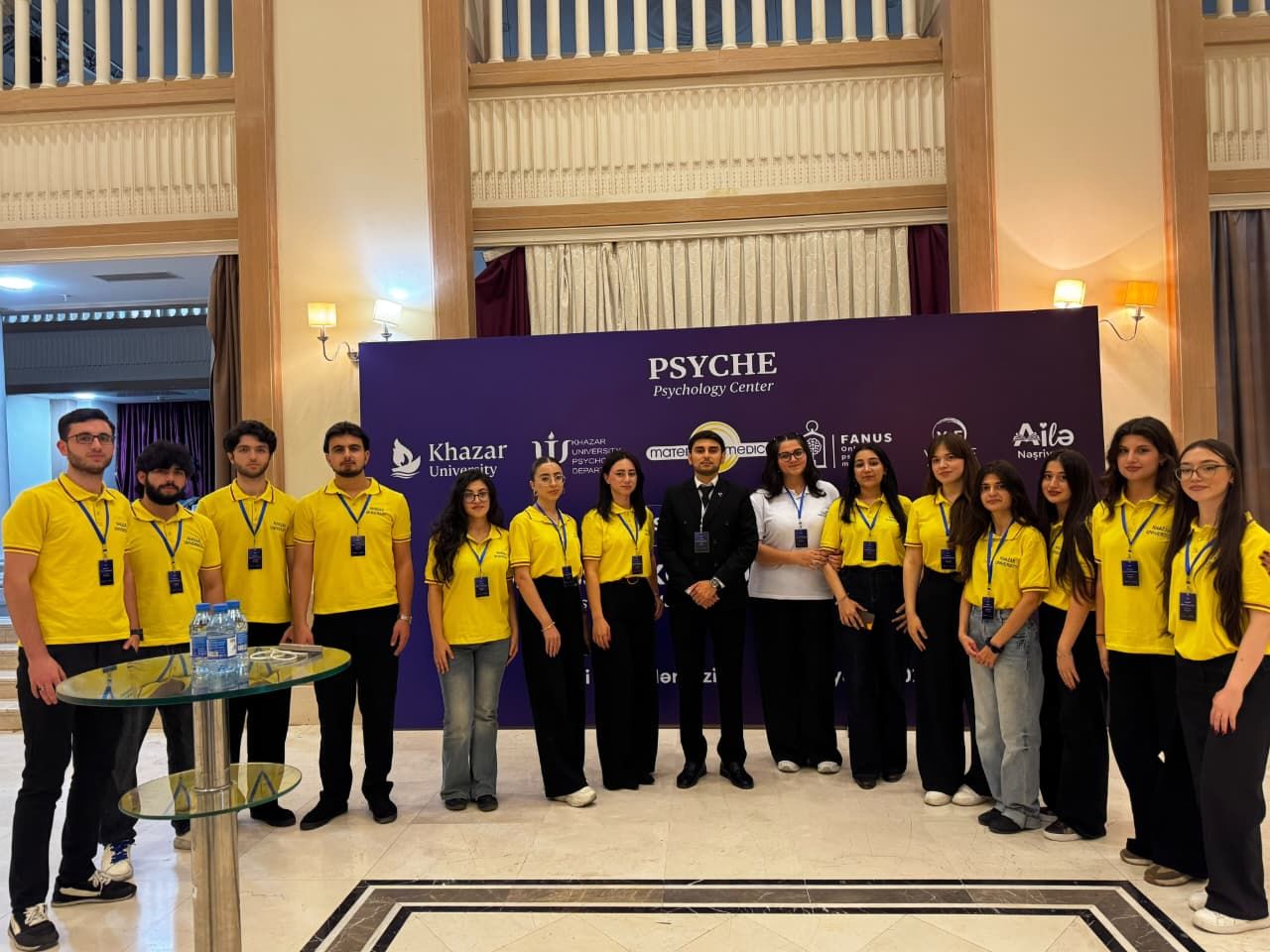
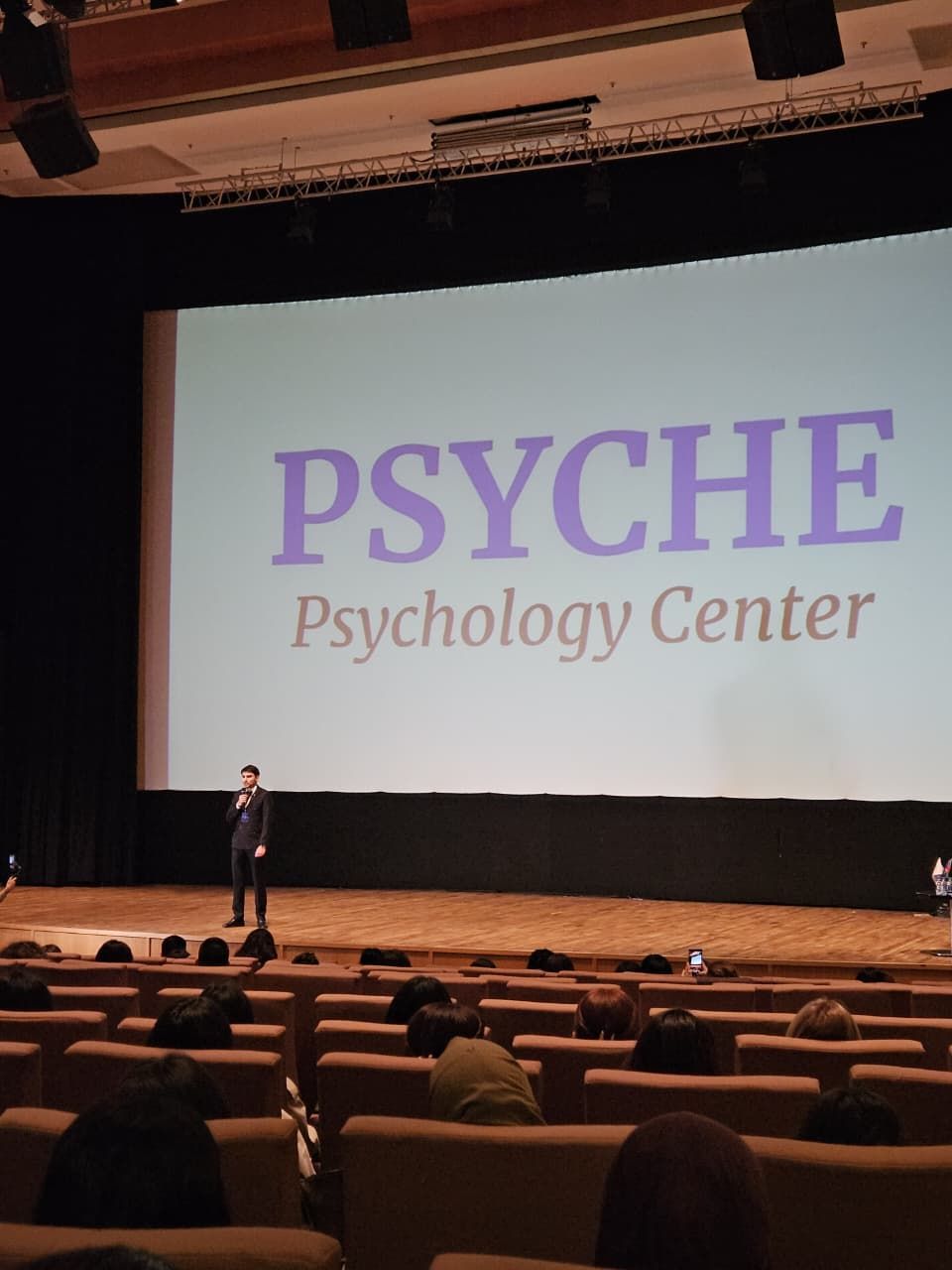
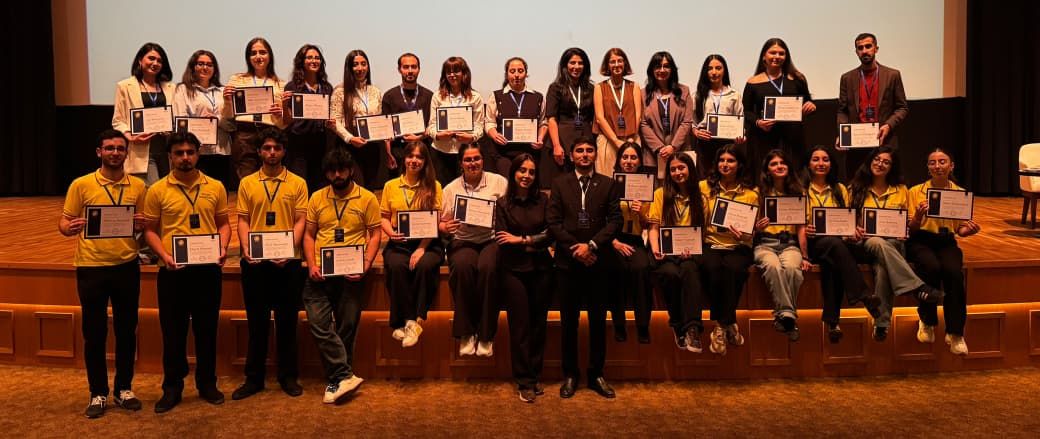
Mirsadig Mukhtarov, a staff member of Khazar University's Department of Psychology and psychologist-psychotherapist at the Khazar Psychological Service Center, took part on October 25, 2026, in a scientific-practical symposium titled "Obsessive-Compulsive Disorder: A Multidisciplinary Perspective on Diagnosis and Treatment," held at the Nizami Cinema Center and organized by the Psyche Psychology Center. The main purpose of the symposium was to discuss modern scientific approaches to the diagnosis and treatment of obsessive-compulsive disorder (OCD) and to strengthen the exchange of scientific and clinical experience among specialists from various fields. Khazar University was represented at the symposium by department staff, faculty, a team of 15 student volunteers, and the university's stand.
The symposium discussed the diagnostic criteria of OCD, its neurobiological mechanisms, its treatment in children and adolescents, family accommodation, as well as the clinical application of cognitive-behavioral therapy (CBT) and exposure and response prevention (ERP) approaches. The bringing together of the fields of psychiatry, neurology, and psychology at the event highlighted the importance of a multidisciplinary approach to OCD.
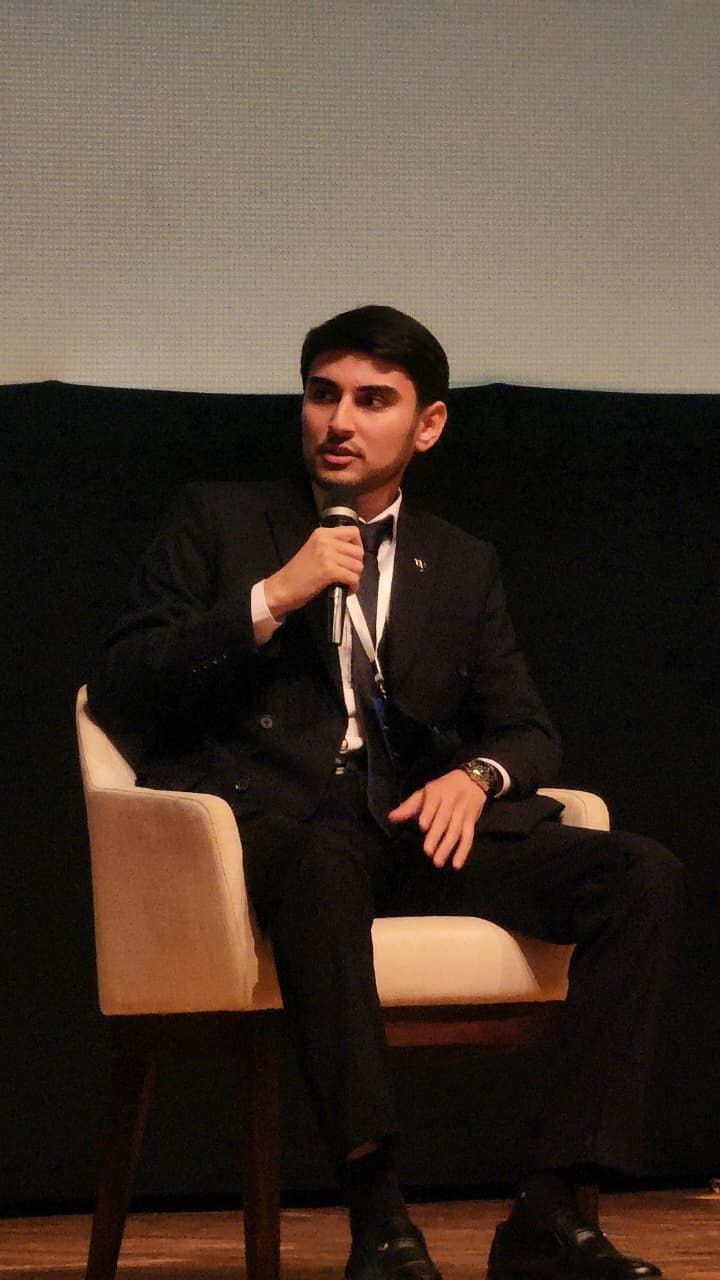
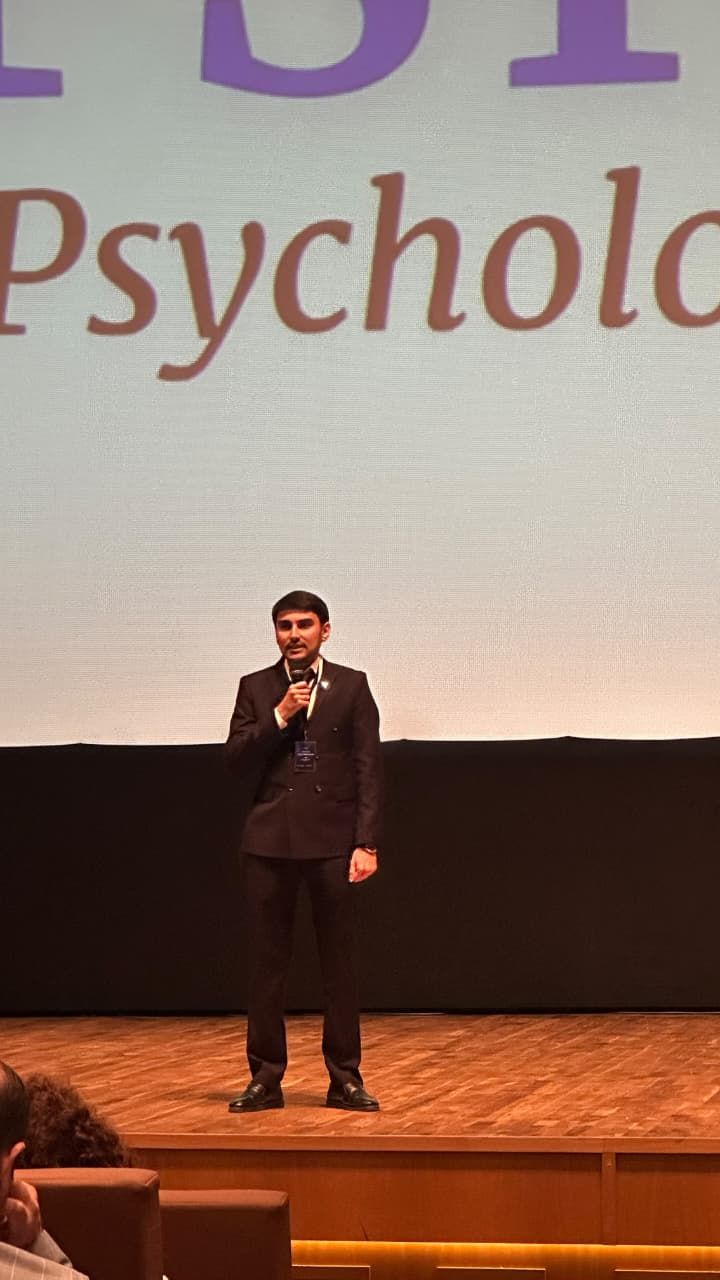
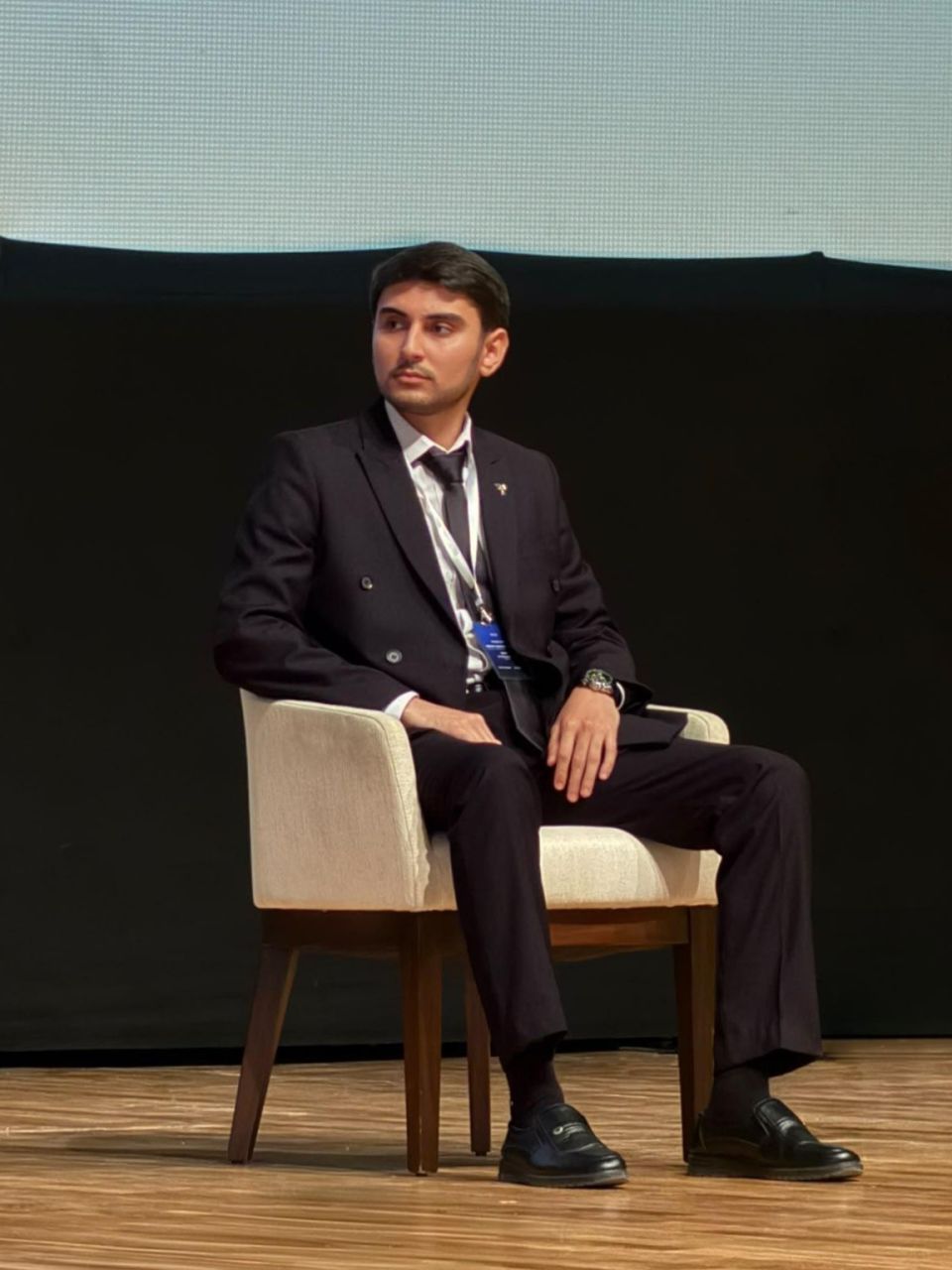
Speaking at the opening of the event, Mirsadig Mukhtarov emphasized the importance of science-based approaches in the proper assessment, early identification, and treatment of OCD. Touching on the disorder's impact on an individual's daily life and social relationships, he noted the importance of taking individual characteristics into account in the treatment process and of cooperation among different specialists.
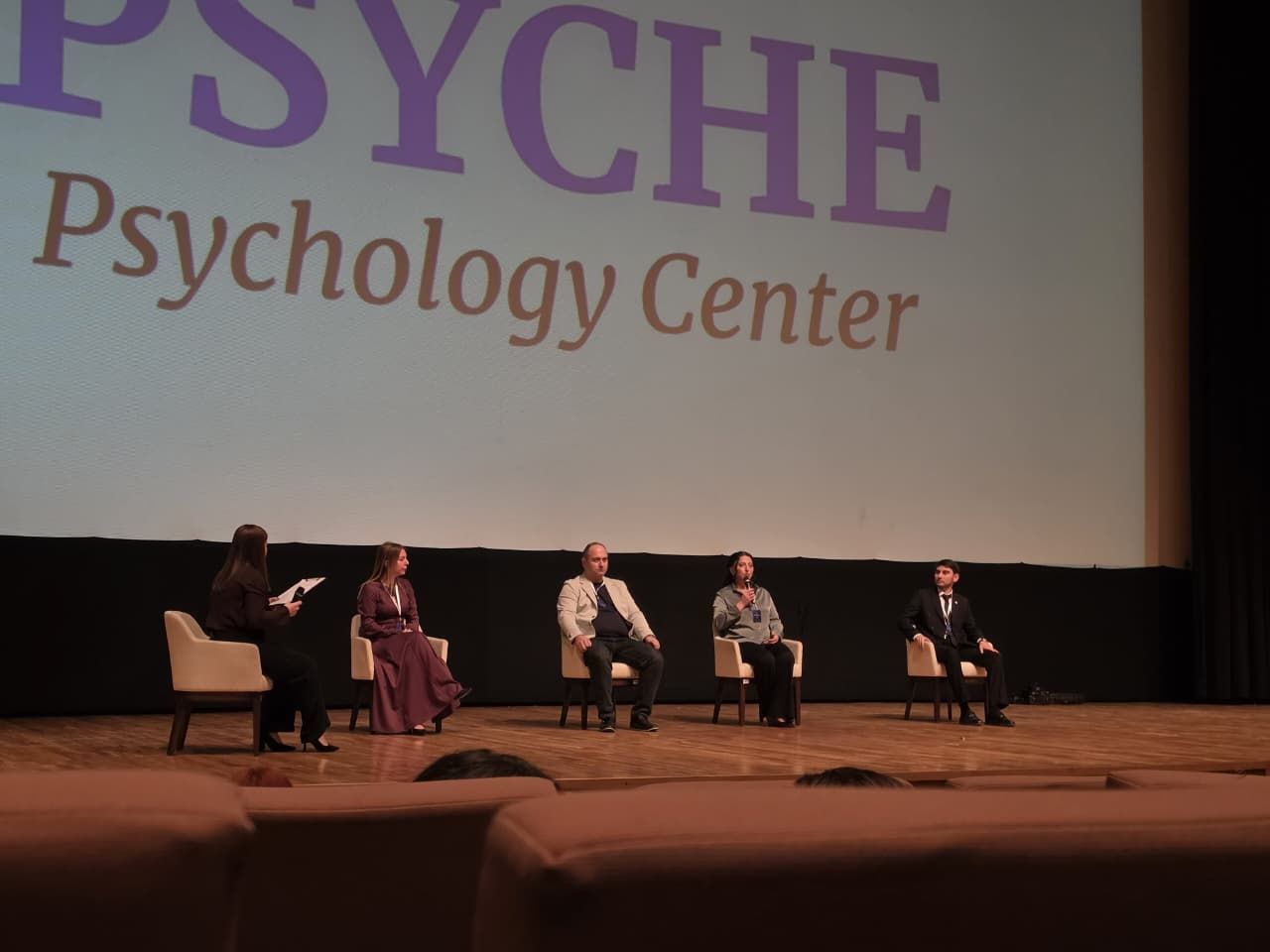
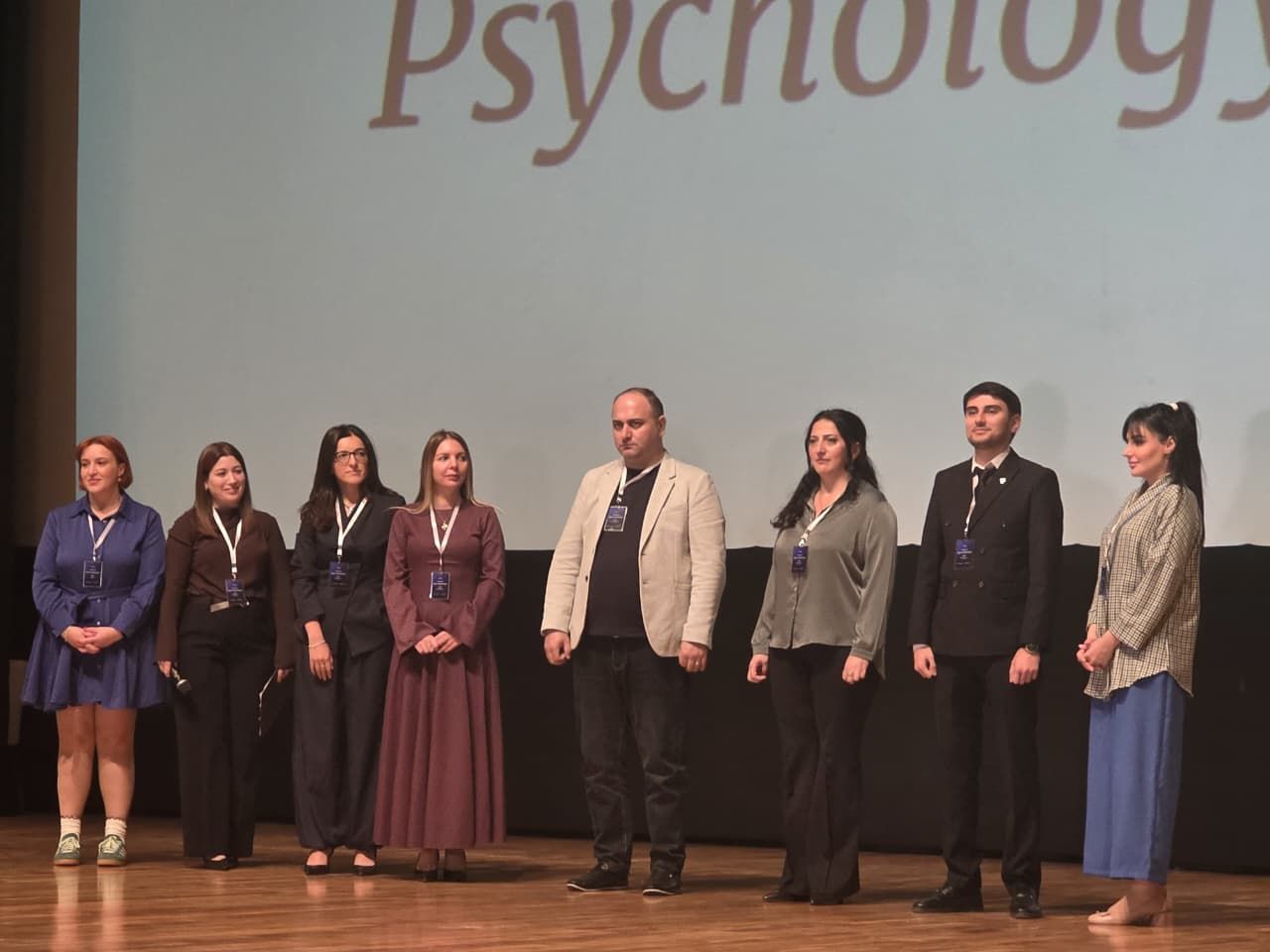
The event, at which university instructors Malak Karimova and Aygun Isgandarova spoke as principal guests, was significant for the sharing of scientific knowledge and professional experience. Khazar University instructors Malak Karimova, Kamala Aliyeva, Khudaverdi Mammadov, and Mirsadig Mukhtarov took part in the symposium's panel discussion. The panel focused on the clinical features of OCD, its assessment, and the role of multidisciplinary cooperation in its treatment.



Copyright © Khazar University, 2026
