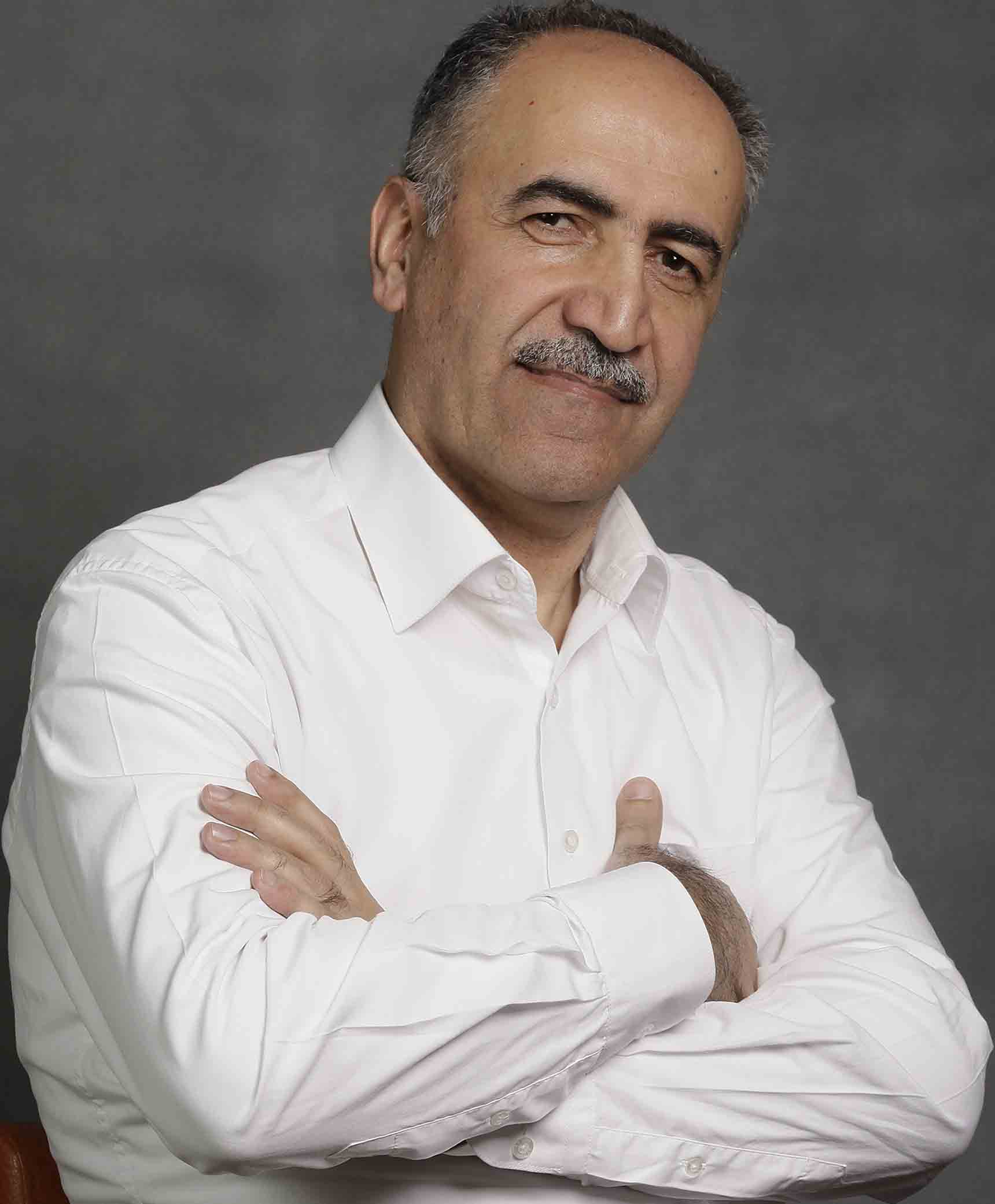
INGILAB AHMADOV
Prof. Ingilab Ahmadov obtained a Doctor of Science in Economics from the Saint Petersburg (Russia) State University of Economics and Finance. In 2008 as a Chevening Fellow, Ingilab Ahmadov took the “Economics of Energy” course at Reading University (UK). His work experience is both extensive and outstanding. He started his career as an instructor at Azerbaijan State Oil Academy and scientific employee at the Center for Strategic and International Studies. He was appointed Advisor to the Minister at the Ministry of Economy of the Republic of Azerbaijan. Since 1995, he acted as Director General of the “Trend” analytical information agency, and between 2004 and 2010 he was the director of Public Finance Monitoring Center—an NGO located in Baku. Prof. Ahmadov has research collaborations with and is a visiting professor of leading universities such as Kiel Institute for the World Economy as well as Oxford and Reading University. His research interests are oil & gas economy and impact of oil revenues on economy, Caspian energy resources, and oil contracts. Prof. Ahmadov has more than 30 research papers and books. Mr. Ahmadov joined the School of Economics and Management at Khazar University in 2008. He mainly teaches courses in Energy Management and Caspian Energy. Ingilab Ahmadov was a member of the International Board of the Extractive Industries Transparency Initiative. Prof. Ahmadov became director of Eurasia Extractive Industries Knowledge Hub and Dean of the School of Economics and Management at Khazar University in 2010.
ANDREW BAUER
Andrew Bauer is an economic analyst at the Revenue Watch Institute. Prior to joining, he served on Canada's G7/8 and G-20 teams as an international economist at the Department of Finance, where he provided economic policy advice and participated in the planning and execution of the G8 and G-20 Summits as well as preparatory finance ministerials during Canada's host year. He has held positions in government, nonprofits and the private sector, having worked for Debt Relief International, UNICEF-Canada, Transparency International-Kenya, the Commission on Human Rights and Administrative Justice (CHRAJ-Ghana), among others.
At Revenue Watch, Andrew Bauer focuses on economic technical assistance and research to improve natural resource revenue management. His work includes advising governments and civil society on macroeconomic management, governance and accountability mechanisms, and local content in the extractives. Andrew holds an M.Sc. in Economics for Development from Oxford University, where he won a thesis distinction for his work on the monetary transmission mechanism in Tanzania. He also received a B.A. in Economics and International Development Studies from McGill University.
 ERICA WESTENBERG
Erica practiced as an attorney for over five years in the Energy and Infrastructure Projects group at Skadden, Arps, Slate, Meagher and Flom LLP, where she managed numerous complex transactions in the areas of energy and natural resources, infrastructure and public-private partnerships. Her pro bono projects included work on parliamentary oversight of extractive industry contracts as well as engagement through the International Senior Lawyers Project on governance reforms in Africa. As EITI Policy Officer, Erica leads RWI's multifaceted engagement with the Extractive Industries Transparency Initiative, which includes supporting the RWI representative to the EITI International Board, providing technical assistance to EITI processes globally and conducting research on EITI-related issues. Erica received a B.A. in government and a certificate in African studies from Harvard College and a M.Sc. in Development Management from the London School of Economics. She holds a J.D. from Harvard Law School, where she received a Chayes International Public Service Fellowship to work on legal and judicial reform in Europe and Central Asia at the World Bank.
 KATARINA KUAI
Before Revenue Watch, Katarina Kuai worked at the United Nations in New York as well as on field missions in Afghanistan and Indonesia. At the Office of the U.N. High Commissioner for Human Rights, she worked on an inter-agency initiative to promote rights-based approaches in the U.N.'s approach to development, peace and security. She has also worked for UNDP, conducting policy research and managing projects in various areas including South-South cooperation, civil society partnerships and indigenous peoples' issues. As program officer, Katarina's focus is on training and capacity development in downstream phases of the extractive sector value chain including revenue management and economic diversification. She is leading RWI's work in Afghanistan and has a special interest in conflict-resource linkages, China-Africa relations and Chinese NOC engagement in extractive sector governance. In addition, Katarina oversees the development of RWI training modules and the management of fellowships. She holds a Masters in International Relations from Yale University and a BA from New School University.
 SUSAN MAPLES
Susan Maples is currently a Visiting Assistant Professor and Andrews Kurth Energy Scholar. Susan's research interests and teaching areas are in comparative constitutional analysis of the governance of natural resources; comparative analysis of oil, gas, and mining laws; energy diplomacy; international petroleum transactions and regulatory frameworks; oil & gas transport; upstream economics; state participation and equity, and resource and energy policy. She has worked in over 25 countries, providing trainings, lectures, and legal and policy support to parliaments, governments, and citizens in resource rich countries and continues to be consulted for advice, research, and lectures by private industry, governments, and civil society.
Susan was also Post-Doctoral Research Fellow at Columbia Law School from 2007-2011, first at the Human Rights Institute under Professor Peter Rosenblum and then at the Vale Columbia Center for Sustainable International Investment under Professor Jeffrey Sachs. She was a co-author of Oil Contracts: How to read and understand them, the co-author of Contracts Confidential: Ending Secret Deals in the Extractive Industries, and a contributor to the forthcoming study, Resource-Based Sustainable Development in the Lower Zambezi Basin.
.jpg)
AZER MEHTIYEV
Azer Mehtiyev is head of “Assistance to Economic Initiatives” PU. As one of the leading economists of the country, he is the author of several important research works on the improvement of effectiveness and transparency of budget process and budget expenses, as well as the implementer of monitoring projects in this field. As a member of Extractive Industry Transparency Initiative NGO Coalition, he is an active participant in the realization of this initiative in Azerbaijan. He was head of the Coalition Council in 2008-2009. While headed by Azer Mehtiyev, the Coalition conducted the validation of EITI in Azerbaijan and achieved the acceptance of its certain terms (especially the establishment of Multi-party Group) by the Government Commission. Azer Mehtiyev is a member of National Budget Group (NBG) Board. He acts as the trainer of NBG trainings on budgeting process, monitoring of budget expenses and budget advocacy issues organized for NGO representatives and journalists. Azer Mehtiyev is also a member of NGO Alliance for the Development of Municipalities that deals with decentralization initiatives and advocacy of the development of local self-governance and acted as the coordinator of this Alliance in 2011-2013. Azer Mehtiyev is the lecturer for the School of “Enterprise Economy” of Azerbaijan State Economic University.
 GALIB EFENDIEV
Before joining RWI, Galib Efendiev worked at the Open Society Institute - Assistance, as director of the Transparency of Oil Revenues and Public Finance (TORPF) program and as head of the grants department. He joined OSI in Azerbaijan at its founding in 1996, helping to manage OSI's first programs in Azerbaijan and serving as Deputy Director for several years. As RWI's Central Asia/Caucasus Regional Coordinator, Galib provides guidance to consolidate local monitoring activities and helps to manage local research, monitoring, advocacy and technical assistance in Azerbaijan, Kazakhstan, Mongolia and Russia, with smaller-scale activities in Georgia, Kyrgyz Republic and the Ukraine. He holds a BS from Rutgers University, with majors in Finance and Management and Eastern European Studies.
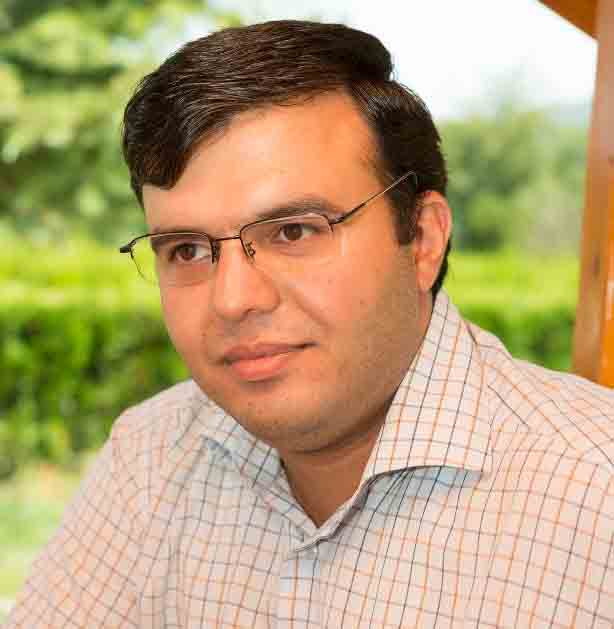 GALIB EFENDIEV
Before joining RWI, Galib Efendiev worked at the Open Society Institute - Assistance, as director of the Transparency of Oil Revenues and Public Finance (TORPF) program and as head of the grants department. He joined OSI in Azerbaijan at its founding in 1996, helping to manage OSI's first programs in Azerbaijan and serving as Deputy Director for several years. As RWI's Central Asia/Caucasus Regional Coordinator, Galib provides guidance to consolidate local monitoring activities and helps to manage local research, monitoring, advocacy and technical assistance in Azerbaijan, Kazakhstan, Mongolia and Russia, with smaller-scale activities in Georgia, Kyrgyz Republic and the Ukraine. He holds a BS from Rutgers University, with majors in Finance and Management and Eastern European Studies.
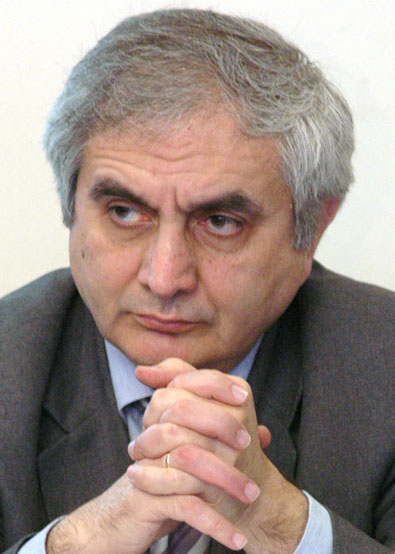 SABIT BAGIROV
Sabit Bagirov is the president of the Entrepreneurship Development Foundation and director of the Center for Economic and Political Research in Baku, Azerbaijan. In 1971 he graduated from the Mechanical Faculty of the Azerbaijani Petrochemical Institute (currently the Oil Academy). Bagirov defended his dissertation at the Institute of Management Problems of the USSR Academy of Sciences (Moscow). From 1992-1993, he served as the state advisor on strategic programs to the President of Azerbaijan, helping establish state committees on antimonopoly policy and support for entrepreneurship, privatization of state property, land reform, and foreign investment. During that time, he was also President of the State Oil Company of Azerbaijan (SOCAR), during which he restructured the company for greater efficiency and was responsible for contracts with foreign investors for the development of oil and gas. From 1994 he was consultant for several private companies on Caspian energy projects, and in 1998 and in 2004 he was a consultant of World Bank on Azerbaijan energy projects. Currently his positions in non-governmental sector include Founder and Member of Board of NGO Coalition on EITI-Azerbaijan , Founder and Member of Azerbaijan National Committee for European Integration, Founder and Member of Board of Transparency Azerbaijan. In 2011-2013 was a member of the International EITI Board.


Copyright © Khazar University, 2026
